DbcultAccessing Vault...
6.6/10
Senior Film Conservator
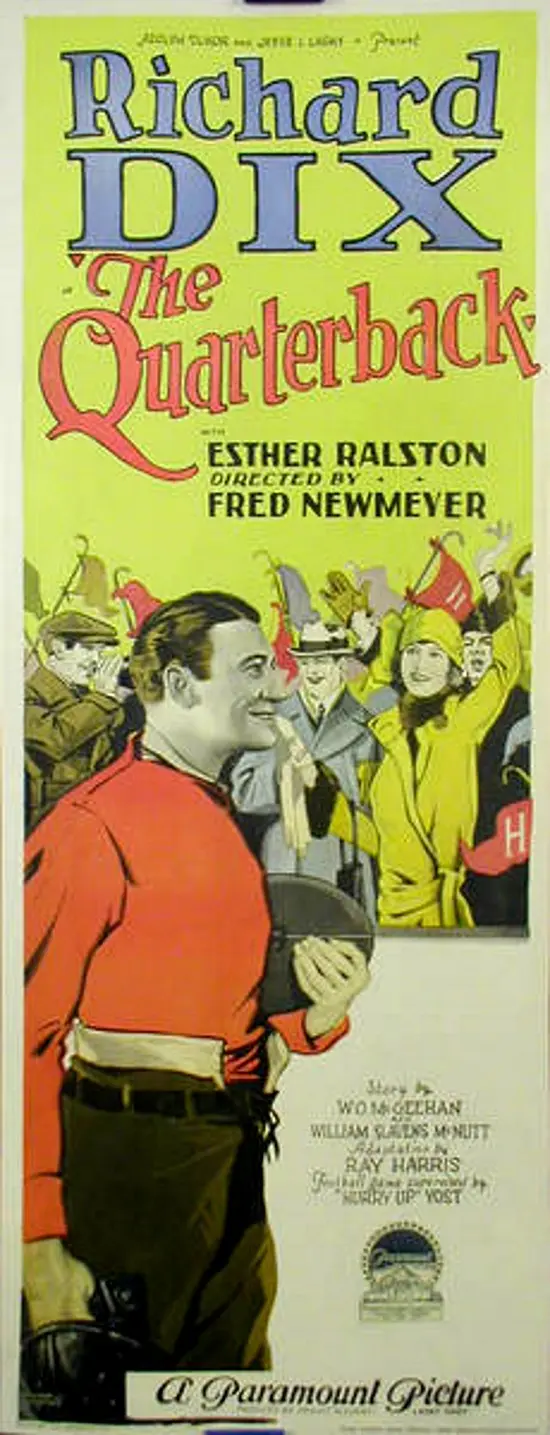
A definitive 6.6/10 rating for a film that redefined the boundaries of cult cinema. The Quarterback remains a cornerstone of transgressive art.
Is The Quarterback a hidden gem of the silent era or a fumbled play? Short answer: Yes, it is a charming, if logically bankrupt, time capsule that highlights the 1920s obsession with collegiate honor. This film is for those who appreciate the physical comedy of the silent era and the career of Richard Dix; it is not for viewers who require narrative realism or high-stakes, modern pacing.
The film presents a world where institutional loyalty borders on the pathological. While the premise of a man staying in college for nearly three decades sounds like a modern 'slacker' comedy, the 1926 treatment is earnest, treating Elmer's vow with a mix of pity and reverence. It is a fascinating look at the 'Big Game' culture that still dominates American Saturdays, albeit through a lens of black-and-white slapstick and melodrama.
1) This film works because the internal logic, however insane, is anchored by Richard Dix’s surprisingly grounded performance as a man stuck in time.
2) This film fails because the second act relies too heavily on repetitive milk-delivery gags that distract from the emotional weight of the father-son dynamic.
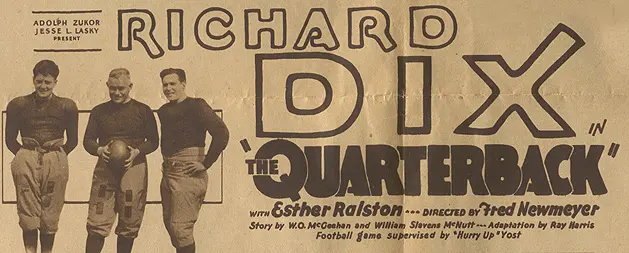
3) You should watch it if you are a fan of early sports cinema or want to see the ancestral blueprint for films like Back to School or Old School.
To answer the question of whether The Quarterback is worth your time today, one must first accept the conventions of 1920s storytelling. This isn't a film about the mechanics of football; it's a film about the mythos of the athlete. If you can move past the technical limitations of the era, there is a genuine heart beating beneath the leather helmets. The scene where Elmer sits in a lecture hall next to his son, Jack, is both hilarious and deeply uncomfortable, predating modern cringe comedy by eighty years.
For the casual viewer, it might feel like a relic. However, for anyone interested in the evolution of the American Hero, Richard Dix provides a masterclass in silent charisma. He doesn't play Elmer as a loser, but as a man of honor whose sense of duty is simply misplaced. It works. But it’s flawed. The pacing can be glacial, yet the payoff during the final game is undeniably cathartic.
The central conceit—Elmer Stone’s 27-year tenure at Colton College—is the film's greatest strength and its most distracting element. In a modern context, we would view Elmer as a man in need of serious psychological intervention. In 1926, he was a symbol of dogged persistence. The film navigates this by keeping the tone light, focusing on the domestic friction between a father who is a 'senior' and a son who is a 'freshman' (socially, if not academically).
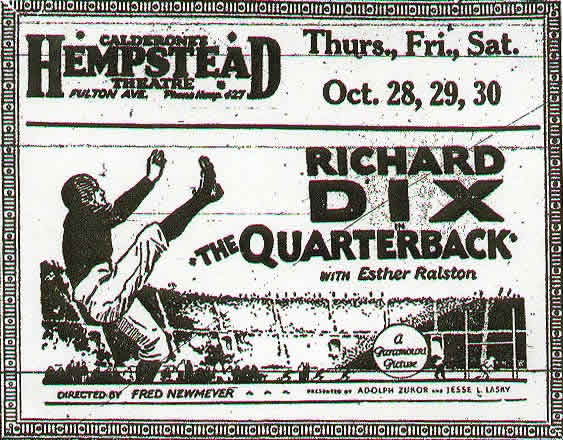
Consider the scene where Jack is being recruited for the team. There is a palpable sense of 'sins of the father' hanging over the recruitment. The film cleverly uses the milk wagon as a symbol of Elmer’s stalled life. While the rest of his 1899 cohort has moved on to become lawyers and titans of industry, Elmer is still doing the same route, literally and figuratively. This visual metaphor is more effective than any of the title cards in conveying the tragedy of his stagnation.
Richard Dix was a titan of his time, and The Quarterback showcases his range. He manages to balance the physical requirements of the sports scenes with the subtle facial expressions needed for the more dramatic moments. When he looks at his son, there’s a mixture of pride and envy that feels remarkably modern. It’s a nuanced performance that elevates the material above standard genre fare.
Esther Ralston provides the necessary romantic interest, though her character is unfortunately sidelined as the plot focuses more on the male-centric world of the gridiron. However, her presence serves as a reminder of what Elmer has sacrificed for his vow. The supporting cast, including Barton MacLane in an early role, fills out the collegiate atmosphere with a rowdy energy that feels authentic to the 'Roaring Twenties' spirit.
The direction (often attributed to Fred C. Newmeyer, a veteran of Harold Lloyd comedies) leans heavily into the rhythmic editing of the era. The football sequences are surprisingly coherent for 1926. Unlike many early sports films that used static wide shots, The Quarterback attempts to get into the thick of the action. You can almost feel the thud of the leather padding and the grit of the dirt.
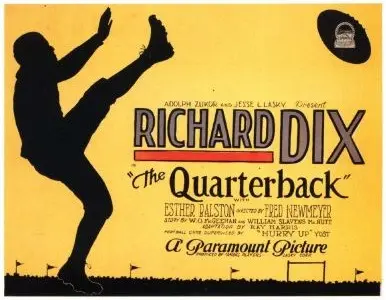
However, the pacing is where the film shows its age. The middle section, which involves a convoluted subplot about Jack’s eligibility, feels like it belongs to a different movie. It slows the momentum built by the father-son introduction. Compared to the brisk pacing of a film like Felix Goes West, The Quarterback can feel a bit bogged down in its own drama. Yet, when the cinematography captures the vastness of the stadium during the climax, the scale is impressive for its time.
When placed alongside other films of the period, such as Pals First or The Sea Master, The Quarterback stands out for its specific focus on Americana and the collegiate myth. While The Sea Master deals with grander nautical adventures, The Quarterback finds its stakes in a tiny patch of grass in a college town. This provincialism is its charm.
The film also shares thematic DNA with His Own Medicine, particularly in how it treats the idea of a 'cure' for one's own obsessions. Elmer Stone needs the win to be 'cured' of his collegiate ghost. It’s a psychological journey masquerading as a sports comedy, a trait it shares with some of the more character-driven narratives like The Seekers.
No, The Quarterback is not based on a specific true story. It is a fictional comedy-drama written by Ray Harris and William Slavens McNutt. The film uses the heightened reality of 1920s college football rivalries to tell a story about obsession and family legacy. While the 'Big Game' atmosphere was inspired by real-life rivalries like Harvard-Yale or Army-Navy, the character of Elmer Stone and his 27-year stay in college are entirely products of the screenwriters' imaginations.
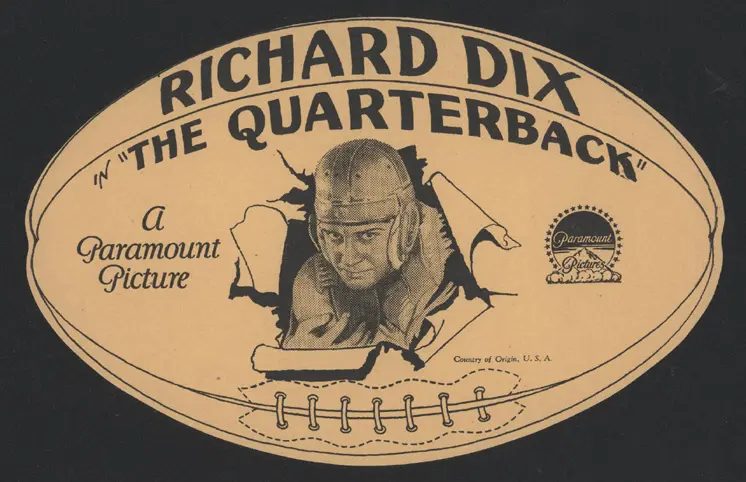
Pros:
Cons:
The Quarterback is a fascinating anomaly. It is a film that shouldn't work—a story about a middle-aged man refusing to graduate until a football team wins—but it succeeds through sheer force of personality. Richard Dix makes Elmer Stone a character you root for, even as you want to shake him and tell him to get a job. The film captures a specific moment in American history when the college experience was being codified into the myth we recognize today.
While it lacks the sheer comedic genius of Buster Keaton or the poetic grace of Murnau, it offers a sturdy, entertaining, and occasionally surreal experience. It is a reminder that the 'eternal student' is not a new phenomenon, and that the 'Big Game' has been a focal point of American storytelling for nearly a century. If you can appreciate it as a historical artifact with a sense of humor, it’s a win. If you’re looking for a tight, modern narrative, you might find yourself stuck in the bleachers.
"A bizarre, earnest, and occasionally hilarious exploration of what happens when a man refuses to let go of his youth—and his school colors."
IMDb 6.3
1919
Community
Log in to comment.