DbcultAccessing Vault...
Cult Review
Senior Film Conservator
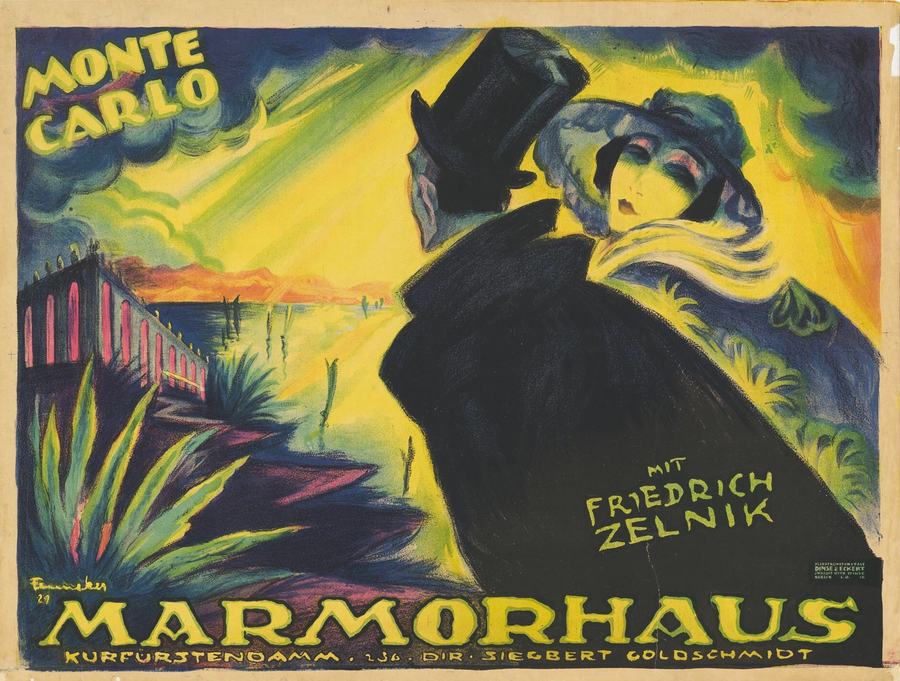
The year 1921 stood as a pivotal juncture for the nascent German film industry, a time when the shadows of expressionism began to meld with a burgeoning interest in high-society melodrama. At the center of this aesthetic evolution was Fred Zelnik, a filmmaker whose prolific output often masked a profound sensitivity to the shifting social mores of his time. His production of Monte Carlo is not merely a film; it is a celluloid excavation of the human psyche under the duress of chance. While many contemporary works were preoccupied with the fantastical or the horrific, Zelnik turned his lens toward the gilded cages of the Mediterranean, capturing a moment of profound cultural vertigo.
The film opens with a visual language that is both expansive and claustrophobic. The grandeur of the Monte Carlo casino is rendered with a meticulous eye for detail, yet Zelnik ensures that the architecture feels imposing, almost predatory. The high ceilings and ornate moldings do not signify freedom; they signify the weight of expectation and the crushing pressure of social standing. Unlike the more intimate domestic tensions found in Lillis Ehe, Monte Carlo operates on a grander, more public stage, where every failure is witnessed by a gallery of judgmental peers.
Zelnik’s direction utilizes the space of the casino as a character in its own right. The camera lingers on the spinning wheels and the sliding chips with a fetishistic intensity that mirrors the obsession of the protagonists. There is a rhythmic quality to the editing that mimics the heartbeat of a gambler—alternating between the slow, agonizing wait for the ball to drop and the rapid, frenetic realization of loss. This mastery of pacing elevates the film beyond a simple narrative, transforming it into a visceral experience of anxiety and ephemeral hope.
The ensemble cast is led by Poldi Müller, whose performance is a masterclass in silent-era nuance. Müller possesses a face that seems tailor-made for the chiaroscuro lighting of the period; her eyes convey a depth of sorrow that words would only diminish. She portrays a woman caught in the crosswinds of desire and duty, a theme that resonates with the tragic undercurrents of The Lotus Woman. Her interactions with Frederic Zelnik—who pulls double duty as actor and director—are charged with a palpable tension that suggests a shared history of unspoken grievances.
Fred Goebel and Fritz Schulz provide the necessary counterpoints to Müller’s gravitas, embodying the youthful arrogance and eventual disillusionment that characterized the 'Lost Generation.' Their trajectory from confidence to ruin is handled with a deft touch, avoiding the histrionics that often plagued silent dramas. The inclusion of veteran actors like Olga Engl and Marie von Buelow adds a layer of gravitas to the proceedings, representing the old guard that watches in silent horror as the world they built is gambled away by their progeny. This generational conflict is handled with more subtlety here than in the overtly moralistic tones of The Flirt.
Fanny Carlsen’s screenplay is a marvel of structural complexity. Rather than following a linear path, the narrative weaves through various subplots, creating a sense of a shared, collective destiny. This mosaic approach allows the film to explore different facets of the gambling addiction—from the professional card shark to the desperate widow. Carlsen’s writing possesses a literary quality, reminiscent of the psychological depth found in The Mystic Hour, though focused more on the external realities of social ruin than on the supernatural.
The dialogue cards are sparse but impactful, often using aphorisms to underscore the themes of the film. "Luck is a mistress who only visits those who no longer need her," reads one particularly biting card. This cynicism is the engine that drives the film forward, stripping away the romanticism often associated with the Riviera. In this regard, Monte Carlo serves as a sharp contrast to the more optimistic or adventurous narratives found in films like As Aventuras de Gregório or the rugged escapism of 'Neath Austral Skies.
Visually, the film is a triumph of early cinematography. The use of natural light in the outdoor scenes—the sun-drenched terraces and the sparkling sea—contrasts sharply with the artificial, smoke-filled atmosphere of the casino interiors. This visual duality highlights the artifice of the characters' lives; they retreat from the beauty of the natural world to immerse themselves in a synthetic environment of their own making. The set design is opulent without being garish, capturing the faded elegance of a resort that has seen better days.
There are moments of startling technical ingenuity, such as double exposures used to represent the internal turmoil of a character contemplating suicide, or the use of close-ups to capture the trembling hands of a man placing his last bet. These techniques, while common in later years, were being refined here with a sense of purpose. The film lacks the patriotic fervor of the All-Star Production of Patriotic Episodes for the Second Liberty Loan, opting instead for a universal humanism that transcends national boundaries.
When placed alongside other films of the era, Monte Carlo occupies a unique space. It lacks the overt religious symbolism of The Star of Bethlehem, yet it is deeply concerned with the concept of sin and redemption. Unlike Not Guilty, where the legal system serves as the arbiter of morality, Zelnik’s film suggests that the ultimate judgment comes from within—or from the cold indifference of the universe. The characters are not seeking exoneration from a court, but from their own sense of failure.
The film’s exploration of the colonial and class-based tensions also brings to mind The Planter, though Zelnik focuses on the internal rot of the colonizer rather than the external conflicts of the colony. There is a sense that the wealth being squandered at the tables is blood money, the spoils of an empire that is rapidly disintegrating. This subtext adds a layer of political urgency to the film, making it more than just a domestic drama. It is a post-mortem of an era of profligacy, much like the thematic concerns of Meatless Days and Sleepless Nights, albeit on a much more lavish scale.
What lingers most after the final reel has spun is the film’s profound sense of melancholy. There is no easy resolution, no happy ending where the protagonist wins back their fortune and lives happily ever after. Instead, Zelnik offers a more honest, if more painful, conclusion. The characters are left to face the morning sun with empty pockets and even emptier hearts. This bleakness is reminiscent of the tragic arcs in Rose di sangue or the shattered dreams of The Valley of Tomorrow.
The film’s portrayal of addiction is remarkably modern. It recognizes that the lure of the game is not the money itself, but the temporary suspension of reality. For a few hours, under the flickering gaslights, the characters can believe that they are the masters of their own fate. This psychological insight is what keeps Monte Carlo relevant a century later. It speaks to a fundamental human desire to escape the mundane and the tragic, even if that escape leads to further ruin. In this regard, the film shares a spiritual kinship with Infatuation, though it trades the obsession with a person for an obsession with the turn of a card.
In the vast landscape of silent cinema, Monte Carlo is a work that deserves a prominent place in the pantheon. It is a film that balances spectacle with intimacy, and cynicism with compassion. Fred Zelnik proved himself to be a director of significant vision, capable of capturing the complexities of the human condition with a sophistication that remains impressive. The performances, particularly those of Müller and the elder cast members, provide a bridge to a lost world, allowing us to feel the pulse of a society on the brink of collapse.
While it may lack the name recognition of some of its contemporaries, the film’s influence can be seen in the numerous gambling dramas that followed. Its DNA is present in every story of a high-stakes loser and every portrait of a crumbling aristocracy. Like Dulcie's Adventure, it finds beauty in the struggle, but it refuses to look away from the cost of that struggle. Monte Carlo is a haunting reminder that while the house always wins, the real tragedy lies in the belief that, just this once, we might beat the odds. It is a masterpiece of atmospheric tension and a poignant elegy for a world that vanished in the shadow of the Great War.
Critique by A. V. Sterling – Film Historian and Cultural Critic.
IMDb —
1920
Community
Log in to comment.