DbcultAccessing Vault...
Cult Review
Senior Film Conservator
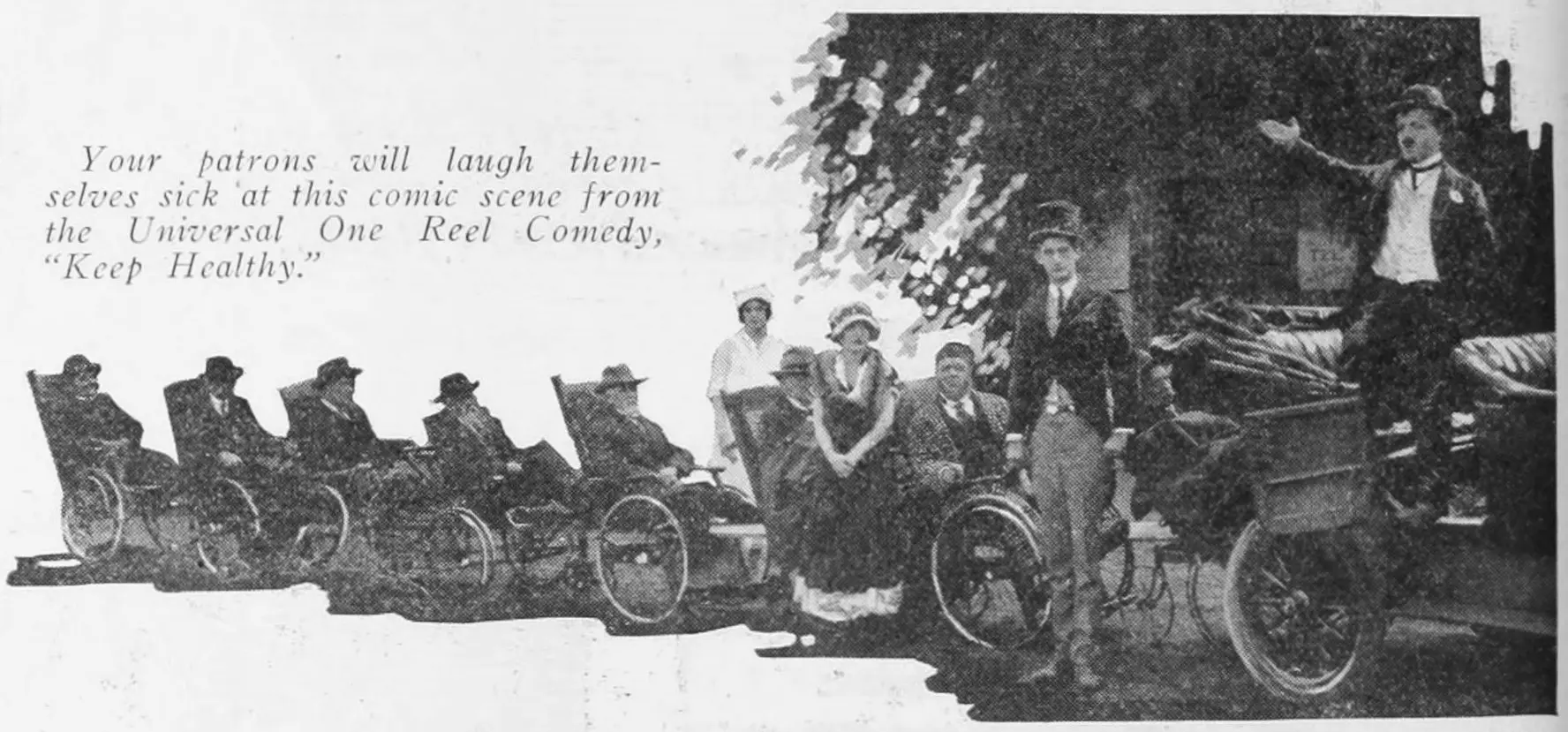
Step back into the roaring twenties, a vibrant epoch of cultural shifts and burgeoning cinematic artistry, where the magic of the silver screen was still largely silent, yet profoundly articulate. Among the myriad of films that flickered to life during this transformative period, a particular gem, Keep Healthy (1920), stands as a testament to the timeless appeal of well-crafted physical comedy and biting social satire. This isn't merely a relic; it's a vibrant, hilarious exploration of human foibles, ambition, and the sheer audacity of desperation, all wrapped in the delightful package of a two-reel comedy that continues to elicit genuine laughter a century later. Its narrative, centered on a pair of utterly inept sanatorium employees, transcends its simple premise to offer a surprisingly nuanced commentary on public credulity and the lengths to which individuals will go to either succeed or, perhaps more accurately, merely survive.
At the heart of Keep Healthy lies the indelible comedic duo of Slim Summerville and Bobby Dunn, whose contrasting yet complementary styles form the bedrock of the film's humor. Summerville, with his gangly physique, perpetually bewildered expression, and a gait that suggests a man perpetually on the verge of tripping over his own feet, embodies the quintessential silent film everyman—a character whose earnest attempts at competence invariably devolve into spectacular failure. His physical comedy is less about grand, acrobatic stunts and more about the subtle, often pathetic, ballet of a man utterly out of his depth. Whether he's fumbling with gardening tools or attempting to project an air of medical authority, Summerville’s performance is a masterclass in understated absurdity. He brings a certain endearing quality to his incompetence, making his character, despite his flaws, surprisingly sympathetic.
Bobby Dunn, on the other hand, provides a perfect foil. Often portrayed as the smaller, nimbler, and perhaps slightly more cunning of the pair, Dunn's character injects a spark of impish energy into the proceedings. While equally prone to blunders, his mistakes often stem from a misguided sense of cleverness rather than sheer clumsiness. Their dynamic is classic: the lanky, well-meaning but utterly ineffective oaf paired with the smaller, sharper, yet equally misguided sidekick. This pairing recalls the enduring appeal of other silent comedy duos, though Summerville and Dunn carve out their own distinct niche with a particular brand of low-stakes, high-hilarity bungling. Their chemistry is palpable, a silent dialogue of shared glances, exasperated sighs (implied), and perfectly timed physical reactions that speak volumes without a single uttered word. Their performances elevate what could have been a simple slapstick reel into a charming character study of two men navigating a world that constantly seems to conspire against their best, or worst, intentions.
The choice of a sanatorium as the primary setting for Keep Healthy is a stroke of ironic genius. A place ostensibly dedicated to healing and well-being becomes, in the hands of Slim and Bobby, a crucible of comedic chaos. The very notion of these two individuals—one a gardener who presumably can't keep a plant alive, the other a janitor whose efforts likely leave more mess than they clean—being employed in a facility designed for recovery is inherently ludicrous. The film capitalizes on this foundational absurdity, showcasing their initial failures in their assigned roles. Imagine a meticulously manicured garden devolving into a tangled mess under Slim’s care, or a pristine hallway becoming a slip-and-slide hazard thanks to Bobby’s overzealous mopping. These early scenes, though perhaps brief, establish their profound unsuitability for any role requiring diligence or competence, setting the stage for the desperate measures they will soon undertake.
Their chronic botching of duties, a source of constant frustration for their superiors (and likely amusement for the audience), leads to their inevitable re-assignment. This pivot from internal incompetence to external marketing is where the narrative truly takes flight. The sanatorium, struggling for business, rather than addressing the root cause of its internal disarray, dispatches its most problematic employees to attract new clientele. This decision, in itself, is a commentary on organizational desperation and perhaps a subtle jab at the often-unconventional strategies employed in business, even a century ago. It’s a classic comedic setup: give the least capable individuals the most critical task, and watch the ensuing pandemonium unfold.
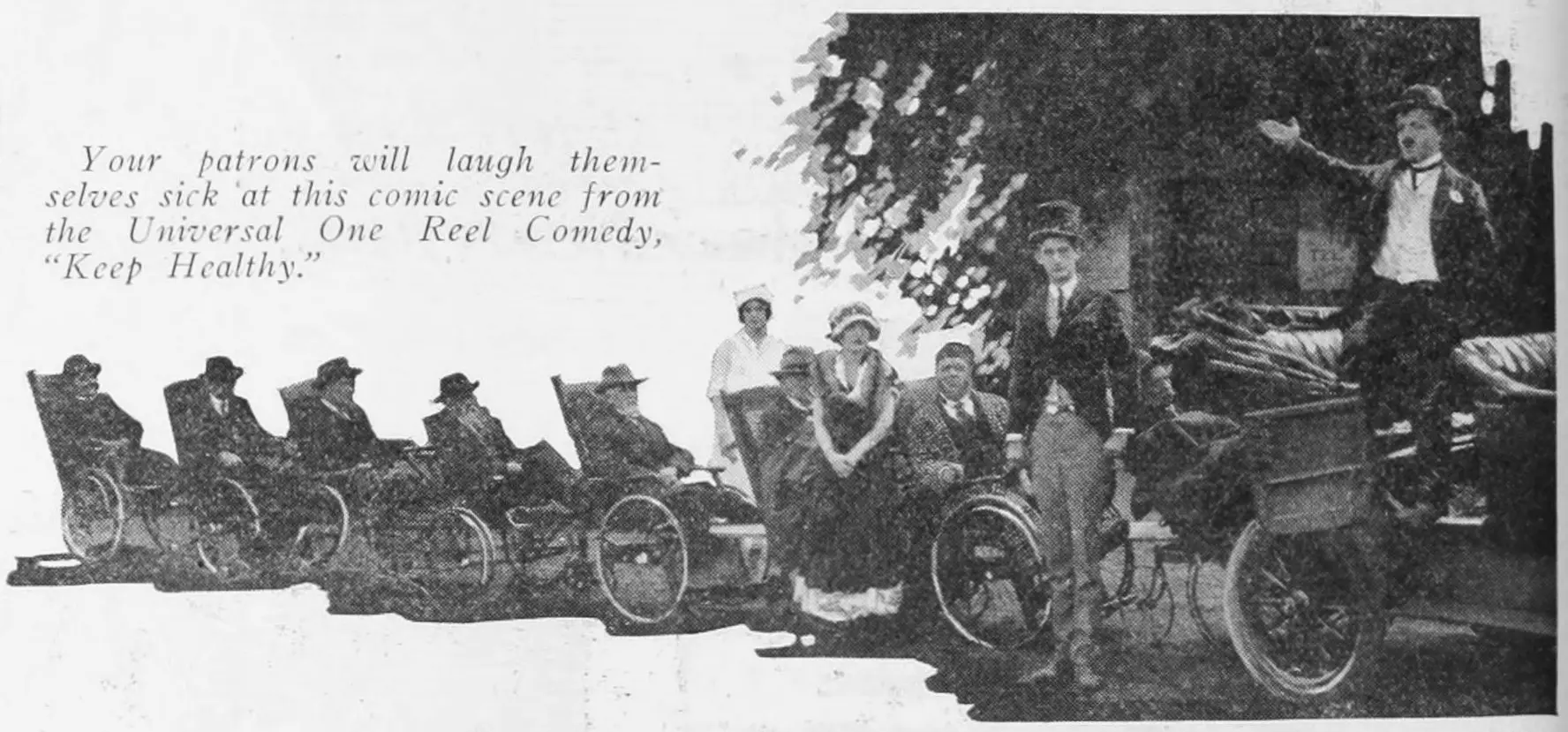
The core of Keep Healthy's comedic brilliance lies in the ingenious, albeit ethically dubious, scheme concocted by Slim and Bobby: the staging of public 'miraculous cures.' Faced with the daunting task of bringing business to their ailing sanatorium, and utterly devoid of genuine marketing acumen, they resort to the oldest trick in the book: theatrical deception. Slim dons the mantle of a distinguished, if somewhat unconvincing, doctor, complete with an air of profound, albeit misplaced, authority. Bobby, with equal enthusiasm, transforms into the 'patient,' a figure of exaggerated ailment and theatrical recovery. Their performances are a delightful blend of over-the-top dramatics and clumsy execution, making the audience privy to the absurdity of their charade while simultaneously watching the unsuspecting crowds fall hook, line, and sinker.
These staged 'cures' are the film’s comedic set pieces. Imagine Bobby, writhing in exaggerated pain, only to spring to life with a triumphant flourish after Slim's 'treatment,' which likely involves nothing more than a grand gesture or a placebo effect amplified by sheer audacity. The visual gags here are paramount: the 'doctor's' comically oversized instruments, the 'patient's' dramatic collapse and subsequent energetic recovery, the wide-eyed awe of the onlookers. It's a meticulous construction of a lie, played out on the impromptu stages of public squares and busy thoroughfares, designed to exploit the innate human desire for quick fixes and the belief in the extraordinary. The film, in its own playful way, critiques the susceptibility of the general public to charismatic, if fraudulent, figures, a theme that remains remarkably relevant even today. The success of their initial stunts highlights not only their unexpected knack for showmanship but also the pervasive gullibility that makes such schemes viable.
Beyond the surface-level gags, Keep Healthy delves into several resonant themes. The most apparent is the exploration of quackery and the exploitation of public trust. The film, through its humorous lens, exposes the charlatans who prey on the hopes and fears of those seeking relief or a cure. This was a prevalent concern in the early 20th century, a time when medical science was still evolving rapidly and regulations were less stringent, making the public particularly vulnerable to dubious remedies and self-proclaimed healers. The film’s lighthearted approach doesn't diminish the underlying critique; rather, it makes it more palatable and accessible, inviting laughter as a form of critical engagement.
Another crucial theme is desperation. Slim and Bobby are not inherently malicious; they are simply incompetent individuals thrust into a situation where their livelihoods, and perhaps the very existence of their employer, depend on their ability to generate revenue. Their scheme, while dishonest, is born out of a profound lack of other options. This desperation fuels their creativity and their audacity, making their actions understandable, if not excusable. It’s a commentary on the pressures of the economic landscape and the lengths to which individuals will go when faced with the threat of failure or unemployment. The film also subtly touches on the societal obsession with 'wellness' and the pursuit of health, a concept that has only grown in complexity over the decades. The eager crowds drawn to the 'miraculous cures' reflect a collective yearning for an easy path to good health, a yearning that remains fertile ground for both genuine innovation and deceptive practices.
As a product of the silent era, Keep Healthy relies entirely on visual storytelling, physical performance, and the judicious use of intertitles to convey its narrative and humor. The film’s direction, though uncredited, demonstrates a keen understanding of silent comedy conventions. Pacing is crucial; the gags unfold with a rhythm that builds anticipation and maximizes comedic impact. The camera often frames the action to emphasize the physical comedy, allowing Summerville’s gangly movements and Dunn’s agile reactions to take center stage. Exaggerated expressions, a hallmark of silent acting, are used effectively to communicate emotions and intentions, bridging the gap left by the absence of dialogue.
The intertitles, sparingly used, provide essential plot points or deliver punchlines that enhance the visual humor without interrupting the flow. They are not merely captions but an integral part of the comedic timing, often appearing just as a character’s expression or action reaches its peak. This precise interplay between visual and textual elements is a testament to the sophisticated craft of silent filmmaking. In comparison to other silent comedies of the period, such as the works found in The Essanay-Chaplin Revue of 1916, Keep Healthy showcases a slightly different comedic sensibility. While Chaplin often imbued his tramp character with a pathos that transcended pure slapstick, Summerville and Dunn lean more heavily into the farcical and the absurd, their characters' predicaments arising less from societal oppression and more from their inherent ineptitude and misguided ambition. Their humor is often more direct, less nuanced, but no less effective in its ability to provoke laughter.
The delicate house of cards built by Slim and Bobby's medical charade is, of course, destined to collapse. The film builds towards the inevitable moment of truth when their staged theatrics collide with the harsh realities of genuine illness. The arrival of a 'real patient'—someone suffering from an actual affliction that demands more than theatrical posturing—serves as the catalyst for their downfall. This scene is pivotal, shifting the tone slightly from pure farce to a more suspenseful, almost dramatic, tension. The audience, having enjoyed the absurdity of their deception, now anticipates the exposure, the moment when their carefully constructed illusion will shatter under the weight of genuine medical need. This structural device is common in comedies of deception, where the protagonists' schemes reach a point of unsustainable complexity or face an undeniable challenge.
The comedic payoff in this sequence often comes from the duo's frantic, increasingly desperate attempts to maintain the illusion, even as it crumbles around them. Their improvised solutions, their wide-eyed panic, and their ultimate failure to provide any actual medical assistance are where the final laughs are found. It's a classic example of situational comedy, where the characters' limitations are starkly contrasted with the demands of the moment. This climax not only provides a satisfying resolution to the narrative arc but also reinforces the film's underlying critique of charlatanism. It asserts that while deception might work for a time, reality, eventually, has a way of catching up.
Despite its age and the silent format, Keep Healthy retains a surprising vitality and comedic punch. It serves as a charming entry point for those new to silent cinema, offering accessible humor that transcends generational divides. The film’s themes of desperation, deception, and public gullibility remain perennially relevant, proving that human nature, for all its advancements, still harbors the same vulnerabilities and absurdities. While not as overtly political or socially conscious as some contemporary dramas like God's Law and Man's, or as grand in scale as adventure serials such as Ruth of the Rockies, its strength lies in its focused, character-driven comedy.
The performances of Slim Summerville and Bobby Dunn are magnetic, showcasing their considerable talents within the constraints of the silent medium. Their ability to convey so much through gesture, expression, and physical timing is a testament to the artistry of early film actors. For enthusiasts of silent cinema, Keep Healthy is a delightful discovery, a reminder of the foundational elements of screen comedy that continue to influence filmmaking today. It's a film that, despite its modest ambitions, delivers an abundance of genuine amusement and offers a window into the comedic sensibilities of a bygone era. It's a testament to the fact that sometimes, the simplest stories, told with genuine wit and physical prowess, can leave the most lasting impression. So, if you're looking for a dose of classic, unadulterated laughter, this century-old short is still remarkably potent, offering a humorous prescription for a healthier outlook on life, even if it's dispensed by the most unqualified of 'doctors'.
IMDb 5.5
1933
Community
Log in to comment.