DbcultAccessing Vault...
4.8/10
Senior Film Conservator
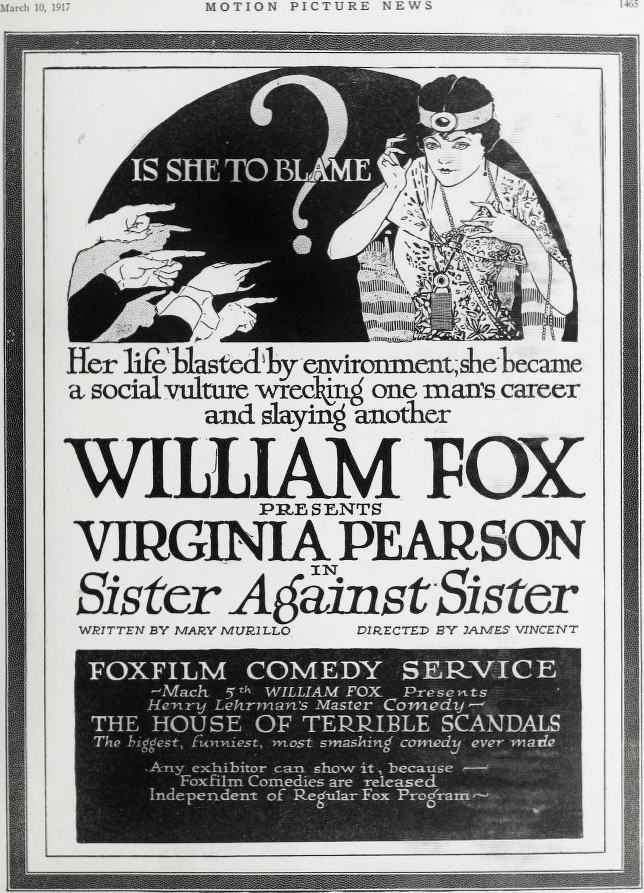
A definitive 4.8/10 rating for a film that redefined the boundaries of cult cinema. Sister Against Sister remains a cornerstone of transgressive art.
From the very genesis of its premise, Sister Against Sister plunges its audience into a compelling, almost Shakespearean exploration of predestination versus personal agency. This early cinematic marvel, crafted by the insightful pen of Mary Murillo, masterfully dissects the profound impact of formative environments on character, setting two siblings on diametrically opposed trajectories from the tender age of separation. It’s a narrative tapestry woven with threads of virtue and vice, political machination and profound personal sacrifice, all culminating in a courtroom drama that transcends mere genre classification to become a poignant meditation on truth and devotion.
The core tragedy, and indeed the central fascination, of Sister Against Sister lies in the lives of Anne and Katherine. Separated by the fractured will of their parents, these twins become living embodiments of the age-old nature versus nurture debate. Anne, under the guiding hand of her mother, ascends to a pinnacle of respectability, a woman whose moral compass is finely tuned to the societal expectations of her era. She is the embodiment of grace, integrity, and an almost anachronistic purity, her character a beacon of hope in a world often depicted as morally ambiguous. Her eventual alliance with Dunsmore, a gubernatorial candidate championing the urgent cause of child labor reform, feels not merely coincidental but an organic extension of her inherent decency. This narrative choice anchors her firmly in the realm of the righteous, a figure whose very presence seems to elevate the moral stakes of the unfolding drama.
In stark contrast, Katherine, tutored by her father, descends into the shadowy world of the 'callous adventuress.' This descriptor itself is loaded, painting a picture of a woman hardened by experience, perhaps by necessity, and certainly by an absence of the nurturing guidance that shaped her sister. Her path is one of pragmatism, of survival, and ultimately, of moral compromise. Her alliance with Huxley, the corrupt manufacturer and Dunsmore's political antagonist, is not just a plot device; it's a profound statement on how circumstances can twist and contort even the most fundamental human bonds. Katherine represents the road not taken by Anne, a darker reflection, a spectral echo of what might have been, making their eventual confrontation all the more potent. The film implicitly asks: are we truly masters of our own destiny, or are we merely products of the environments that sculpt our nascent selves? This thematic depth positions Sister Against Sister as more than just a melodrama; it’s a social commentary disguised as a thrilling narrative.
The political backdrop of Sister Against Sister is not merely incidental; it’s the very crucible in which the sisters’ fates are forged. Dunsmore, portrayed as a gubernatorial candidate dedicated to child labor reform, represents the progressive ideals struggling against the entrenched corruption of the era. His campaign is a fight for the soul of society, a battle against the exploitation of the most vulnerable. This noble pursuit immediately endears him to Anne, whose own moral fabric resonates with his vision of a more just world. Their burgeoning love story is, therefore, not just a romantic subplot but a symbol of hope, a union of like-minded individuals striving for betterment.
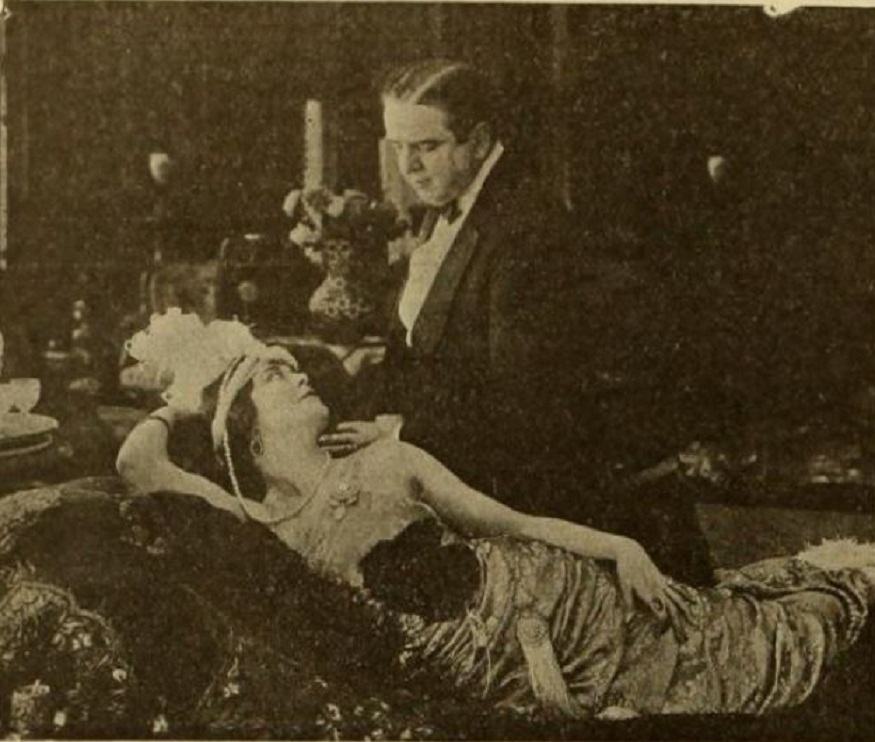
Conversely, Huxley, the corrupt manufacturer, embodies the very forces Dunsmore seeks to dismantle. He is the antagonist not just to Dunsmore, but to the very ideals Anne champions. His alliance with Katherine is a calculated move, a cynical exploitation of her vulnerabilities and her perceived lack of moral anchors. This intricate web of political and personal loyalties sets the stage for a dramatic clash, where the personal becomes irrevocably political. The film cleverly uses this framework to explore how individual choices, even those made in the shadow of personal gain, ripple outwards to affect the broader societal landscape. In this regard, it shares a certain thematic weight with films like The Vanderhoff Affair, which also delved into the moral complexities of power and influence, albeit perhaps with a different focus on the ramifications of social standing.
The narrative’s dramatic pivot arrives with Huxley’s vengeful plot. After losing the gubernatorial race, his ambition curdles into malice, driving him to seek Dunsmore’s permanent elimination. Here, Katherine becomes a pawn, lured by Huxley into a scheme to ensnare Dunsmore. The tension in this sequence would have been palpable, a masterclass in silent film suspense: the unsuspecting Dunsmore, the duplicitous Katherine, and the malevolent Huxley. However, it is at this critical juncture that Katherine’s character undergoes a seismic shift. As Huxley draws his gun, poised to commit murder, Katherine, in an electrifying moment of moral awakening or perhaps a primal surge of familial loyalty, turns her own weapon on Huxley and kills him instead.
This act is the film’s central conundrum, a moment that defies simple categorization. Is it redemption? Self-preservation? A buried flicker of the shared goodness she inherited from her twin? The ambiguity is precisely what lends the scene its enduring power. Dunsmore, caught in the throes of the moment and mistaking Katherine for Anne due to their identical appearance, allows her to escape. This mistaken identity is not merely a convenient plot device; it’s a tragic irony, a veil drawn over the truth that sets in motion the subsequent legal and emotional turmoil. His arrest for a crime he didn’t commit, yet for which he appears undeniably culpable, is a testament to the capricious nature of perception and the profound impact of outward appearances. This theme of hidden truths and appearances versus reality resonates with the psychological intricacies found in films like The Dark Silence, where unspoken secrets and obscured motives drive the narrative forward.
The courtroom becomes the ultimate stage for the film’s exploration of justice, sacrifice, and the elusive nature of truth. Dunsmore, steadfast in his conviction and perhaps protecting the woman he believes to be Anne, stoically withholds the name of his mysterious rescuer. This act of chivalry, though misguided in its recipient, underscores his inherent nobility. It’s a powerful portrayal of a man willing to face ignominy and even death rather than betray a perceived trust, even when that trust is founded on a profound misunderstanding.
Then enters Anne, her sacrifice an act of unparalleled devotion. Believing Dunsmore to be innocent and mistakenly assuming she is the woman he is protecting, she gives herself up as the murderess. This moment elevates the film from a mere crime drama to a profound exploration of altruism and the depths of human love. Anne’s willingness to surrender her freedom, and potentially her life, for the man she loves, is a testament to the strength of her character and the purity of her affections. It’s a dramatic climax that resonates with the intense emotional stakes found in narratives of profound self-sacrifice, perhaps echoing the spirit of enduring commitment depicted in films such as The Battle of Life, where characters often face immense personal struggles for a greater good.
However, the truth, like a persistent current, cannot remain submerged indefinitely. Katherine, driven half-mad by visions of Huxley and the crushing weight of her guilt, finally confesses all. Her breakdown is not merely a plot device for exposition; it’s the agonizing culmination of her journey from callous adventuress to a soul tormented by conscience. It speaks to the enduring power of morality, even in those who seem to have abandoned it. Her confession peels back the layers of deceit, revealing the full, complex tableau of events. This unraveling of secrets, the slow but inevitable march towards truth, is a narrative device that still captivates audiences, much like the gradual revelations in The Light at Dusk, where obscured realities slowly come into focus.
The climax of the trial, with Katherine’s confession, brings with it a cascade of revelations. Upon seeing the striking resemblance between the two sisters, Dunsmore finally comprehends the magnitude of Anne’s sacrifice. The woman he believed he was protecting was not the one offering her life; it was her virtuous twin, driven by an even deeper love. This recognition is a moment of profound emotional clarity, a realization that transcends the legal proceedings and speaks to the very heart of human connection. His rush to embrace Anne is not just a romantic gesture; it’s an affirmation of true love, profound gratitude, and the enduring power of selflessness.
The final tableau is one of bittersweet irony and poignant resolution. Anne and Dunsmore depart the courtroom, their love affirmed, their future, however scarred by the ordeal, now clear. Their exit symbolizes the triumph of virtue, sacrifice, and truth. Meanwhile, Katherine is led to a cell, her freedom lost but perhaps her soul, through confession, finally unburdened. Her fate serves as a stark reminder of the consequences of one’s choices, but also hints at a deeper, albeit painful, path toward absolution. The film, therefore, doesn't offer a simplistic happy ending but a nuanced conclusion that acknowledges the complexities of life, justice, and the indelible bonds of family. It’s a powerful statement on the multifaceted nature of sisterhood, a theme that, while explored in different contexts in films like A Sister of Six, finds a uniquely dramatic and morally charged expression here.
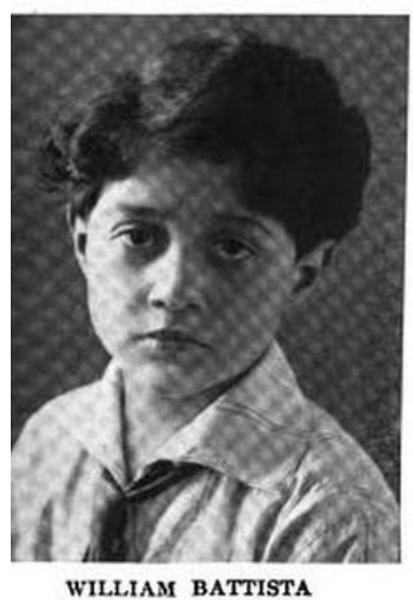
Sister Against Sister, despite its age, remains a compelling piece of cinematic history, a testament to the storytelling prowess of its creators. Virginia Pearson, Archie Battista, and the rest of the cast would have had the formidable task of conveying such intense emotional and moral complexity without the aid of spoken dialogue, relying purely on expression, gesture, and the visual language of silent cinema. Their performances, interpreted through the narrative’s enduring power, would have been crucial in bringing Murillo’s intricate plot to vivid life.
The film’s exploration of twin dynamics, moral choices, political corruption, and the redemptive power of truth is as relevant today as it was upon its release. It challenges audiences to consider the forces that shape us, the sacrifices we are willing to make for love and justice, and the ultimate price of deceit. It is a profound character study wrapped in a thrilling drama, a narrative that lingers long after the final frame, prompting reflection on the intricate dance between fate and free will. Its themes of duality and sacrifice, rendered with such compelling intensity, cement its place as a significant, if perhaps underappreciated, work in the annals of early cinema.
IMDb 3
1933
Community
Log in to comment.