DbcultAccessing Vault...
5.5/10
Senior Film Conservator
A definitive 5.5/10 rating for a film that redefined the boundaries of cult cinema. Kiddie Revue remains a cornerstone of transgressive art.
Alright, so Kiddie Revue. Is it worth tracking down today? Probably not for most folks. If you’re a hardcore cinephile fascinated by the weird corners of early cinema, or maybe a historian of vaudeville acts, then yeah, give it a shot. Everyone else? You’ll likely find it a bit… quaint. Possibly even boring.
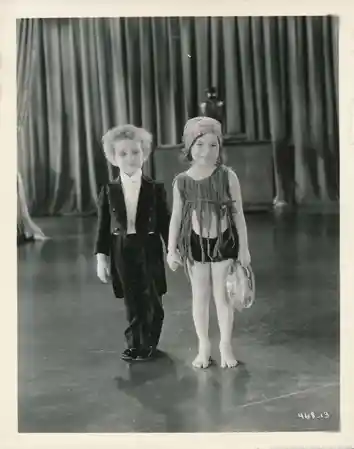
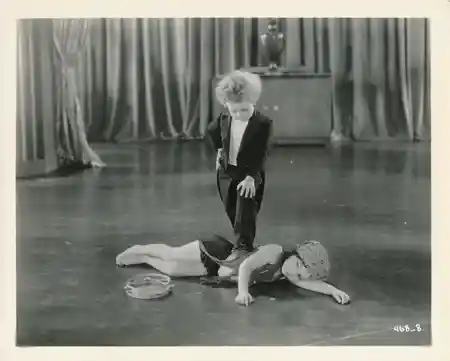
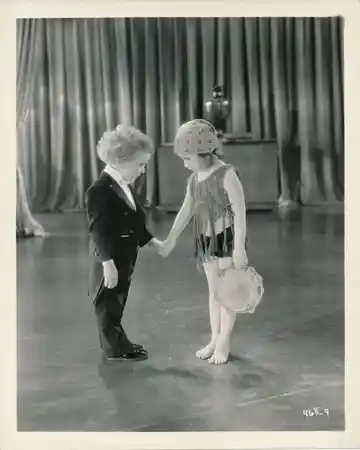
This film is basically what it says on the tin: a revue of kids performing. Douglas Scott and The Meglin Kiddies are the stars here, and they bring a certain energy. It’s a very specific vibe, one that’s kinda hard to explain if you haven't seen a lot of these older shorts. Like, imagine a school play but with more professional ambition, yet still with that undeniable kid-logic charm.
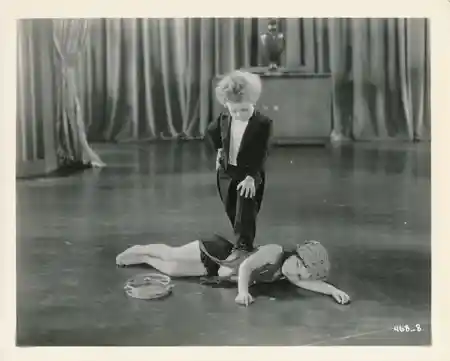
The numbers themselves are pretty straightforward. Lots of singing, lots of tap dancing. Some of the routines feel quite rehearsed, almost *too* polished for children. Then there are other moments where a kid seems to forget a step, and it’s just left in there. That honesty is actually quite refreshing. You can almost feel the director thinking, "Ah, close enough."
Douglas Scott, bless his heart, has a real presence. He's got that undeniable kid star quality, a bit theatrical, but you can tell he’s really trying. There's this one moment during a solo where his eyes just kinda dart off-camera for a split second. Was he looking for a cue? Or just checking if his mom was watching? It’s a tiny, human detail.
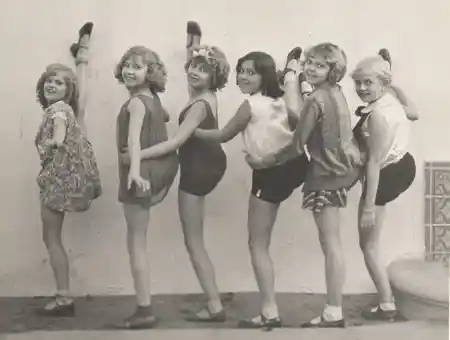
The Meglin Kiddies, as a group, are a whirlwind. They move like a singular, enthusiastic blob. Sometimes they’re all in sync, and it’s genuinely impressive for their age. Other times, it looks like they're just barely holding it together, a few of them a beat behind. It’s **endearing**, honestly. The costumes are… well, they’re very much of their time. Lots of ruffles, shiny fabrics, and hats that seem a bit too big for their heads. 👒
What struck me was the static nature of the camera. It’s mostly just set up, watching the stage. There aren’t many fancy angles or close-ups. It lets you just *observe* the performances, almost like you’re sitting in the audience. Sometimes, a reaction shot lingers so long on a kid's slightly forced smile, it almost becomes funny. You can feel the pressure they're under.
The sound quality is what you'd expect from early talkies. A bit tinny, sometimes hard to make out every word in the songs. But the energy of the performances still cuts through. You hear those tap shoes clacking, even if the singing is a little muddy.
There's this one sequence, I think it was a tap number with about six kids, where one of them is just *slightly* off from the beat. Not badly, just enough that if you're really paying attention, you notice it. It’s these small imperfections that make it feel real, less like a machine-made product.
Honestly, the whole thing feels like a forgotten postcard from a different time. It’s not profound. It’s not visually stunning in the modern sense. It’s just kids, doing their thing, trying their best for the camera. For a short burst of pure, unadulterated nostalgia for an era you probably weren't even alive for, it does the trick. But don’t go in expecting anything groundbreaking. Just a lot of little smiles and big bows. 🎀
IMDb 7.7
1935
Community
Log in to comment.