DbcultAccessing Vault...
5.4/10
Senior Film Conservator
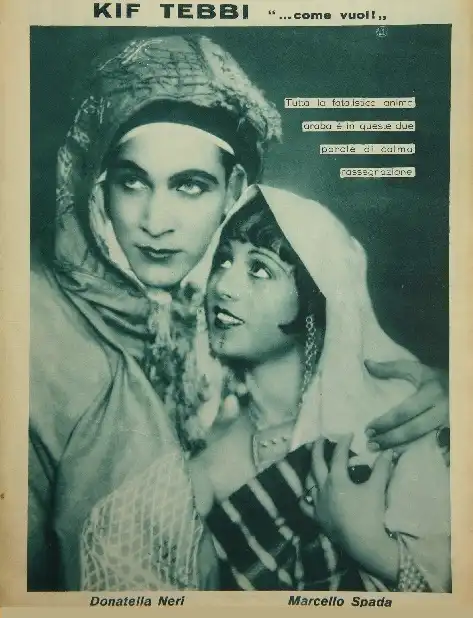
A definitive 5.4/10 rating for a film that redefined the boundaries of cult cinema. Kif Tebbi remains a cornerstone of transgressive art.
Alright, so, _Kif Tebbi_ from 1911 isn't exactly a weekend binge for most people. If you’re really into early cinema, or maybe just curious about how films told stories over a century ago, then yes, _maybe_ give it a look. But if you're expecting modern pacing or anything close to a clear narrative, you'll probably spend most of its runtime checking your watch. Seriously, don't go in blind on this one.
The premise is interesting enough on paper: a young Libyan nobleman, Nini Dinelli, educated in Italy, is called to fight for the Ottoman Empire in 1911. It sets up a potentially rich conflict of identity, culture, and duty.
But this is 1911 cinema, remember. So, instead of nuanced character arcs, you get a lot of **very dramatic gesturing**. Dinelli, bless his heart, acts like every emotion is a capital letter. You can practically _hear_ the silent film orchestra swelling behind him, even when there isn't one.
The film opens with a surprisingly vast shot of the desert, which is cool for a second. Then the camera just… _stays there_ for ages. You start to wonder if they forgot to yell 'cut' or something. It's a test of patience, definitely.
The fight scenes, when they happen, are less about actual combat and more about people standing around looking determined. There’s a lot of dramatic arm waving and posing with rifles. It’s less 'war epic' and more 'tableau vivant'.
One particular shot has our hero riding a horse, and it's framed so oddly. Like, half the horse is off screen, and then the camera just doesn't move. It's a strange, almost _accidental_ artistic choice, I guess?
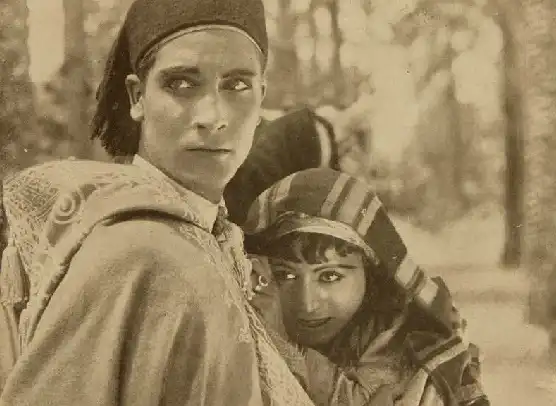
The intertitles, man, they are doing all the heavy lifting here. It often feels like you’re just reading a book with pictures, stopping every few minutes for another block of text. This isn't a bad thing for a film of this age, but it sure slows down the already glacial pace.
You do get a sense of grand ambition though, even if the execution feels a little clunky now. They were definitely *trying* to tell a big story, with big stakes. The costumes, for example, are quite something. All the detail on the military uniforms and traditional dress, you can tell they put effort there. A small but noticeable thing. ✨
The idea of a Libyan nobleman caught between cultures in a historical conflict is genuinely compelling. But the film itself doesn't dig into the _why_ very deeply. It's mostly just presented as 'duty' and 'honor', which is fine, but doesn't make for deep emotional connection.
Piero Carnabuci, playing an Ottoman officer I think, has this intense stare he uses for almost every scene. You can tell he's supposed to be formidable, but after a while, it just becomes his default setting. He's very consistent, I'll give him that.
There are these long, lingering shots on faces that don't seem to be doing much sometimes. They just sort of… exist. You project your own thoughts onto them, maybe? Or you just kinda zone out. Both are valid responses.
Overall, _Kif Tebbi_ is a curious artifact. It's not a thrilling watch, but for those who appreciate the quirks and nascent storytelling techniques of early cinema, there are little nuggets to ponder. It’s less a movie to *enjoy* in a modern sense, and more one to *observe*.
IMDb 5.5
1924
Community
Log in to comment.