DbcultAccessing Vault...
Cult Review
Senior Film Conservator
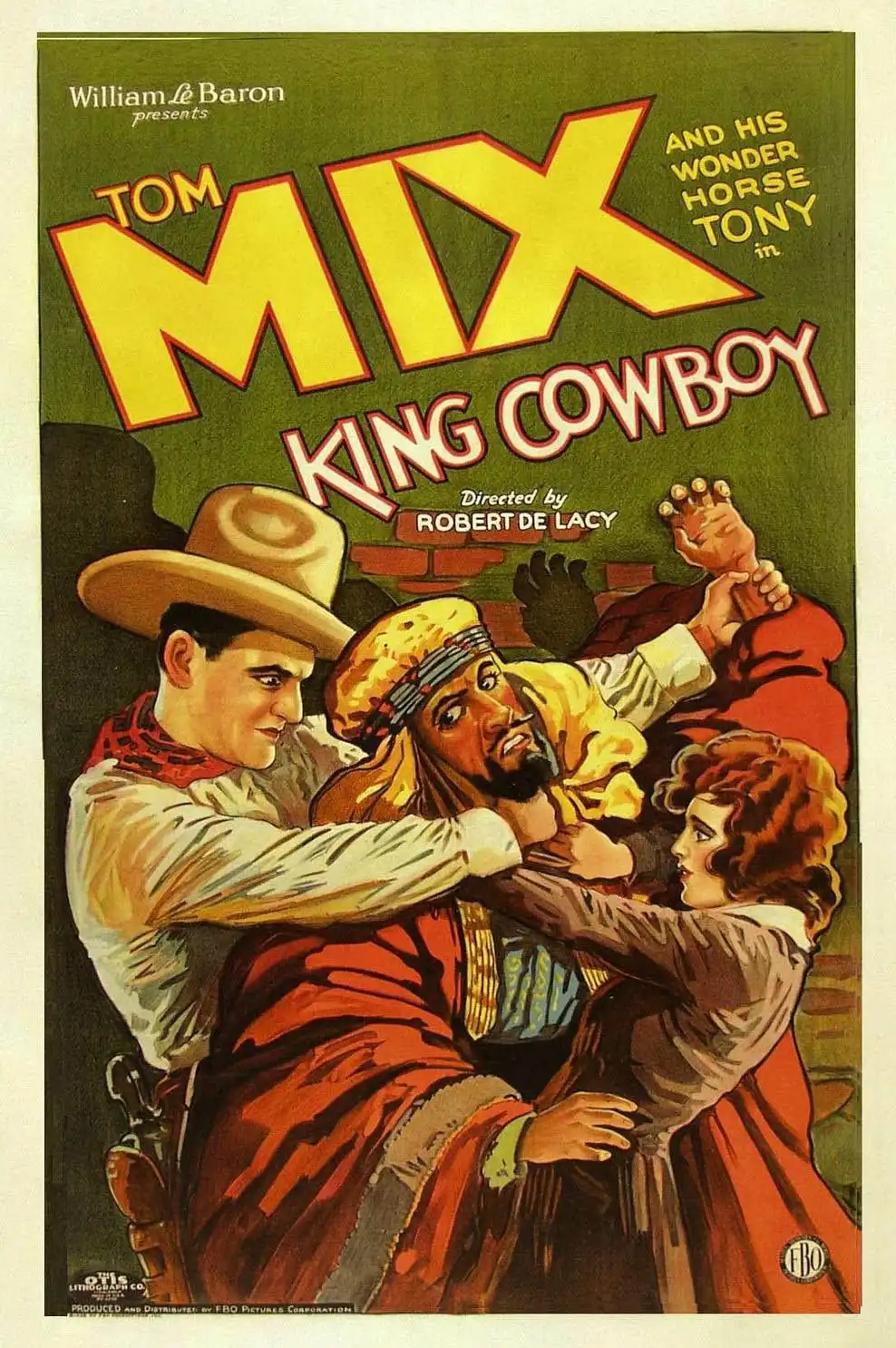
If you have ever wanted to see a cowboy ride a horse onto a steamship and then gallop through a Moroccan bazaar, King Cowboy is pretty much the only game in town. It is a weirdly specific itch to scratch, but the movie does it. Is it worth watching today? Only if you have a soft spot for the sheer absurdity of the late silent era or if you’re a Tom Mix completist. If you’re looking for a gritty, realistic Western, you’re going to hate this. It’s a pantomime with sand.
The whole thing starts off feeling like a standard Mix vehicle. He’s Jim Logan, a ranch foreman who is clearly too good at his job. But then the plot decides the American West isn't big enough and ships him off to North Africa to save Sally Blane. The transition is jarring. One minute we’re in the familiar territory of dust and sagebrush, and the next, Tom is standing on a deck looking at the horizon. It reminded me a bit of the tonal shifts in Oath-Bound, where the movie can't quite decide what genre it wants to live in.
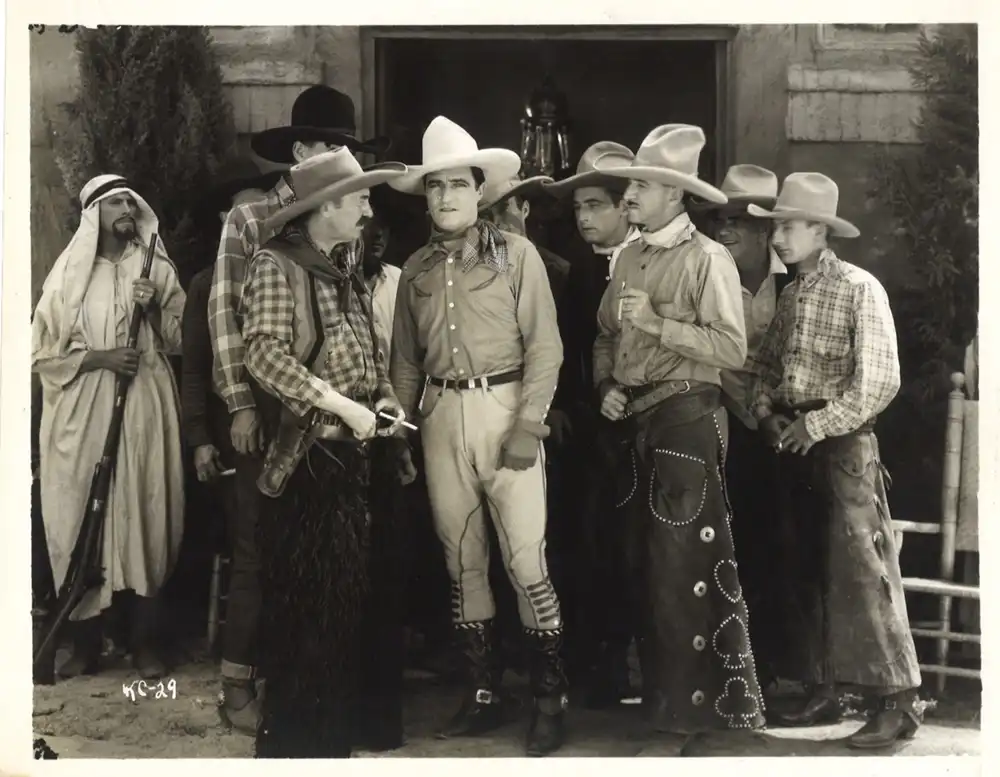
The most striking thing about the film isn't the action, though. It’s Tom Mix’s hat. It is massive. In the desert scenes, it looks like he’s carrying a small roof on his head. There is a specific shot where he’s talking to a group of locals, and the shadow of his brim literally obscures two other actors. It’s unintentional comedy, but it’s the kind of detail that makes these old silents feel human. No one told him to take it off; it was his brand, and he was sticking to it, even if it made zero sense in a Moroccan heatwave.
Tony the Horse is, as always, the most professional person on screen. There is a moment where Tony has to navigate some narrow stairs, and you can see the horse thinking about it. It’s a genuine moment of animal intelligence that feels more real than any of the dialogue titles. Tony gets more close-ups than some of the supporting cast, and honestly, he earns them. The chemistry between Mix and his horse is the only relationship in the movie that feels lived-in. When he’s with Sally Blane, it feels like they’ve just met five minutes before the cameras rolled. Blane is fine, but she’s mostly there to look distressed in high-contrast lighting.
The "Morocco" of the film is clearly a mix of California dunes and some very ambitious studio sets. You can tell when they switch from the real outdoors to the soundstage because the lighting suddenly gets very flat and the sand looks suspiciously like it was raked ten minutes ago. There’s a scene in a sultan’s palace—or a villa, it’s never quite clear—where the extras are just standing around in the background looking incredibly bored. One guy in the back left is clearly adjusting his costume while Tom Mix is doing a dramatic reveal. I love that stuff. It breaks the illusion, but it reminds you that this was just a day’s work for these people.
The villains are led by Lew Meehan, who plays Abdul El-Hadi with the kind of mustache-twirling energy you’d expect. It’s very 1920s-style villainy—lots of narrowed eyes and dramatic cape-swishing. It’s not subtle. Compared to the more grounded tension in something like Virginian Outcast, this feels like a Saturday morning cartoon. There’s a fight scene toward the end that goes on for a while, and the editing is a bit choppy. You can see the stunt doubles swapping in and out if you blink at the wrong time. Mix was getting older here, and while he still does some impressive mounts, you can feel the movie trying to hide the fact that he’s not as fast as he used to be.
One thing that really dragged was the middle section. Once they get to Africa, there’s a lot of walking through markets and looking at things. It feels like the director, Robert De Lacey, was enamored with the exoticism of the sets and forgot to keep the pace up. We get long shots of people in robes just... existing. It’s meant to build atmosphere, but it mostly just makes you wish they’d get back to the horse stunts.
The ending is exactly what you think it is. There’s no subversion here. Jim Logan saves the day, Tony does a cool trick, and the bad guys are dispatched with a few punches that clearly don't land. But there’s a charm to it. It’s a relic of a time when you could just throw a cowboy into a different continent and call it a day. It’s not a masterpiece, and it’s definitely not deep, but seeing that white hat bobbing through a crowd of fezzes is an image that stays with you, for better or worse.
If you’re looking for a quick watch, this isn’t it—the pacing is too uneven—but if you want to see a weird piece of Hollywood history where the star’s ego and a very talented horse are the only things holding the plot together, give it a look. Just don't expect the desert to look like anything other than a very hot day in Oxnard.
IMDb 5.1
1922
Community
Log in to comment.