DbcultAccessing Vault...
Cult Review
Senior Film Conservator
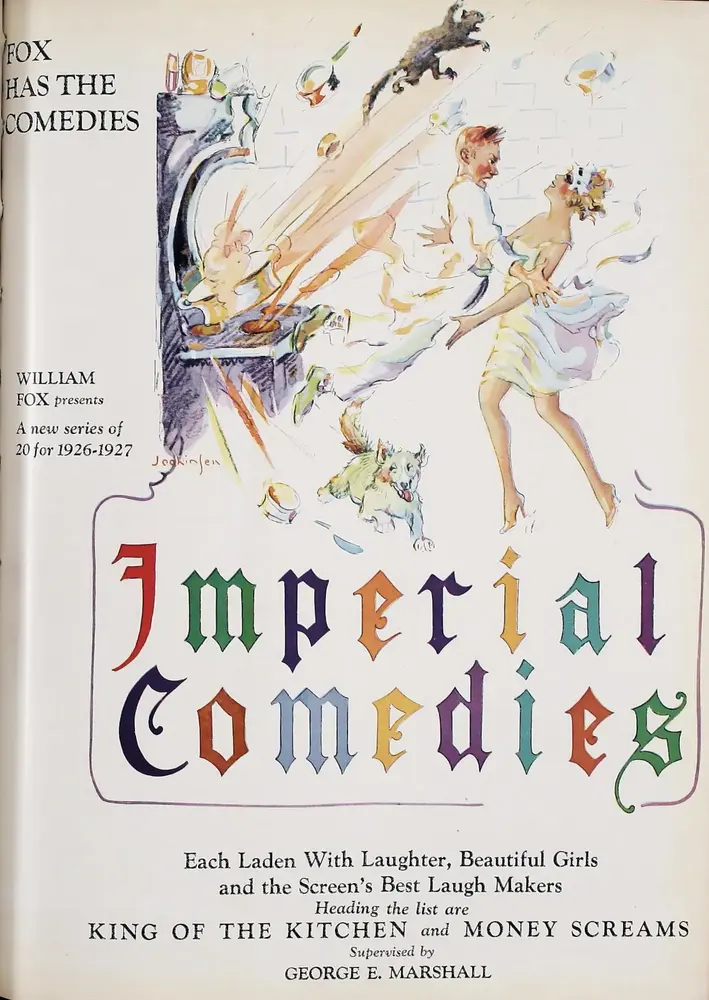
Is "King of the Kitchen" a forgotten silent film worth unearthing in the modern age? Short answer: yes, but with significant caveats. This film is a compelling watch for dedicated silent era enthusiasts and film historians eager to explore the foundational comedic styles of the 1920s, but it will likely test the patience of casual viewers accustomed to contemporary narrative pacing and sound.
For those willing to engage with its particular rhythms, however, "King of the Kitchen" offers a delightful, if somewhat rough-hewn, glimpse into early cinematic comedy and the often-overlooked talents of its lead, Lige Conley. It’s an artifact, yes, but one that still possesses a surprising amount of life.
This film works because: Its central performance by Lige Conley is genuinely charismatic, embodying the everyman thrown into extraordinary circumstances with a natural comedic timing that transcends the decades. The film captures a palpable sense of the era's working-class struggle and the allure of escapism, even if forced.
This film fails because: Its narrative simplicity, while charming, often borders on the simplistic, lacking the intricate plotting or deep character development found in more celebrated silent features. The pacing can feel sluggish in parts, a common issue with films of its vintage when viewed through a modern lens.
You should watch it if: You appreciate the raw, unpolished energy of early cinema, enjoy physical comedy, or are specifically interested in the careers of its overlooked cast and crew, particularly Lige Conley’s early work.
The premise of "King of the Kitchen" is disarmingly straightforward: Lige, a waiter tethered to the monotonous rhythm of a dockside lunchroom, finds his humble existence violently upended. The film quickly establishes Lige’s world as one of constant motion – clanking dishes, gruff customers, and the ceaseless ebb and flow of dock workers. It’s a setting ripe for both mundane comedy and sudden drama, and the film leans into this dichotomy effectively.
The pivotal moment arrives with the shanghaiing, a sudden, brutal act that catapults Lige from the familiar grime of his kitchen apron into the bewildering reality of a freighter’s deck. This isn't a subtle transition; it's a jarring, almost slapstick abduction that sets the tone for much of the subsequent action. The immediate visual contrast between Lige’s wide-eyed panic and the callous efficiency of his captors is particularly effective, an early example of the film’s ability to find humor in distress.
Writers Sidney Lanfield and J. Walter Ruben craft a narrative that, while lean, feels purposeful. They understand that the power of the story isn't in its intricate twists but in the sheer absurdity of Lige’s predicament. There’s a beautiful, almost naive honesty to how the plot unfolds, allowing the audience to fully invest in the protagonist’s fish-out-of-water struggle without the distraction of overly complex subplots.
The simplicity, however, is a double-edged sword. While it allows for clear character focus, it occasionally leaves the viewer yearning for more narrative meat. The motivations of the shanghaiing crew, for instance, are barely sketched, serving primarily as a catalyst rather than fully fleshed antagonists. This isn't necessarily a flaw for a short silent comedy, but it prevents the film from achieving deeper thematic resonance.
The undeniable heart of "King of the Kitchen" is Lige Conley. His performance as the hapless waiter turned unwilling sailor is a masterclass in silent comedy, relying heavily on expressive physicality and a remarkably elastic face. Conley’s ability to convey terror, confusion, and fleeting moments of triumph with just a tilt of his head or a frantic gesture is genuinely impressive, recalling the early work of Keaton or Chaplin without ever feeling like a mere imitation.
Consider the scene where Lige, utterly out of his element, attempts to navigate the rocking deck of the freighter. His exaggerated swaying, his desperate attempts to maintain balance, and the genuine fear in his eyes as he nearly tumbles overboard are not just funny; they’re a testament to his incredible physical control and comedic timing. He makes the danger feel real, which only heightens the humor of his awkwardness.
Della Peterson, Florence Gilbert, Dick Dickinson, and Larry Fisher provide solid, if less spectacular, support. Peterson, likely playing a love interest or a sympathetic figure, brings a touch of warmth to the otherwise chaotic proceedings. Gilbert and Dickinson, perhaps as the gruff captain or crew members, embody the harsh reality of Lige’s new environment. Their performances are functional, providing the necessary foils for Conley’s central act, but they rarely rise above the archetypal.
It’s a shame that Conley isn't as widely remembered as some of his contemporaries. "King of the Kitchen" showcases a performer with immense potential, capable of anchoring a film with sheer force of personality and a finely tuned understanding of comedic beats. His work here suggests a career that deserved more mainstream recognition, proving that not all silent film stars found their way into the annals of popular history.
While the director of "King of the Kitchen" isn't explicitly credited in many records, the film's visual language speaks volumes about the craftsmanship of its era. The direction, likely a collaborative effort in many early productions, demonstrates a clear understanding of how to tell a story visually without dialogue. There's a particular emphasis on wide shots during the dock scenes, effectively conveying the bustling, almost overwhelming environment from which Lige is snatched.
The cinematography, though perhaps not groundbreaking, is functional and often quite effective. The contrast between the confined, dimly lit interiors of the freighter and the vast, often ominous expanse of the open sea is well-captured. There are moments, particularly when the ship is at sea, where the camera cleverly emphasizes Lige's isolation and vulnerability, using the rolling waves as a backdrop to his personal turmoil.
One striking example is the sequence immediately following Lige’s arrival on the ship. The camera often frames him alone amidst a sea of ropes, crates, and indifferent sailors. This visual strategy underscores his status as an outsider, a lost lamb in a den of wolves. The use of intertitles is sparse but impactful, providing just enough context without bogging down the visual narrative, a hallmark of well-executed silent storytelling.
The film’s visual style is unpretentious, prioritizing clarity and comedic impact over artistic flourish. This pragmatic approach serves the story well, ensuring that the audience remains focused on Lige’s plight and his increasingly desperate, and often hilarious, attempts to adapt or escape. It's not the grand, sweeping epic of The Last Frontier, but rather a more intimate, character-driven piece.
The pacing of "King of the Kitchen" is characteristic of many silent comedies of its time: it starts briskly, establishes the premise with urgency, and then settles into a series of episodic gags once Lige is aboard the freighter. The initial shanghaiing sequence is a whirlwind of chaotic action, perfectly setting up the abrupt shift in Lige's life. However, once on the ship, the rhythm becomes more deliberate, allowing Conley’s physical comedy to take center stage in various scenarios, from scrubbing decks to attempting to cook.
The tone is predominantly lighthearted, despite the underlying seriousness of forced labor. The film consistently finds humor in Lige’s predicament, portraying his struggles with a comedic lens rather than a tragic one. There's an inherent resilience to Lige that the film celebrates, even as it pokes fun at his ineptitude. This balance between sympathetic portrayal and comedic exaggeration is crucial to its charm.
Thematic undercurrents, while not deeply explored, are certainly present. The most prominent is the classic 'fish out of water' narrative, exploring how an ordinary man copes when thrust into an extraordinary, hostile environment. There’s also a subtle commentary on freedom versus captivity, and the unexpected ways individuals adapt when their agency is stripped away. Lige’s journey, however involuntary, becomes a testament to the human spirit’s capacity for endurance, albeit with plenty of pratfalls along the way.
One particularly interesting observation is how the film subtly critiques the rough justice of the docks. The act of shanghaiing is presented not as an anomaly, but as an accepted, if brutal, part of that world. This provides a fascinating, if grim, backdrop to Lige’s comedic exploits, adding a layer of social realism beneath the slapstick. It’s a bold choice for a comedy to acknowledge such harsh realities without dwelling on them. This gives the film a surprising edge, making it more than just a series of gags.
Absolutely, for the right audience. If you are a devotee of silent cinema, particularly early comedies, "King of the Kitchen" offers a rewarding experience. It provides valuable insight into the comedic sensibilities and filmmaking techniques of the 1920s.
The film's runtime is manageable, making it an accessible entry point for those curious about the era. Lige Conley's performance alone justifies the watch, showcasing a talent that deserves more recognition.
However, if your exposure to silent film is limited to the most iconic works or if you struggle with the lack of dialogue and the often-slower pacing, this might not be your ideal starting point. It requires a certain patience and an appreciation for historical context.
"King of the Kitchen" is far from a lost masterpiece, but it is unequivocally a charming, historically significant piece of silent cinema. Its true value lies in Lige Conley’s magnetic performance, which serves as a potent reminder of the depth of talent that graced the screen in the early days of film. It works. But it’s flawed. This film is a delightful diversion for the discerning cinephile, offering a window into a bygone era of comedic storytelling. While it won’t convert every skeptic to the silent film cause, it certainly solidifies Lige Conley’s place as an unsung hero of the genre. Seek it out if you appreciate the raw, unpolished energy of early film; you might just discover a new favorite old comedian.
IMDb 1.2
1928
Community
Log in to comment.