DbcultAccessing Vault...
Cult Review
Senior Film Conservator
Fortune's Wheel, a delightful curio from the silent era, spins a yarn of whimsical chaos that, despite its apparent simplicity, offers a fascinating glimpse into the comedic sensibilities of its time. It's a film that encapsulates the nascent thrill of mechanical innovation mixed with the timeless appeal of slapstick, all filtered through the wide-eyed innocence of its young protagonist, Jimmy. Directed with an energetic, though uncredited, hand and penned by the prolific Scott Darling, this picture solidifies its place as a charming, if often overlooked, piece of cinematic history.
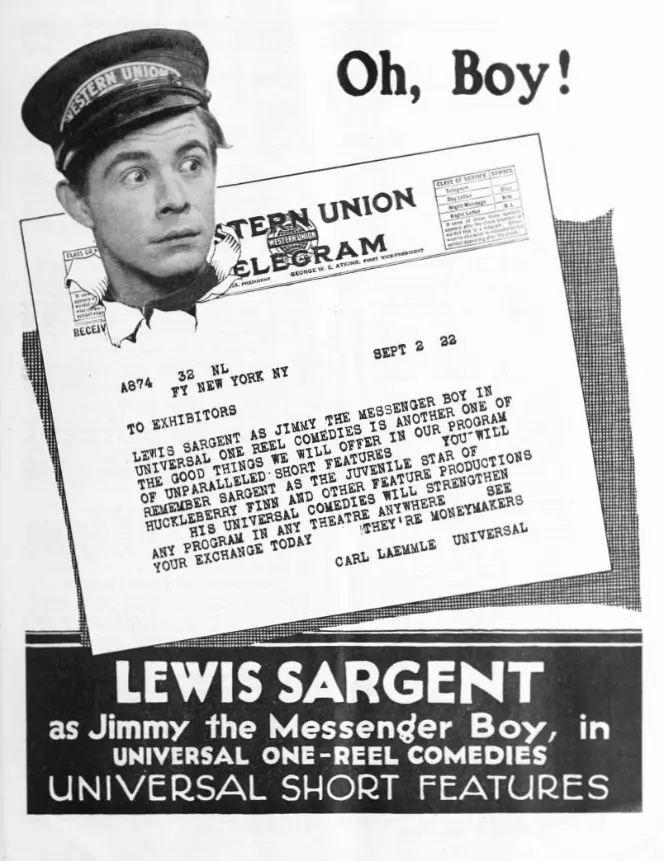
At its core, the narrative is elegantly straightforward: a boy, a bicycle, and a motor wheel. Yet, from this elemental setup, Darling’s script extracts an astonishing array of comedic scenarios. Lewis Sargent, in the role of Jimmy, delivers a performance that is both earnest and physically agile, embodying the spirit of youthful curiosity and the unwitting instigator of pandemonium. His expressive face and limber movements are perfectly suited to the demands of silent comedy, where much of the storytelling hinges on visual cues and exaggerated reactions. Sargent doesn't just ride the bicycle; he becomes an extension of its erratic, motor-driven will, a puppet pulled by the strings of its unpredictable propulsion.
The motor wheel itself is not merely a prop; it functions almost as a character in its own right—a mischievous, untamed entity that imbues Jimmy's ordinary bicycle with an anarchic spirit. This mechanical contraption, a symbol of the era's fascination with speed and power, becomes a catalyst for a series of escalating mishaps. We witness Jimmy, initially thrilled by the newfound velocity, quickly grappling with the wheel's recalcitrant nature. It's a classic comedic premise: man versus machine, but here, it’s boy versus a particularly spirited, almost sentient, piece of engineering. The humor derives not just from the stunts themselves, but from Jimmy’s increasingly desperate attempts to assert control over a device that seems to have a mind of its own.
One cannot help but draw parallels between the kinetic energy of Fortune's Wheel and other comedic offerings of the silent era. Much like the animated antics seen in Felix Strikes It Rich, which often hinged on the protagonist's ingenuity and the chaotic consequences of their actions, this film revels in a similar brand of innocent, yet destructive, fun. While Felix the Cat navigated a world of fantastical challenges, Jimmy navigates the more mundane, yet equally perilous, landscape of an ordinary town, his motor-powered bike transforming everyday obstacles into grand comedic set pieces. The physical comedy here is paramount, a testament to the fact that laughter transcends language barriers, relying instead on universal expressions of surprise, frustration, and triumph.
The scrapes Jimmy finds himself in are a masterclass in silent film gag construction. Imagine the scene: Jimmy, propelled by the erratic motor, careening through a bustling marketplace, narrowly avoiding vendors' stalls, scattering pedestrians, and leaving a trail of bewildered expressions in his wake. The visual rhythm of these sequences is crucial, a rapid-fire succession of near-misses and improbable escapes that build to a satisfying crescendo of comedic chaos. It's a style of filmmaking that demands precise timing and a deep understanding of physical humor, elements that are clearly present in the execution of Fortune's Wheel.
Scott Darling’s screenplay, while not heavy on dialogue (for obvious reasons), is rich in situational comedy. He understands the mechanics of a good gag, building anticipation and delivering payoffs with a deft touch. The situations Jimmy finds himself in are not random; they escalate logically (within the bounds of comedic logic, of course), each scrape leading to a more elaborate predicament. This narrative progression is vital, ensuring that the audience remains invested in Jimmy's fate, even as they delight in his misfortunes. The film doesn't just present a series of disconnected stunts; it weaves them into a coherent, albeit lighthearted, journey.
The visual language of Fortune's Wheel speaks volumes. Without the crutch of spoken words, the filmmakers relied on exaggerated facial expressions, broad gestures, and dynamic cinematography to convey emotion and plot. Lewis Sargent's performance is a prime example of this artistry; his wide-eyed astonishment, his frantic efforts to control the bike, and his sheepish grins after yet another close call are all communicated with crystalline clarity. It reminds one of the pure visual storytelling prowess that was the hallmark of the era, a skill often lost in the transition to talkies.
Comparing this film to others of its time reveals interesting facets. While a film like The Little Church Around the Corner might delve into poignant drama and social commentary, Fortune's Wheel embraces pure, unadulterated entertainment. It doesn't aim for profundity but rather for immediate, visceral laughter. This contrast highlights the diverse landscape of silent cinema, which catered to a wide range of tastes, from the deeply dramatic to the lightheartedly absurd. Similarly, while The Mystery of Edwin Drood offered intricate plotlines and suspense, Fortune's Wheel provides a refreshing simplicity, a direct route to comedic gratification that requires no complex decoding.
The film's exploration of technology, nascent as it was, also merits consideration. The motor wheel represents a burgeoning era of mechanical marvels, a time when new inventions were simultaneously exciting and slightly terrifying in their unpredictability. Jimmy’s struggle is, in a way, a microcosm of society’s own grappling with rapid technological advancement. The laughter isn’t just at Jimmy’s expense; it’s also a communal release of anxiety about things moving too fast, about machines gaining an unwelcome autonomy. This subtext, though subtle, adds a layer of unexpected depth to what might otherwise be dismissed as mere slapstick.
The production values, typical for a film of its modest scope, are perfectly adequate for conveying the narrative. The sets, likely simple street scenes and interiors, serve as effective backdrops for the physical comedy. What truly shines through is the energy of the performances and the inventiveness of the gags. It’s a testament to the silent film era’s ability to conjure compelling entertainment with limited resources, relying heavily on the creativity of its writers and the prowess of its actors. Lewis Sargent's contribution is particularly noteworthy; his ability to convey character and emotion without dialogue is what truly brings Jimmy to life, making him a relatable figure even in his most absurd moments.
When considering other films that feature protagonists getting into scrapes, one might think of the more overtly mischievous character in The Sneik, if it shares a similar comedic vein, or perhaps the more deliberate escapades found in something like Easy to Cop. However, Jimmy’s predicament in Fortune's Wheel feels less driven by malice or cunning and more by an accidental, almost innocent, entanglement with a device that simply refuses to behave. This distinction gives the film a unique, charming quality, positioning Jimmy not as a trickster, but as a boy caught in the whirlwind of his own creation.
The longevity of silent comedies like Fortune's Wheel lies in their universal appeal. The humor is visual, physical, and transcends cultural nuances that might date more dialogue-heavy films. It speaks to a fundamental human appreciation for slapstick, for the unexpected, and for the sheer joy of watching someone navigate a series of increasingly absurd predicaments. It's a reminder of a bygone era of filmmaking, an era where storytelling was distilled to its purest visual form, and where the ingenuity of filmmakers and performers shone brightly without the aid of sound.
In conclusion, Fortune's Wheel is far more than just a historical artifact; it's a vibrant, laugh-out-loud experience that holds up remarkably well. It’s a testament to the enduring power of simple, well-executed comedy, brought to life by the spirited performance of Lewis Sargent and the clever writing of Scott Darling. For anyone with an appreciation for the foundational elements of cinematic humor, or simply a desire to witness a boy and his bicycle wreak wonderfully innocent havoc, this film offers a delightful journey back to the golden age of silent film. It’s a charming, energetic piece that continues to spin its comedic magic, proving that some forms of entertainment are truly timeless.
IMDb 6.5
1919
Community
Log in to comment.