DbcultAccessing Vault...
Cult Review
Senior Film Conservator
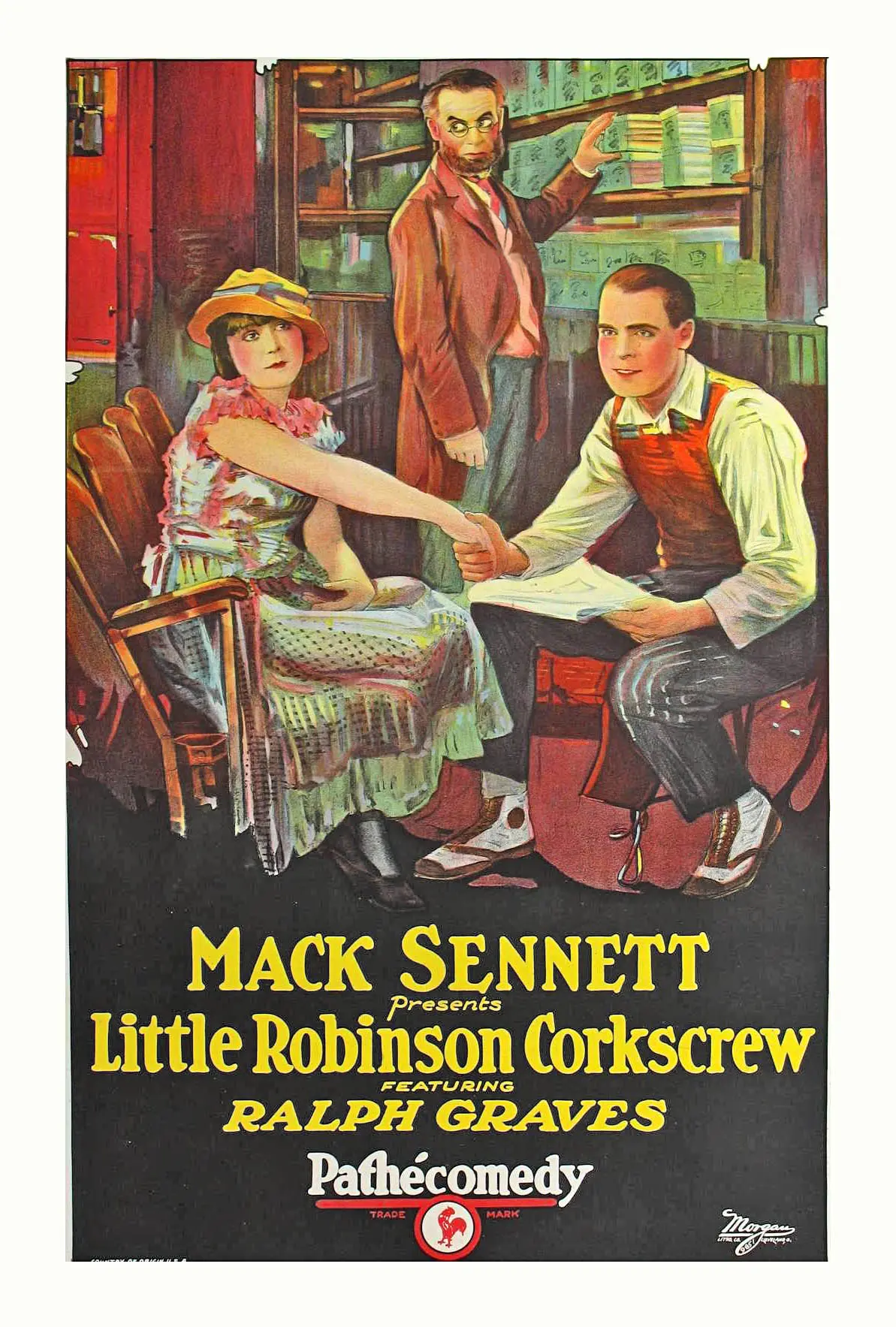
To watch Little Robinson Corkscrew in the modern era is to participate in a form of cinematic archaeology, unearthing the foundations of what would eventually become the 'Capra-esque' ideal. Long before Frank Capra was the architect of American populism, he was a writer honing his craft in the frantic trenches of the Mack Sennett studio. This 1924 gem, featuring the athletic and charismatic Ralph Graves, serves as a fascinating specimen of the transition from pure slapstick to narrative-driven character comedy. Graves plays a fitness equipment salesman—a role that perfectly encapsulates the 1920s obsession with self-improvement and the 'New Man.' Unlike the gritty realism found in The Clean-Up, this film leans into the whimsical, treating the protagonist's profession as a springboard for physical comedy that feels both spontaneous and meticulously choreographed.
The narrative structure avoids the episodic pitfalls common in early silent shorts. Instead, it weaves a cohesive tapestry of a man returning to his roots, only to find that his new, polished exterior clashes with the rugged simplicity of his origins. The 'corkscrew' of the title isn't merely a name; it’s a physical manifestation of Graves’ character—winding, turning, and perhaps a bit too sharp for the delicate sensibilities of his hometown. This thematic depth distinguishes the work from contemporaries like The Fotygraft Gallery, which relied more heavily on static situational irony. Here, the movement is constant, a testament to the directorial pacing and Capra’s burgeoning understanding of the 'little man' archetype.
Alice Day, playing the storekeeper’s daughter, provides a performance of remarkable subtlety for the era. In an age where pantomime often veered into the hyperbolic, Day anchors the film with a grounded, luminously expressive presence. Her chemistry with Graves is palpable, transforming what could have been a rote romantic subplot into the emotional core of the film. While films like The Girl I Loved explored the pangs of rural romance with a more melancholic brush, Little Robinson Corkscrew opts for a sunnier, albeit no less intricate, portrayal of attraction. Day’s character isn't just a prize to be won; she is the moral compass that forces the protagonist to reevaluate his frantic pursuit of 'progress.'
The supporting cast is a veritable 'who’s who' of silent comedy royalty. From the mustachioed antics of Billy Bevan to the versatile character work of Andy Clyde and Vernon Dent, the ensemble creates a living, breathing community. These aren't just background extras; they are the texture of the town. Their interactions with Graves’ fitness gadgets—clunky, absurd contraptions that look more like torture devices than health aids—provide some of the film's most enduring visual gags. It’s a satirical poke at the burgeoning industrialization of health, a theme that remains surprisingly relevant in our current era of biohacking and fitness influencers.
The writing by Frank Capra and John A. Waldron is where the film truly elevates itself. There is a linguistic wit present in the intertitles that mirrors the physical dexterity on screen. The dialogue—or the silent representation of it—is peppered with a vernacular that feels authentically 'small-town America,' yet possesses a sharp, satirical edge. They manage to avoid the heavy-handed moralizing found in Idolators, choosing instead to let the comedy reveal the character's flaws. The screenplay understands that for a salesman, the pitch is everything, and when Graves fails to 'sell' himself to the woman he loves, the resulting vulnerability is where the film finds its heart.
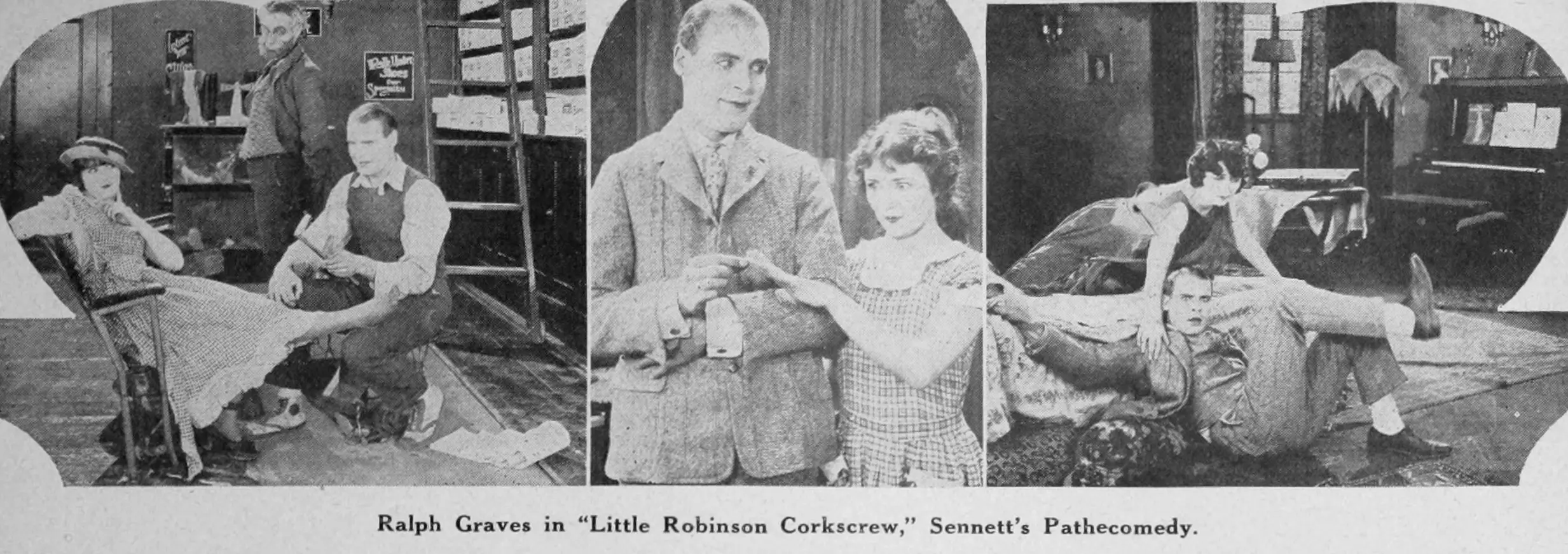
Technically, the film utilizes the naturalistic lighting of its outdoor locations to great effect. The contrast between the dusty roads and the cluttered, shadow-filled interior of the general store creates a visual dichotomy between the protagonist's internal restlessness and the external stability he secretly craves. This is far removed from the stylized shadows of Oliver Twist, opting instead for a bright, high-key aesthetic that complements the comedic tone. The camera work is steady but fluid, capturing the frantic 'corkscrew' movements of Graves as he navigates the physical obstacles of his environment.
It is impossible to discuss Little Robinson Corkscrew without acknowledging the Mack Sennett influence. Sennett’s 'Fun Factory' was known for its relentless pace, but by 1924, there was a clear move toward sophisticated narrative. This film sits at that crossroads. We see vestiges of the 'Keystone Cops' energy in the physical altercations, yet there is a burgeoning maturity in how these sequences serve the plot. For instance, a sequence involving a malfunctioning exercise machine isn't just a gag; it’s a manifestation of the protagonist’s hubris. This integration of character and comedy is what Capra would eventually master in his later features.
Comparing this to Brigadier Gerard or the heavier dramatics of Tess of the D'Urbervilles from the same year highlights the unique space comedy occupied in the mid-20s. It was the experimental laboratory for film grammar. In Little Robinson Corkscrew, the editing is particularly sharp, using jump cuts and rhythmic pacing to simulate the high-strung energy of a salesman on the verge of a breakdown. The film doesn't just tell a story; it vibrates with the anxiety of the modern age, even as it seeks refuge in a nostalgic past.
One might wonder why the film remains obscure compared to other silent classics. Perhaps it is because its charms are more subtle, requiring an appreciation for the 'middle-brow' comedy that defined the era's daily cinematic diet. It lacks the surrealist heights of a Buster Keaton feature, but it possesses a warmth and a human-scale relatable quality that is often missing from more 'important' works. It shares a certain DNA with The Good Provider, focusing on the domestic struggles of the working class, but filters it through a lens of optimistic absurdity.
The 'fitness equipment' angle is particularly inspired. In 1924, the world was still reeling from the aftermath of the Great War and the flu pandemic; the cult of health was a way to reclaim agency over the body. Graves’ character is selling more than just springs and pulleys; he’s selling the American Dream of self-reinvention. When he returns home, he realizes that the people he left behind don't need reinvention; they need connection. This realization is handled with a light touch, avoiding the saccharine sentimentality that would occasionally plague later Capra films. It’s a lean, efficient piece of storytelling that respects the audience’s intelligence.
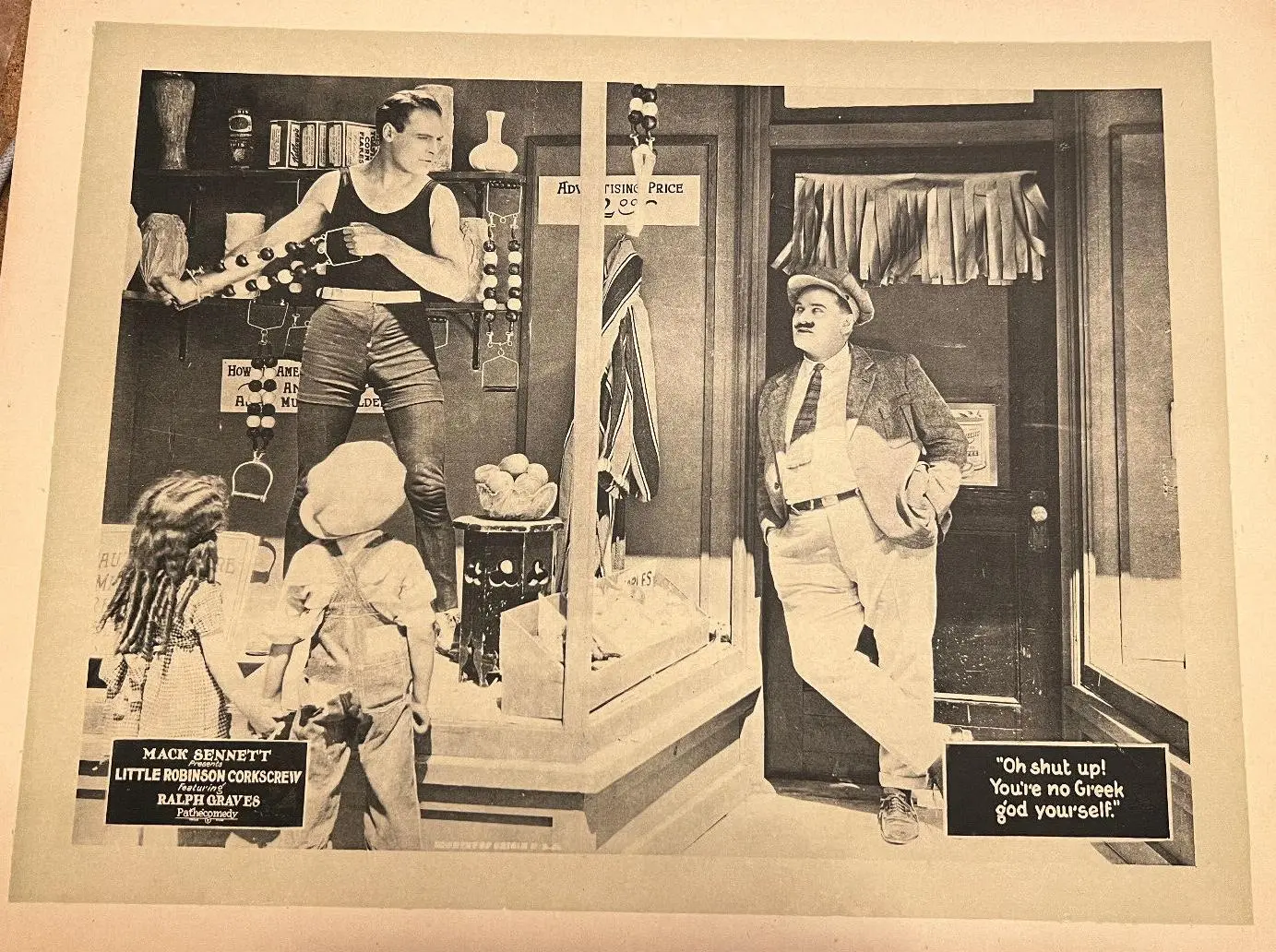
The set design of the general store is a masterpiece of silent era clutter. Every shelf is packed with the detritus of rural life, creating a visual contrast to the sleek, metallic 'modernity' of Graves’ sales samples. This environmental storytelling tells us everything we need to know about the conflict before a single word is read. The store is a place of history and slow accumulation; the salesman is a creature of the ephemeral 'now.' This clash of temporalities is a recurring theme in 1920s cinema, also seen in works like Passing Night or the social critiques of Chains of the Past.
Furthermore, the use of the ensemble—including the likes of Thelma Hill and Bud Ross—creates a sense of a Greek chorus. They react to the protagonist’s failures and successes with a collective skepticism that mirrors the audience’s own. It’s a brilliant way to ground the more outlandish slapstick elements. When Graves tries to demonstrate a chest expander and nearly destroys a display of canned goods, the reaction of the townspeople is what makes the scene work. It’s not just about the destruction; it’s about the social embarrassment of the 'city slicker' returning home and making a fool of himself.
As the film reaches its crescendo, the stakes shift from the commercial to the existential. The protagonist must decide if his identity is tied to his success as a salesman or his value as a member of the community. This is a profound question for a silent comedy to ask, and it does so with a wink and a smile. The resolution is satisfying not because he makes a big sale, but because he finds a way to integrate his 'corkscrew' energy into the life of the town. It’s a happy ending that feels earned, avoiding the forced resolutions of films like Kærlighedsspekulanten.
In the broader context of 1924, a year that gave us the opulence of Silk Stockings and the pastoral beauty of Rose o' Paradise, Little Robinson Corkscrew stands out for its sheer vitality. It doesn't try to be a grand epic or a tragic masterpiece; it simply tries to be a damn good story, told with wit and physical grace. For fans of Frank Capra, it is an essential piece of the puzzle, showing the early sparks of the humanism that would define the American cinema of the 1930s and 40s. For fans of silent comedy, it is a reminder that beyond the big three (Chaplin, Keaton, Lloyd), there was a vast ocean of talent producing work of incredible craft and heart.
Ultimately, the film is a celebration of the idiosyncratic. It suggests that even the most 'corkscrew' of individuals can find a place to fit, provided they are willing to stop selling and start living. It’s a message that resonates as clearly today as it did a century ago, delivered through the timeless medium of a well-timed pratfall and a sincere glance between two people in a crowded general store. If you have the chance to see a restored print or even a grainy archival copy, do not hesitate. It is a brisk, refreshing tonic of a film that reminds us why we fell in love with the movies in the first place.
IMDb —
1935
Community
Log in to comment.