DbcultAccessing Vault...
Cult Review
Senior Film Conservator
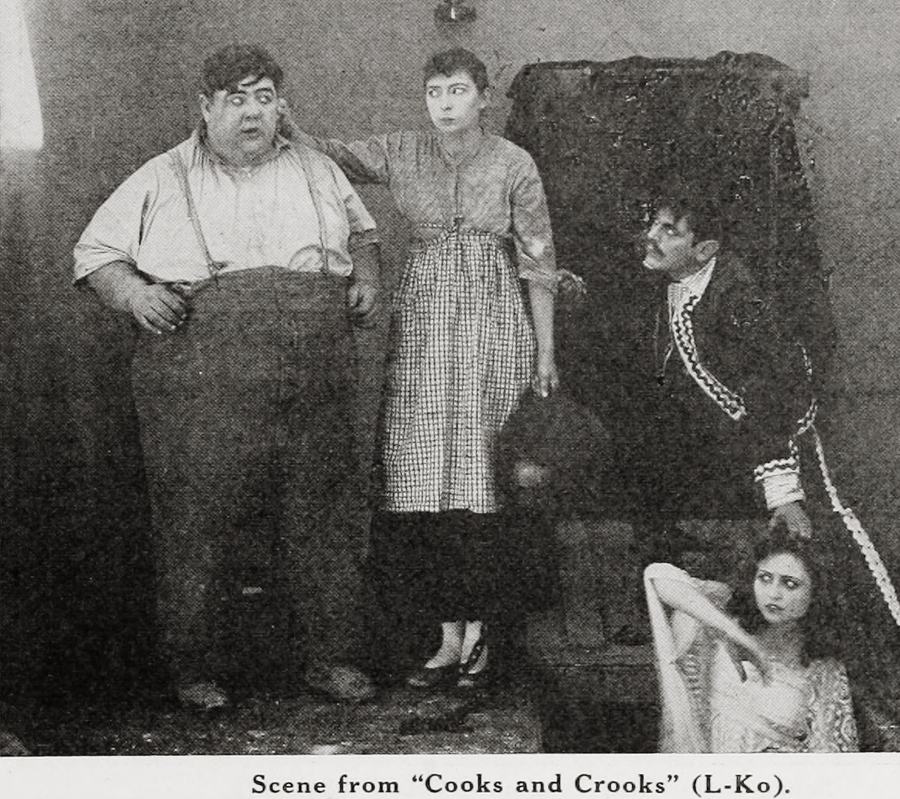
In the burgeoning landscape of 1919 cinema, where the language of the moving image was still shedding its theatrical chrysalis, Cooks and Crooks emerges as a fascinating artifact of physical comedy and social satire. The film, featuring the idiosyncratic pairing of Gale Henry and Hughie Mack, serves as a masterclass in the 'mismatched duo' archetype that would later define much of the golden age of Hollywood comedy. Henry, with her angular, elongated physique and elastic facial expressions, provides a stark visual contrast to the rotund, jovial presence of Mack. This juxtaposition is not merely for visual amusement; it creates a dynamic tension that fuels the film's frenetic energy.
The premise—a traveling lunch wagon besieged by brigands—is a stroke of comedic genius. It takes the comfort of the domestic sphere (the kitchen) and places it on wheels, thrusting it into the perilous unknown. Unlike the structured environments found in A Pair of Sixes, where the humor is derived from social mores and corporate rivalry, Cooks and Crooks leans into the primal, almost surrealist nature of early slapstick. The lunch wagon is a microcosm of civilization, a beacon of hot coffee and sandwiches in a world that seems perpetually on the verge of collapsing into banditry.
Dave Morris, as the delightfully named Melachrino Mike, embodies the 'brigand' not as a figure of genuine terror, but as a catalyst for narrative chaos. The name itself, likely a nod to the popular cigarette brand of the era, suggests a character who is more of a caricature of a villain than a true threat. His band of brigands operates with a theatricality that mirrors the stage traditions of the nineteenth century, yet their interaction with the cinematic space is purely modern. They represent the 'Crooks' of the title, but their villainy is secondary to the slapstick opportunities their presence provides. In many ways, their role is similar to the antagonistic forces in Tillie's Tomato Surprise, where the plot serves as a mere scaffolding for the lead's physical prowess.
The capture of Gale and Hughie by these brigands shifts the film from a situational comedy into a rescue-and-escape narrative. This transition is handled with a deftness that belies the film's short runtime. The choreography of the capture, the subsequent confinement, and the inevitable escape attempts are punctuated by Gale Henry's uniquely histrionic style. Henry was often called the 'female Charlie Chaplin,' but such a comparison does a disservice to her specific brand of awkward, high-velocity humor. While Chaplin was fluid and balletic, Henry was jagged and unpredictable, her movements often defying the expectations of the viewer.
One cannot overlook the importance of the setting. The 'traveling lunch wagon' is more than just a prop; it is a character in its own right. In an era where travelogues like The English Lake District were popularizing the beauty of the natural world, Cooks and Crooks uses the outdoors as a site of comedic conflict. The wagon, with its narrow confines and precarious stability, provides an excellent stage for the 'cooks' to navigate. The clatter of pots and pans, though silent to the audience of 1919, is viscerally felt through the rhythmic editing and the actors' exaggerated reactions to the bumpy terrain.
Compared to the heavy emotional weight of contemporary dramas like Bristede Strenge or the psychological depth of Az éjszaka rabja, Cooks and Crooks offers a refreshing levity. It doesn't ask the audience to contemplate the human condition; it asks them to marvel at the sheer resilience of the human body when faced with a rolling pin or a band of inept outlaws. The film's pacing is relentless, reflecting a time when cinema was obsessed with movement—the 'motion' in motion pictures was the primary attraction.
While Henry and Mack dominate the screen, the presence of Eva Novak adds a layer of traditional cinematic charm. Novak, who would go on to have a prolific career in Westerns and dramas, provides a grounding influence. In the midst of the chaos, her character often acts as the 'straight man' (or woman), allowing the absurdity of the leads to shine even brighter. This ensemble approach to comedy is what makes the film endure. It isn't just a vehicle for one star; it is a collaborative effort to maintain a pitch-perfect tone of ridiculousness.
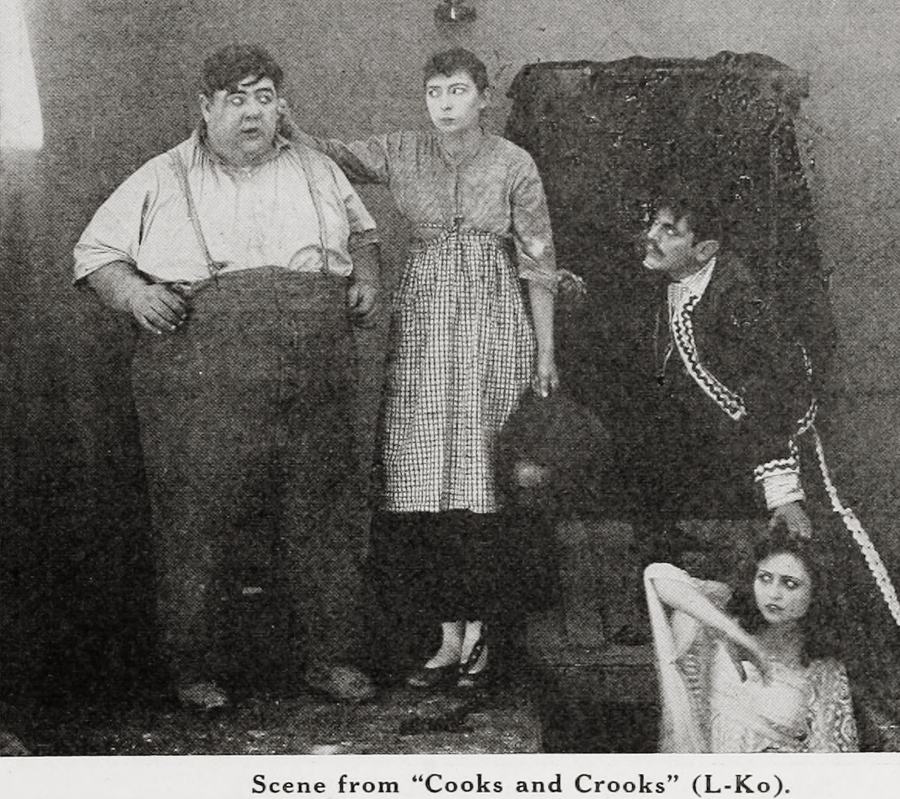
When we examine the film alongside works like The Mainspring or The Price of Happiness, we see a divergence in the purpose of storytelling. While those films sought to provide moral lessons or social commentary, Cooks and Crooks is unapologetically dedicated to the 'gag.' The gag is the fundamental unit of the film, and the plot is merely the thread that connects them. Whether it’s Gale Henry trying to serve soup during a kidnapping or Hughie Mack’s physical struggle with the brigands, the focus is always on the immediate, visceral laugh.
Technically, the film utilizes the limitations of its time to its advantage. The use of deep focus in the outdoor scenes allows for simultaneous action—the brigands approaching in the background while the oblivious cooks work in the foreground. This layering of action is a hallmark of sophisticated silent direction. It creates a sense of dread that is instantly undercut by the comedic payoff. The editing, likely overseen by the prolific Jack White, is sharp and purposeful, ensuring that no gag overstays its welcome.
Furthermore, the film’s treatment of the 'brigand' trope is worth noting. In 1919, the concept of the outlaw was transitioning from the romanticized figures of the Old West to the more urbanized 'crooks' of the prohibition era. Melachrino Mike is a bridge between these two worlds—a bandit who feels like he belongs in a desert hideout but is raiding a lunch wagon that feels like it belongs on a city street. This clash of settings adds to the film's surreal quality, making it feel more like a fever dream of Americana than a straightforward comedy.
To watch Cooks and Crooks today is to witness the birth of a comedic language that we now take for granted. It is a reminder that humor does not require dialogue to be nuanced, and that character can be established through a single gesture or a well-timed fall. While it may lack the epic scale of Bar Kochba, the Hero of a Nation or the intricate mystery of The Opened Shutters, it possesses a vitality that is infectious. It is a celebration of the resilient spirit of the common worker—the 'cook'—who, when faced with the 'crook,' doesn't just survive; they do so with a flair for the dramatic and a frying pan in hand.
In the broader context of the cast's filmographies, this short stands as a testament to Gale Henry’s brilliance as a comedienne who was unafraid to be 'ugly' for a laugh—a rarity in an era that often demanded female stars be perpetually decorative. Her partnership with Hughie Mack in this film is a highlight of her career, showcasing a synergy that is as effective as it is bizarre. For any student of silent cinema or any lover of pure, unadulterated slapstick, Cooks and Crooks is an essential viewing experience, a relic of a time when the world was changing rapidly, but the simple joy of a well-executed pratfall remained universal.
Recommended for fans of:
IMDb 6.8
1926
Community
Log in to comment.