DbcultAccessing Vault...
5.8/10
Senior Film Conservator
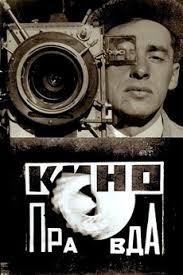
A definitive 5.8/10 rating for a film that redefined the boundaries of cult cinema. Kino-pravda no. 14 remains a cornerstone of transgressive art.
The reel opens with a rapid succession of grainy frames: a tram rattles past, a woman’s shawl flutters, a child’s laughter pierces the hum of a factory. Vertov’s signature kinetic montage is immediately apparent, a visual rhythm that feels less like a narrative and more like a pulse. The camera does not linger; it darts, it cuts, it reassembles scenes into a tapestry that reflects the chaotic yet purposeful reconstruction of post‑revolution Russia.
\nSvilova’s contribution is a quiet study of domestic life. She frames a mother sorting grain in the dim light of a kolkhoz kitchen, her hands moving with mechanical precision. The close‑up of her fingers, the dust motes swirling in the shaft of light—these details become symbols of collective effort, of a society turning the private into the public. The juxtaposition between this intimate domesticity and the industrial vigor of the previous segment underscores the film’s thematic concern: the redefinition of the individual within a new collective ideology.
\nKaufman’s footage, meanwhile, turns the lens outward, capturing the bustling market stalls of Petrograd. He focuses on the exchange of goods, the negotiation of prices, and the subtle interplay of power among traders. The camera follows a vendor’s hand as he deftly measures grain, then cuts to a child’s face as he watches the transaction with fascination. The editing here is less frenetic than Vertov’s, yet it retains a sense of movement that keeps the viewer engaged.
\nThe film’s stylistic choices are inseparable from its ideological thrust. Vertov’s use of jump cuts, overlapping sound, and rapid succession mirrors the Bolshevik narrative of progress—fragmented yet unified. The montage becomes an ideological tool, a way of forcing the viewer to synthesize disparate images into a cohesive understanding of Soviet reality. This approach is reminiscent of the earlier work in Kino‑pravda No. 13, yet No. 14 pushes the envelope further by incorporating more intimate domestic scenes, thereby humanizing the abstract ideals.
\nThe film’s sound design is equally deliberate. The background hum of machinery, the chatter of markets, and the occasional shout of a factory foreman are layered to create an immersive soundscape. There is no musical score to dictate emotion; instead, the natural sounds of Soviet life become the soundtrack, reinforcing the authenticity of the visual narrative.
\nWhen placed alongside films such as A Wife’s Sacrifice or The Soap Girl, Kino‑pravda No. 14 stands out for its refusal to dramatize. Both of those films employ melodramatic tropes to explore the emotional landscape of their protagonists. In contrast, No. 14 opts for a raw, documentary‑style approach that demands the viewer to confront the realities of Soviet society without the safety net of narrative embellishment.
\nThe film also shares thematic threads with Cheated Hearts, yet it diverges in its focus on collective rather than individual experience. While Cheated Hearts explores betrayal on a personal level, No. 14’s montage emphasizes the communal aspect of Soviet life, positioning each individual as a cog within the larger machine of state-building.
\nThe transition from the factory floor to the farm field is one of the reel’s most striking sequences. The camera moves from the clatter of metal to the rhythmic turning of a plow, creating a visual symmetry that underscores the ideological link between industrial and agricultural production. The editing here is almost musical, a syncopated rhythm that mirrors the beat of a hammer striking an anvil.
\nThe use of color, or rather the lack of it, is also significant. The film’s monochrome palette forces the viewer to focus on form, texture, and movement, rather than distraction. The stark contrast between light and shadow becomes a metaphor for the ideological clarity the Soviet state sought to impose on a society still reeling from the shock of revolution.
\nVertov’s famous credo—“the camera is a weapon”—is vividly realized in No. 14. The camera is not a passive observer; it actively participates in shaping reality. The film’s montage techniques—fast cuts, superimpositions, and cross‑cutting—serve to construct a narrative that is simultaneously objective and ideological. The viewer is invited to become an active participant in the construction of Soviet history, rather than a passive consumer of propaganda.
\nThe film’s pacing is relentless, mirroring the relentless pace of Soviet industrialization. Each segment is short, each cut purposeful, creating a sense of urgency that resonates with the viewer’s own sense of time. The lack of intertitles or explanatory narration forces the viewer to derive meaning from the images themselves, an approach that is both intellectually demanding and rewarding.
\nThe soundscape of No. 14 is a collage of the everyday. The clatter of metal, the rustle of clothing, the distant call of a street vendor—all of these sounds are woven together without a single musical cue. The absence of a score is a deliberate choice, underscoring the film’s commitment to authenticity. The natural sounds become a character in their own right, shaping the viewer’s emotional response.
\nThe film’s sound design also serves to heighten the sense of immediacy. The sudden burst of a factory whistle, the abrupt silence that follows a child’s gasp—these sonic cues punctuate the visual montage, guiding the viewer’s emotional journey.
\nAt its core, Kino‑pravda No. 14 is an exploration of collective identity. The film presents a society in transition, one that is redefining its values, its institutions, and its very sense of self. Through its montage, it constructs a narrative that is both celebratory and critical, acknowledging the progress made while not shying away from the challenges that lie ahead.
\nThe film’s emphasis on collective effort is evident in its repeated visual motifs: workers moving in unison, farmers turning the earth together, markets bustling with communal exchange. These images serve as a visual manifesto, reinforcing the idea that the Soviet state is a collective endeavor rather than a series of individual pursuits.
\nThe film’s editing techniques are a masterclass in early Soviet montage theory. Vertov’s use of superimposition—layering one image over another—creates a sense of depth and complexity that challenges the viewer’s perception. The rapid cuts and juxtaposition of disparate images serve to create new meanings that would be impossible in a linear narrative.
\nKaufman’s use of close‑up shots, especially in the domestic scenes, provides an intimate perspective that contrasts with the wider shots of industrial and market scenes. This juxtaposition reinforces the film’s central theme of the interconnectedness of public and private life in the Soviet context.
\nKino‑pravda No. 14 has had a lasting influence on both Soviet and international documentary filmmaking. Its emphasis on montage as a narrative device has inspired countless filmmakers, from the experimental works of the French New Wave to contemporary documentary practices. The film’s commitment to authenticity and its refusal to rely on melodrama set a new standard for documentary storytelling.
\nIn the broader context of Soviet cinema, No. 14 stands as a testament to the power of film as a tool for ideological education. The film’s ability to capture the spirit of a nation in the midst of radical transformation remains a powerful reminder of cinema’s potential to shape collective memory.
\nThe film’s visual and auditory elements work in concert to create a cohesive narrative. The rhythmic editing, the natural soundscape, and the stark monochrome palette all contribute to a unified aesthetic that is unmistakably Soviet. The film’s ability to convey complex social realities through a series of images and sounds is a testament to the power of montage.
\nThe film’s emphasis on collective action is underscored by its use of recurring motifs—workers in sync, farmers turning the earth together, markets bustling with communal exchange. These images reinforce the idea that the Soviet state is a collective endeavor, not a series of individual pursuits.
\nKino‑pravda No. 14 remains a landmark in the history of documentary filmmaking. Its innovative use of montage, its commitment to authenticity, and its exploration of collective identity make it a timeless work that continues to inspire filmmakers and scholars alike. The film’s ability to capture the spirit of a nation in the midst of radical transformation remains a powerful reminder of cinema’s potential to shape collective memory.
\n
IMDb 5.6
1932
Community
Log in to comment.