DbcultAccessing Vault...
5.9/10
Senior Film Conservator
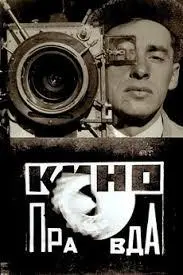
A definitive 5.9/10 rating for a film that redefined the boundaries of cult cinema. Kino Pravda No. 16: Spring Kino-Pravda. A Picturesque, Lyrical Newsreel remains a cornerstone of transgressive art.
Step back in time, not to a meticulously recreated set, but to the very pulse of a nation in the throes of seismic change. Dziga Vertov's Kino Pravda No. 16: Spring Kino-Pravda. A Picturesque, Lyrical Newsreel isn't just a film; it's a vibrant, breathing artifact, a testament to a radical cinematic philosophy that sought to capture life's raw, unvarnished essence. Released in 1922, this installment of the groundbreaking Kino-Pravda (Film-Truth) series offers a mesmerizing glimpse into early Soviet Russia, a period of immense optimism, struggle, and revolutionary zeal. It’s a stark contrast to the narrative-driven features of its era, like the lighthearted antics of The Masquerader or the charming simplicity of Judy Forgot, which sought to entertain through fictional constructs. Vertov, alongside his brilliant editor Elizaveta Svilova and audacious cinematographer Mikhail Kaufman, wasn't interested in escapism; he aimed for enlightenment, for a direct communion with reality.
The very title, "Spring Kino-Pravda. A Picturesque, Lyrical Newsreel," hints at its dual nature. It is indeed a newsreel, documenting the events and rhythms of Russian life. Yet, it is also 'picturesque' and 'lyrical,' elevated beyond mere factual reporting by an artistic vision that transforms the mundane into the magnificent. The arrival of spring, a universal symbol of renewal and rebirth, takes on profound resonance in a country rebuilding itself after revolution and civil war. Vertov harnesses this symbolism, weaving together images of thawing ice, burgeoning flora, and the vigorous activity of people emerging from winter's slumber, all contributing to a powerful metaphor for the fledgling Soviet state's own awakening. This is a far cry from the more structured, often moralistic narratives found in films such as The Simple Life, which, despite its title, still relied on conventional storytelling to convey its message.
At the heart of Kino Pravda No. 16 lies Vertov's radical concept of the 'Kino-Eye' (Kinoglaz). This wasn't just a theoretical construct; it was a practical methodology for apprehending and presenting reality. Vertov believed the human eye was imperfect, limited by emotion and perspective. The camera, however, could transcend these limitations, seeing more, seeing deeper, and capturing life 'unawares' – without the self-consciousness that tainted staged performances. Mikhail Kaufman, Vertov's brother and primary cinematographer for the series, was the physical embodiment of this 'Kino-Eye,' venturing into streets, factories, and fields, often with hidden cameras, to capture authentic moments. This dedication to raw observation fundamentally differentiated the Kino-Pravda series from the narrative features dominating cinemas, offering a visceral authenticity that still feels remarkably fresh today.
The footage itself is incredibly diverse, reflecting the vastness and varied experiences of the early Soviet Union. We see agricultural workers engaged in the ancient rituals of planting and harvesting, their faces etched with the toil of the land. Then, the scene shifts abruptly to urban centers, showcasing the burgeoning industrial might: clanking machinery, bustling markets, and the everyday lives of city dwellers. Children play with an infectious exuberance, their innocence a stark contrast to the monumental societal shifts occurring around them. There are moments of quiet contemplation, interspersed with bursts of dynamic activity. This mosaic approach, far from being disjointed, creates a holistic portrait of a society in motion, a collective organism striving towards a new future. It’s an immersive experience, pulling the viewer into the very fabric of early 20th-century Russia, making it a crucial historical document as much as a cinematic masterpiece.
While Vertov conceived the philosophy and Kaufman captured the images, it was Elizaveta Svilova, Vertov's wife and a brilliant editor, who truly sculpted the raw footage into a coherent, compelling narrative of reality. Her role was paramount. Svilova's mastery of montage is evident throughout Kino Pravda No. 16. She didn't merely assemble clips; she orchestrated them, creating rhythms, juxtapositions, and thematic connections that transcended the individual shots. A rapid succession of images—a close-up of a worker's hands, a wide shot of a factory floor, a child's laughing face—builds a powerful emotional and intellectual impact, guiding the viewer's perception without explicit narration. This innovative use of editing was revolutionary, moving beyond the simple cut to create meaning through collision and contrast, a technique that would profoundly influence future generations of filmmakers.
Consider the segments
Community
Log in to comment.