DbcultAccessing Vault...
Cult Review
Senior Film Conservator
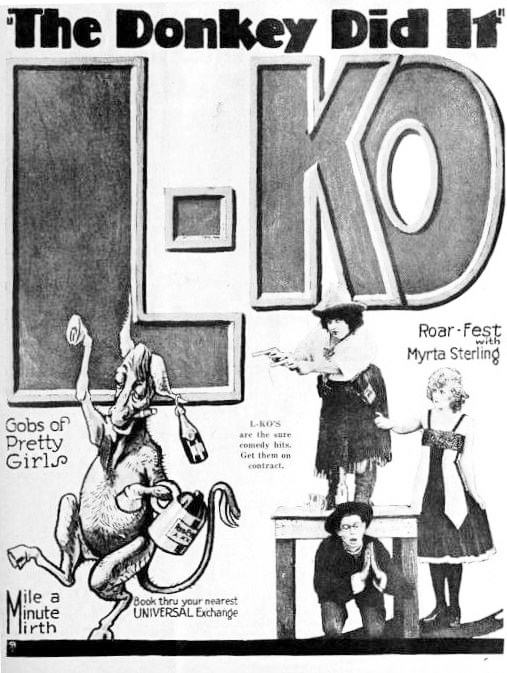
Before a single title card flashes, you can practically smell the rot wafting from Last Chance Valley. This isn't merely a lawless town—it's a carcass picked clean by vultures wearing human skin, a place where ethics dissolved faster than sugar in moonshine. Director Elmer Pearson conjures a tactile hellscape through Expressionist angles: saloon doors perpetually swinging like slack jaws, tilted buildings leaning away from decency, shadows stretching like grasping fingers across mud-choked streets. The atmosphere swallows hope whole, making the arrival of Professor Polonius Pinhead (Al Forbes, all angular limbs and vibrating Adam's apple) atop stoic donkey King Solomon feel less like an entrance and more like trespass into the lion's den.
The film's radical power blooms unexpectedly through its feminine contrasts. Violet (Babe Emerson) embodies fragility pushed to breaking point—a tremolo in human form, shoulders perpetually hunched as if awaiting the next blow. Her physicality speaks volumes: fingers twisting apron fabric into knots, eyes perpetually downcast, movements so slight they verge on disappearance. Then there's Molly. Merta Sterling's performance shatters silent-era feminine archetypes with seismic force. At 350 pounds, Molly occupies space with regal defiance. Sterling avoids grotesque caricature; her Molly moves with deliberate, powerful grace. When she brandishes her bean-shooter with the casual lethality of a Code of the Yukon frontiersman, it's not played for laughs but as testament to capability honed by necessity. Her very existence critiques societal dismissal of large bodies—a concept decades ahead of its time.
Howling Hank (Russ Powell) isn't just evil; he's professionally evil. The film's masterstroke lies in its satirical jab at Hollywood's own assembly-line villainy via the fictional Moving Picture Theater Villains' Association. Powell struts with bureaucratic malevolence, twirling his regulation black mustache as if filing paperwork. His six-shooter's impossible forty-seven shots become a running gag mocking action tropes—each bullet spent metronomically counted, his frustration mounting as the cylinder defies physics. This meta-commentary predates postmodernism by half a century, positioning Hank closer to the performative rogues of The Danger Game than genuine psychopaths like those in Hell Bent. His demand for Violet isn't mere lust; it's corporate expansion, turning human souls into revenue streams.
The titular quadruped transcends animal sidekick status. King Solomon functions as silent Greek chorus and deus ex machina—observing human folly with unsettlingly wise eyes before delivering the catalytic kick. Cinematographer Len Brewster films the fateful hoof-strike in mythic slow-motion, dust exploding around Pinhead's flailing limbs like divine punctuation. This isn't slapstick; it's destiny delivered by donkey. Pinhead's subsequent transformation—from cringing academic to swaggering hero—requires alcoholic alchemy ("Dutch courage" the intertitle wryly notes). Forbes mines profound physical comedy from Pinhead's drunken metamorphosis: limbs suddenly coordinating like a marionette given new strings, voice-box exercises practiced mid-stagger, spectacles pushed high with newfound authority. His courtship of Molly becomes a drunken waltz of mutual astonishment.
The Donkey Did It's gender dynamics warrant excavation. Violet's fragility isn't romanticized—it's portrayed as trauma response in a predatory environment. Her eventual rescue requires collective action, not a singular knight. Molly's agency remains paramount; she chooses Pinhead, not vice versa. Their union's physical contrast—lanky scholar and formidable heroine—is framed not as joke but revolutionary compatibility. When Molly lifts Pinhead clear off his feet during their embrace, the camera lingers not on his dangling legs but on her beatific smile. It rejects the era's wasp-waisted ideals as vehemently as Her Silent Sacrifice reinforced them. This body-positivity feels startlingly modern, contrasting sharply with the grotesque fat-shaming prevalent even in comedies like Hooverizing.
Pinhead's drunken heroism deserves nuanced reading. Unlike the noble sobriety of Lion of Venice's protagonists, his valor is chemically conjured—a subversion of heroic tropes. The film asks: does courage's origin matter if the outcome is just? Forbes plays Pinhead's intoxication as emotional unmasking rather than personality erasure. Inhibitions dissolve to reveal latent capability, suggesting alcohol doesn't create but unlocks. His confrontation with Hank becomes a ballet of improvised bravado—using academic texts as projectiles, tripping over spittoons with lethal accuracy, turning library ladder into siege engine. The climax celebrates chaotic ingenuity over noble marksmanship, echoing the anarchic spirit of El último malón.
Pearson's direction thrives in margins and moments: King Solomon nuzzling Violet's trembling hand, Molly's silhouette filling a doorway like protective mountain, Hank meticulously counting spent cartridges mid-gunfight. The film's pacing eschews frenetic chase sequences for building claustrophobic tension, letting glances and gestures carry narrative weight. Brewster's chiaroscuro lighting sculpts moral contrasts—Violet often bathed in vulnerable white light, Hank emerging from inky voids. Its formal experimentation aligns with European innovators like Ein Gruss aus der Tiefe, yet remains grounded in Western vernacular.
While superficially a comedy, The Donkey Did It functions as stealth critique—of Hollywood villain factories, body-shaming norms, and academic impotence. Its resolution avoids facile romance; Pinhead and Molly's marriage feels like pragmatic alliance between survivors, a frontier merger of intellect and force. King Solomon's centrality predates animal-centric narratives by decades, his quiet agency more profound than the human posturing surrounding him. The film's refusal to moralize Pinhead's drunken heroism remains provocative—a muddy reflection of how courage manifests in flawed beings. Buried for decades by distributors uneasy with Molly's physique and the donkey's divinity, its rediscovery challenges canonized narratives. It stands not as quaint curiosity but as silent cinema's radical dissident—a testament that the deepest societal critiques often arrive braying on four legs.
IMDb 6.6
1924
Community
Log in to comment.