DbcultAccessing Vault...
5.5/10
Senior Film Conservator
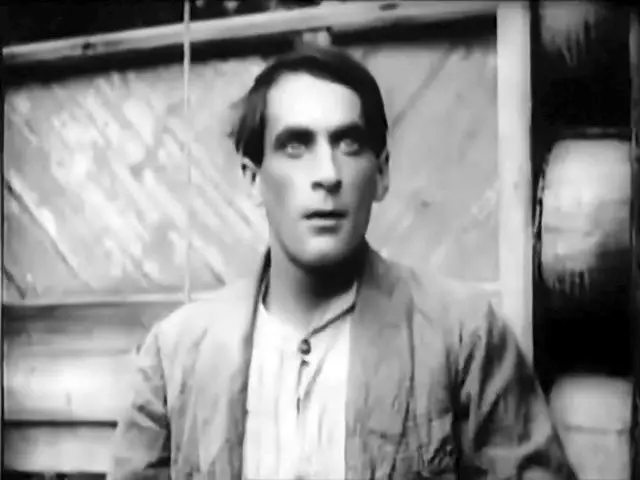
A definitive 5.5/10 rating for a film that redefined the boundaries of cult cinema. Kinokar'era zvonarya remains a cornerstone of transgressive art.
Does a film from a bygone era about a bell ringer’s unexpected foray into cinema still resonate in today’s hyper-connected world? Short answer: yes, but with significant caveats that demand a particular kind of viewer. Kinokar'era zvonarya, or 'The Bell Ringer's Film Career,' is a peculiar, often poignant exploration of identity, transformation, and the intoxicating allure of a burgeoning new art form.
This film is unequivocally for those with a deep appreciation for silent cinema, historical context, and character studies that prioritize thematic depth over explosive plot points. It is decidedly NOT for viewers seeking rapid-fire entertainment, clear-cut narratives, or modern cinematic sensibilities. Prepare for introspection, not spectacle.
Nikolai Verkhovsky's screenplay, a testament to the era's burgeoning narrative ambitions, crafts a story that feels both fantastical and deeply human. The premise, a bell ringer entering the film industry, is inherently rich with symbolic potential. It pits the ancient against the modern, the sacred against the secular, and the authentic against the performed. Pyotr Savin, in the titular role, embodies this clash with a nuanced performance that transcends the often broad strokes of silent acting.
Savin’s initial portrayal of the bell ringer is one of quiet dignity, his movements precise, his world bounded by the rhythms of the belfry. When thrust into the chaotic, artificial world of film sets, his physical presence becomes a stark contrast. He doesn’t just act; he reacts with an almost childlike wonder mixed with bewilderment. This isn't a story of a man who eagerly seeks fame, but rather one who stumbles into it, carrying the weight of his former life like an invisible shroud.
"The film's true genius lies not in its plot twists, but in its profound meditation on the nature of identity in an age of mechanical reproduction."
The supporting cast, including Rozinov A., Stanislav Novak, Borisovich V., and Lidiya Klubkova, serve as excellent foils. Rozinov A., perhaps as a cynical director or studio head, provides the necessary push and pull, exploiting the bell ringer's novelty while simultaneously recognizing his unique, unpolished appeal. Klubkova, likely playing a glamorous actress or a sympathetic colleague, offers a glimpse into the human cost of the industry, contrasting sharply with Savin's grounded innocence.
Their performances, while secondary, are crucial in painting a complete picture of the film world's impact on our protagonist. One scene, where Savin's character attempts to mimic the exaggerated gestures of a leading man, is both humorous and heartbreaking, revealing the chasm between his inherent truth and the demands of performance. It's a moment that resonates with the struggles of authenticity that many artists still face today.
While the director remains uncredited in the brief synopsis, the film's execution speaks volumes of a clear, guiding vision. The direction deftly handles the tonal shifts, moving from the solemnity of the bell tower to the frenetic energy of the film studio. The use of parallel editing to juxtapose the bell ringer's solitary life with his public persona is particularly effective, creating a visual dialogue about his internal conflict.
The film doesn't shy away from critiquing the nascent film industry's sensationalism. It subtly suggests that while cinema offers new avenues for expression and spectacle, it also risks commodifying genuine human experience. This theme, surprisingly prescient for its time, gives the film an enduring quality, making it more than just a historical curiosity.
Consider the visual composition: the bell tower scenes are often vertical, emphasizing the protagonist's lofty, isolated existence, while the studio scenes are horizontal, expansive, and filled with bustling activity. This deliberate framing reinforces the central conflict of the film, highlighting the two disparate worlds he inhabits. It’s a masterful, if understated, use of visual metaphor.
The cinematography in Kinokar'era zvonarya is surprisingly sophisticated, especially when considering the technological limitations of the era. The camera work, though largely static by modern standards, employs thoughtful framing and depth of field to convey emotion and character. The lighting in the belfry scenes often uses chiaroscuro, emphasizing the bell ringer's solitary figure against deep shadows, creating an almost spiritual atmosphere. This contrasts sharply with the often flat, bright lighting of the studio sets, which perfectly captures the artificiality of the film world.
One particularly memorable sequence involves a montage of the bell ringer's various 'roles' in films – perhaps as a background extra, then a character actor, and finally a leading man. This visual progression, achieved through clever editing and subtle changes in costume and makeup, effectively conveys the passage of time and his gradual assimilation into the industry. It’s an early example of cinematic shorthand used to great effect.
The pacing of the film is deliberate, mirroring the measured, rhythmic life of a bell ringer before accelerating slightly as he enters the faster-paced world of cinema. This controlled tempo allows the audience to fully absorb the emotional weight of each transition. Unlike the frantic energy seen in some contemporary comedies like The Gay Deceiver, this film opts for a more contemplative rhythm, allowing its themes to simmer rather than explode.
The tone is a delicate balance of gentle satire, drama, and a touch of melancholy. It never fully descends into pure comedy, nor does it become overly dramatic. Instead, it maintains a reflective quality, inviting viewers to ponder the implications of its narrative rather than simply react to it. This nuanced approach is a credit to the filmmakers and elevates the material beyond a simple rags-to-riches tale.
Absolutely, but only if you approach it with the right mindset. Kinokar'era zvonarya is a crucial piece of early cinema that offers unique insights into the cultural shifts occurring at the time. Its exploration of identity and the impact of new media feels remarkably contemporary, even a century later. It works. But it’s flawed. The slow burn might test the patience of some, and the silent film conventions require a degree of engagement that modern blockbusters rarely demand. However, for those willing to lean in, the rewards are substantial.
This film works because of its profound thematic depth, its empathetic central performance by Pyotr Savin, and its surprisingly sophisticated visual storytelling that transcends the limitations of its era.
This film fails because its deliberate pacing and reliance on visual storytelling over explicit dialogue might alienate viewers accustomed to more direct narrative exposition. Its historical context, while a strength for some, can be a barrier for others.
You should watch it if you are a film student, a historian, or simply a cinephile seeking to understand the roots of cinematic storytelling and character development. It’s a quiet triumph that rewards patience and thoughtful engagement.
Kinokar'era zvonarya is far more than a historical footnote. It is a compelling character study wrapped in a thoughtful critique of nascent celebrity culture, a film that, despite its age, speaks volumes about the human condition. While it demands patience and an open mind, the rewards are substantial for those willing to engage with its unique rhythm and profound message. It stands as a testament to the power of early cinema to explore complex ideas with surprising subtlety and artistic flair, a quality often overlooked in the shadow of more bombastic productions of the era. This film, much like its protagonist, might seem unassuming at first glance, but it possesses a resonance that lingers long after the final frame.
IMDb —
1925
Community
Log in to comment.