DbcultAccessing Vault...
Cult Review
Senior Film Conservator
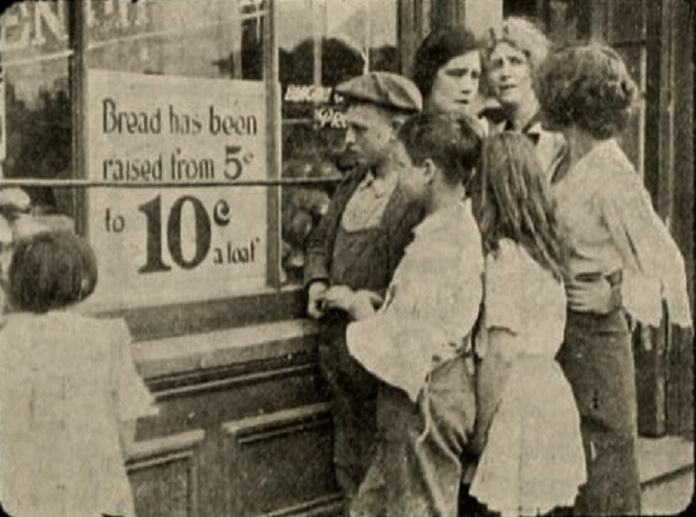
There is a moment—halfway through James Keane’s 1921 morality phantasmagoria Money—when the screen itself seems to perspire. Foundry light, orange as Judas’s hair, pools across the banquet tables of Croesus Maximillian while outside the palace gates a tide of torch-bearing workers swells like an overdue reckoning. Intertitles flicker: “The feast of the world‐owner begins; the hunger of the world-worker ends.” The cut is surgical: inside, a roasted stag crowned in gold leaf; outside, children siphoning molasses from cracked barrels. The juxtaposition is so bald, so brash, it would feel cartoonish if the film’s tinting weren’t hemorrhaging actual crimson. In that hemorrhage lies the picture’s enduring, unsettling pulse.
Yes, the narrative chassis is Dickens welded to Upton Sinclair: rapacious oligarch, cloistered daughter, virtuous laborer, predatory lieutenant. Yet Keane and cinematographer Norbert Cills shoot the parable as though it were a fever dream financed by the very trusts it excoriates. The camera stalks catwalks above vats of surging slag, then plunges to ground level where sweat turns to steam on men’s eyelashes. Depth-of-field bravado for 1921: background blast furnaces roar while foreground faces register the private micro-shock of conscience.
E. Alyn Warren’s Croesus is less a man than a ledger incarnate—his spine straightens whenever the stock ticker clacks, as if receiving electric communion. Watch the way he fingers the lapel of his coat: same tremor a preacher reserves for scripture. Carlotta De Felice gifts Ruth a porcelain bewilderment that slowly ossifies into flint; her eyes widen not in ingénue wonder but in the horror of belated seeing. George Chesebro’s Crosby is all sinewy forward motion—one thinks of Lincoln before the beard, had Lincoln carried a slide rule and known how to throw a punch inside a burning ballroom.
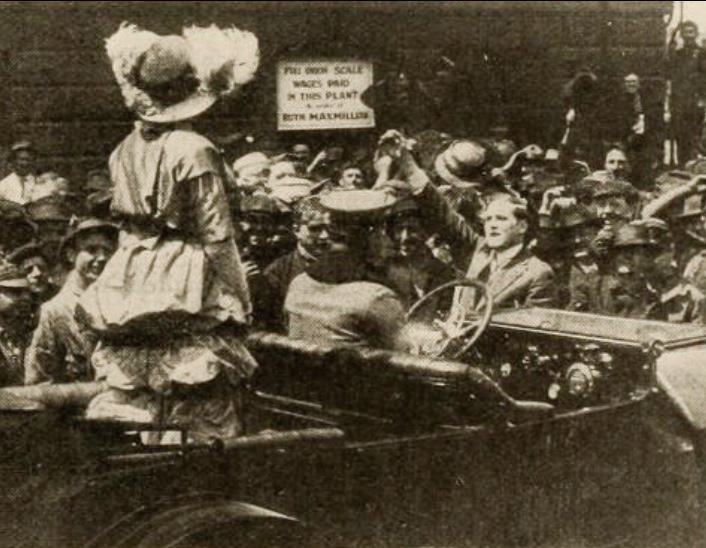
And then there is Elizabeth Stewart’s Hope Ross, the real moral fulcrum. Stewart has the era’s fashionable bob but her gaze is centuries older, as though she has already lived through every strike and breadline to come. When Livingston (Matt Snyder, oozing entitled sleaze) traps her against the filing cabinet, her hand doesn’t flutter to her throat in token modesty; it reaches for the heavy glass inkwell—an emblem of clerical labor turned potential bludgeon. The gesture is swift, credible, and quietly revolutionary.
The production design is a miracle of thrift-shop opulence. Maximillian’s palace is clearly a rented Gilded Age mansion, yet Cills drapes it in so many chandeliers that ceilings disappear behind stalactites of crystal. Meanwhile the steelworks are shot on location in an actual Pennsylvania mill: girders sweat, cranes creak, and every frame smells of scorched motor oil. The tonal whiplash—Versailles adjacent to Vulcan—intensifies the moral vertigo.
Keane orchestrates set pieces with proto-Sturges vigor. The workers’ raid intercuts newsreel footage of 1919’s Great Steel Strike; smoke bombs obscure rear-projected silhouettes, creating a polyphony of authentic chaos and staged melodrama. A subtitle card—“Law is a paper shield when hunger holds the hammer”—appears superimposed over an image of a policeman’s nightstick fracturing a picket sign. The collision of text, image, and historical echo is heady stuff for a popcorn epoch.
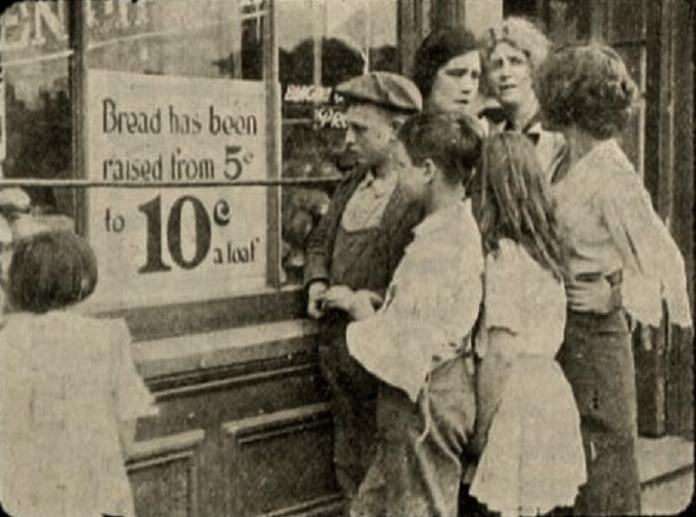
Most silent films treat water as a painted backdrop. Not here. Keane hauls cameras aboard a genuine thirty-foot cruiser off Staten Island. When the yacht slices through the reef, whitecaps rear like stallions, drenching the lens. Hope’s abductors struggle with oilskin slickers that balloon in the wind, turning them into glistening gargoyles. Crosby’s pursuing police launch is rammed; wood splinters, an officer tumbles into churning black. The stunt work is death-defying yet lyrical—each wave crest catches the arc-light, transmuting violence into phosphorescent ballet.
Inside the sinking cabin, Livingston’s face is lit from below by a swinging lantern; shadows carve his cheeks into a death-mask. Crosby’s final grapple with him is framed in medium shot, water rising waist-high, both men drenched, hair plastered to skulls like wet fresco. The lantern shorts, flash-framing the struggle in stark white negative before the cabin implodes. It is, for my money, the most visceral underwater fight pre-Thunderball.
The closing conflagration is a tour-de-force of optical printing and full-scale fire. A bolt of lightning (animated onto the negative by hand) spears the palace dome; miniature footage of collapsing masonry is intercut with live flames licking velvet drapes. Croesus’s death—crushed beneath a Corinthian column—carries a mythic sting: Midas drowned in his own reflecting pool. The image dissolves to Ruth, silhouetted against the smoldering skyline, now costumed in a simple wool dress, hair unbobbed, signing a new wage agreement while workers watch in stunned semi-circle. The arc from gilt to cinder to communal hearth lands with startling sincerity.
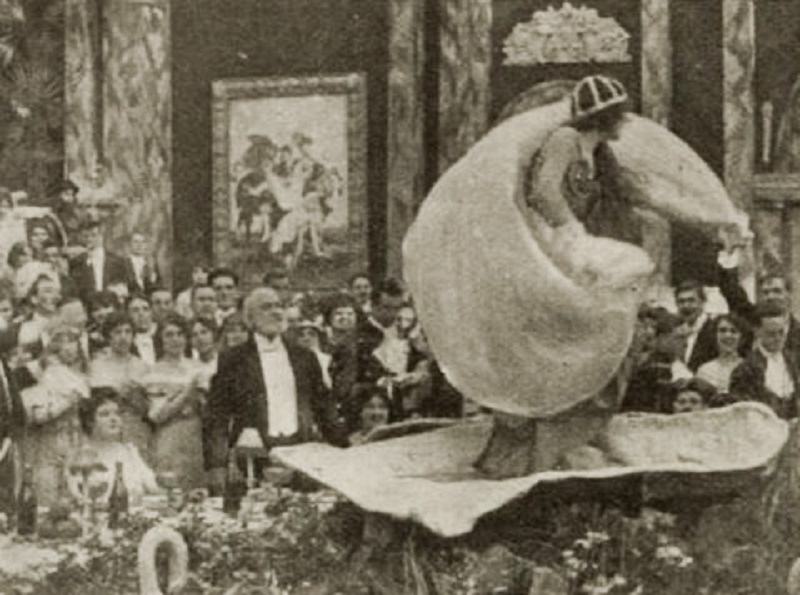
Contemporary critics dismissed Money as “Bolsheviki bombast” (Variety, Nov. ’21). Yet the film’s prescription is less Marx than Methodist: conversion, not revolution. Ruth’s first act as proprietor is to establish a company store that sells flour at cost and boots without markup; her second is to fund a night school where workers’ children learn trigonometry beside her own. It’s reformist fantasy, yes, but delivered with such fervor you half expect Jane Addams to stroll through the frame.
Compare it to The Boss (also ’21) where the tycoon repents by writing a single fat check, or The Cheat (1915) which punishes excess with a branding iron. Money imagines systemic overhaul piloted by an heiress who has literally smelled the furnaces. Naïve? Certainly. Prophetic? Occasionally—note the way Ruth insists on transparent ledger books decades before SEC disclosure rules.
The picture flirts with melodrama’s usual virgin/whore binary—Ruth in white furs, Hope in secretary serge—yet subverts it through cross-class sorority. When Ruth loans Hope her sealskin cloak, the garment becomes a torch passed between worlds. Later, wearing the cloak, Hope is kidnapped in Ruth’s stead, a literal substitution that binds their fates. The moment reads as penance for Ruth’s inherited guilt and as acknowledgment that privilege is a garment you can divest—if you have the guts to walk outside without it.
Crosby’s masculinity is equally knotty. He rescues Ruth twice, yet each time emerges more dependent on Hope’s nursing. In the final reel he accepts the plant-manager post only after Ruth guarantees joint veto power with an elected workers’ council. He enters the marriage bed having bartered away absolute authority—a rarity in twenties macho iconography.
Freeze the frame when the first striker hurls a rock through the palace window; reflected in a shattered shard is a portrait of Croesus painted à la Gainsborough. Later, as Ruth signs the wage accord, a calendar on the wall reads October 1921—the exact month the film premiered in Chicago. Such self-conscious time-stamping anticipates the meta flourish of Jim the Penman (1921) and the Brechtian winks in Dionysus’ Anger.
No original cue sheets survive, but contemporary exhibitors reported pairing the climax with a mash-up of Tchaikovsky’s 1812 Overture and W.C. Handy blues rags—an anarchic sonic palette that, by all accounts, left audiences cheering through tears. Modern restorations commissioned by MoMA (2017) commissioned a new score by Vijay Iyer: prepared piano, bowed vibraphone, and factory field recordings. The dissonance between Iyer’s metallic clatter and the film’s Victorian sentiment reawakens its dialectic heart.
For decades only a 9-minute fragment circulated among collectors—enough to tantalize, not explicate. Then a 35mm nitrate reel turned up in a Croatian monastery in 2014, followed by a Dutch distribution print with English intertitles in 2019. The current restoration runs 74 minutes, four shy of the original roadshow cut, but restores the yacht sequence in all its tempestuous glory. You can stream it on Kanopy via participating libraries, or snag the Blu-ray from Kino Classics which includes a commentary by labor historian Dr. Jacqueline Jones.
Does Money solve capitalism? About as effectively as A Christmas Carol ended child poverty. Yet its combustible blend of sermon and spectacle, its conviction that images can tilt the moral axis, makes it linger like the smell of coal smoke in winter. After the credits—Ruth silhouetted against sunrise, workers filing through open gates—I sat in hush, pulse syncing to the distant throb of an ambulance siren on 53rd Street. Ninety-plus years collapsed; the flicker felt closer to documentary than fantasy. That, perhaps, is the most subversive dividend Money pays: it reminds us that fortunes rise on the same ground where feet blister, and lightning does occasionally strike the countinghouse.
Grade on a curve of historical audacity: A-. For sheer artisanal verve, for staging class war inside a tinderbox palace and letting both sides burn, Money earns every cent of its title—and then some.
IMDb —
1917
Community
Log in to comment.