DbcultAccessing Vault...
5.7/10
Senior Film Conservator
A definitive 5.7/10 rating for a film that redefined the boundaries of cult cinema. Sovetskie igrushki remains a cornerstone of transgressive art.
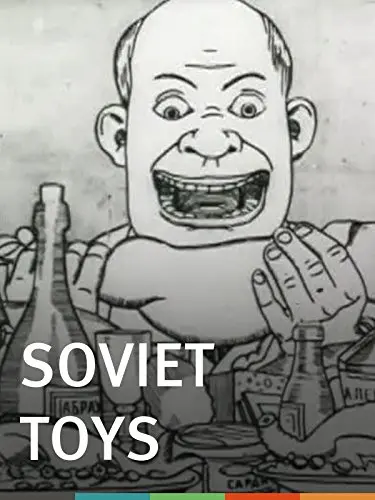
Dziga Vertov's Sovetskie igrushki stands as a testament to the power of animation as a tool for social commentary. This pioneering work, born from the fervor of the Soviet era, employs a deceptively simple animation style to convey a complex critique of capitalist excess. The film's central image—a bloated, grotesque caricature of a capitalist indulging in an unending feast—serves as a potent symbol of the bourgeoisie's perceived decadence.
The film's origins in the Soviet Union during a period of significant political and social upheaval cannot be overstated. As an early example of Soviet animation, Sovetskie igrushki reflects the ideological fervor of its time, channeling the revolutionary spirit into a scathing indictment of capitalist values. Vertov, already an established figure in the realm of documentary filmmaking, leverages his expertise to craft a narrative that is both engaging and thought-provoking.
At its core, Sovetskie igrushki is a masterclass in visual storytelling. Vertov's decision to utilize a caricatured representation of a capitalist, juxtaposed against the backdrop of a vast, sumptuous feast, is a stroke of genius. This imagery not only serves to underscore the themes of consumption and gluttony but also provides a stark contrast to the austerity and egalitarian ideals of the Soviet ethos. The animation, while rudimentary by today's standards, possesses a certain charm and effectiveness in conveying the film's message.
The influence of Sovetskie igrushki can be seen in various works that followed, including The Janitor's Harem and My Official Wife, both of which explore themes of social satire and critique. However, Vertov's work remains unique in its approach, combining humor and criticism in a manner that is both accessible and impactful.
In comparing Sovetskie igrushki to other films of its era, such as Ferravilla nelle sue più caratteristiche interpretazioni and Alarm Clock Andy, one notices a shared concern with themes of social commentary and critique. Yet, Vertov's film stands apart in its use of animation to convey these themes, demonstrating an innovative approach that would influence generations of filmmakers to come.
The film's exploration of consumption and excess also invites comparison with Dead Men Tell No Tales and Sunday Calm, both of which touch on the human condition in their narratives. However, Sovetskie igrushki's focus on the capitalist's insatiable hunger serves as a pointed critique of the societal ills of its time, setting it apart from its contemporaries.
Vertov's work on Sovetskie igrushki also draws parallels with other early cinematic experiments, such as Den doode steden aan de Zuiderzee and IV. Károly király koronázása. These films, like Sovetskie igrushki, represent a nascent exploration of the medium's potential for storytelling and social commentary. They collectively underscore the innovative spirit of early filmmakers, who sought to push the boundaries of what cinema could achieve.
In addition to its thematic resonance, Sovetskie igrushki is also notable for its influence on the development of animation as an art form. Works such as Livets Omskiftelser and Jubilo, Jr. reflect the evolving landscape of animation during the early 20th century, with Sovetskie igrushki serving as a pivotal moment in this journey.
The film's legacy extends beyond its immediate thematic concerns, speaking to broader questions about the role of art in society. Like The Purple Lily and The Faith Healer, Sovetskie igrushki challenges viewers to consider the relationship between the artist, the audience, and the societal context in which a work is created. This reflexive engagement with the viewer's perspective is a hallmark of Vertov's approach, underscoring his commitment to cinematic innovation and social critique.
In conclusion, Sovetskie igrushki stands as a landmark in the history of animation, offering a compelling critique of capitalist excess through a visually engaging and sonically rich narrative. Dziga Vertov's pioneering work not only reflects the ideological fervor of its time but also demonstrates an innovative approach to storytelling that would influence generations of filmmakers. As a testament to the power of animation as a tool for social commentary, Sovetskie igrushki remains a vital and thought-provoking work, inviting viewers to reflect on the enduring themes of consumption, excess, and the role of art in society.
Ultimately, Sovetskie igrushki serves as a reminder of the enduring power of cinema to challenge, engage, and inspire. Like Once to Every Woman, Ene i verden, and Tempêtes, it invites us to consider the complex interplay between art, society, and the human condition, ensuring its continued relevance for audiences today.

IMDb —
1921
Community
Log in to comment.