DbcultAccessing Vault...
4.5/10
Senior Film Conservator
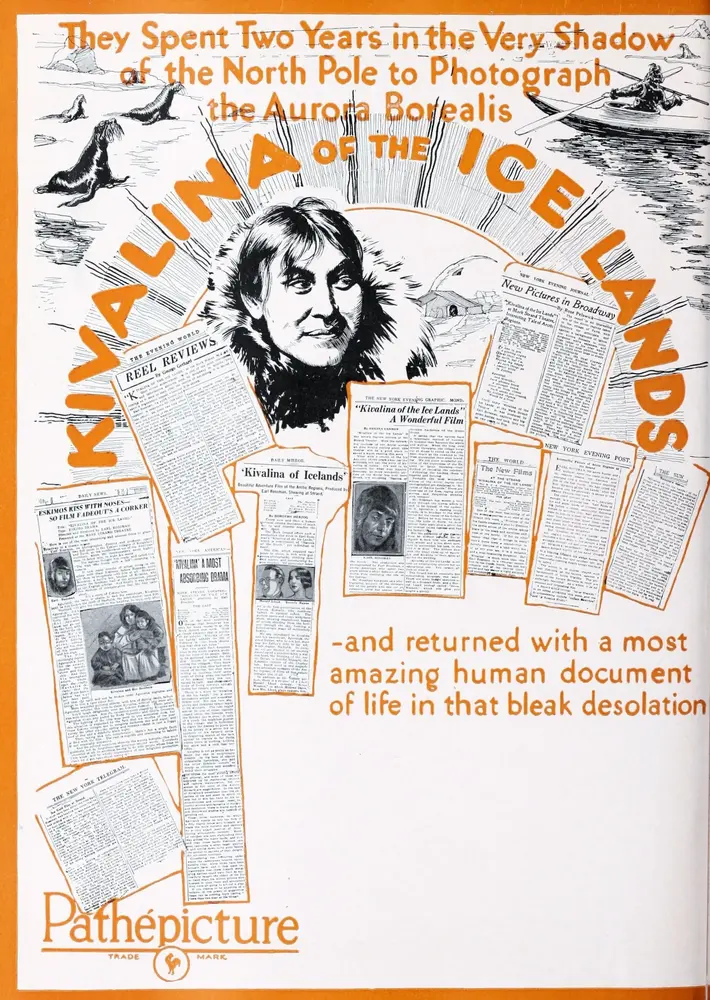
A definitive 4.5/10 rating for a film that redefined the boundaries of cult cinema. Kivalina of the Ice Lands remains a cornerstone of transgressive art.
Is Kivalina of the Ice Lands a film that warrants your attention in the modern era? Short answer: Yes, but only if you approach it as a historical artifact of obsession rather than a polished piece of narrative entertainment.
This film is specifically for students of early ethnographic cinema and those fascinated by the 'heroic age' of Arctic exploration; it is certainly not for viewers who require fast-paced plotting or high-definition visual fidelity. It is a slow, freezing burn of a movie.
This film works because it captures the terrifying scale of the Arctic through the eyes of a man who was actually there, providing a level of environmental authenticity that no studio set in 1925 could hope to replicate.
This film fails because the forced romantic subplot between the explorer and Kivalina feels like a clunky concession to Hollywood tropes, distracting from the much more interesting reality of Iñupiat life.
You should watch it if you want to see how early filmmakers struggled to balance the 'truth' of documentary with the 'marketability' of a love story.
Earl Rossman was not just a filmmaker; he was a man possessed by the North. This obsession drips from every frame of Kivalina of the Ice Lands. Unlike the grand, sweeping drama found in The Four Horsemen of the Apocalypse, Rossman’s film feels cramped and intimate, despite the vastness of its setting. The camera often feels like it is fighting the wind, a technical reality that adds a layer of grit to the viewing experience.
There is a specific scene where the expedition team is caught in a whiteout. The film grain becomes almost indistinguishable from the swirling snow. It is in these moments—where the 'plot' falls away and the struggle for survival takes over—that the film finds its true voice. Rossman’s presence as both producer and actor creates a strange meta-narrative. He is playing a version of himself, and his performance is stiff, yet his stiffness reflects the rigidity of a man trying to impose his will on a landscape that does not care if he lives or dies.
The performances of the native cast, including Tokatoo and Kivalina herself, are the film's strongest assets. While Rossman and the Western actors seem to be 'performing' for the lens, the Iñupiat cast members possess a naturalism that was rare for the 1920s. They move through the ice with a grace that highlights the clumsiness of the explorers. This creates a fascinating, perhaps unintentional, commentary on colonial intrusion.
In contrast to the raw emotion seen in Assunta Spina, the acting here is muted by the cold. There are no grand gestures. Instead, we get long, lingering shots of faces weathered by the elements. The 'love story' is told through glances and the shared labor of survival. It’s clunky. But it’s real.
We must discuss the sheer difficulty of filming this. In 1925, cameras were heavy, hand-cranked machines. Lubricants would freeze, and film stock would become brittle and snap. When you see a steady shot of a dog sled team crossing a ridge, you aren't just seeing a scene; you are seeing the result of hours of agonizing labor in the cold. This technical reality makes the film's existence more impressive than its script.
Kivalina of the Ice Lands is worth watching for anyone interested in the evolution of the docudrama. It serves as a bridge between the pure documentary style of Robert Flaherty and the more theatrical silent epics of the time. While the story is thin, the visual record of the Arctic in the 1920s is priceless. It is a film that demands patience but rewards you with a sense of time travel.
Pros:
Cons:
There is a debatable opinion that the film would have been significantly better if Rossman had abandoned the fictional elements entirely. By trying to make a 'movie' out of a 'journey,' he diluted the power of the footage. Look at a contemporary film like Shattered Idols, which deals with cultural clashes; it has a narrative cohesion that Kivalina lacks because Kivalina is constantly fighting its own documentary nature.
The film is at its best when it stops trying to be a romance and starts being a tragedy of geography. The Northern Lights sequence, likely hand-tinted in original prints, is a surprising observation of beauty in a film otherwise defined by grey and white. It’s a moment of pure cinema that transcends the clunky dialogue titles written by Katherine Hilliker.
Kivalina of the Ice Lands is a flawed, fascinating ego-project. It is a movie that exists because a man wanted to be a hero and had a camera to prove it. It isn't a masterpiece. It isn't even a particularly good story. But as a window into a world that was already melting away in 1925, it is indispensable. It works as a record. It fails as a drama. It is a cold, hard piece of history that refuses to be forgotten.
IMDb 6.2
1934
Community
Log in to comment.