DbcultAccessing Vault...
Cult Review
Senior Film Conservator
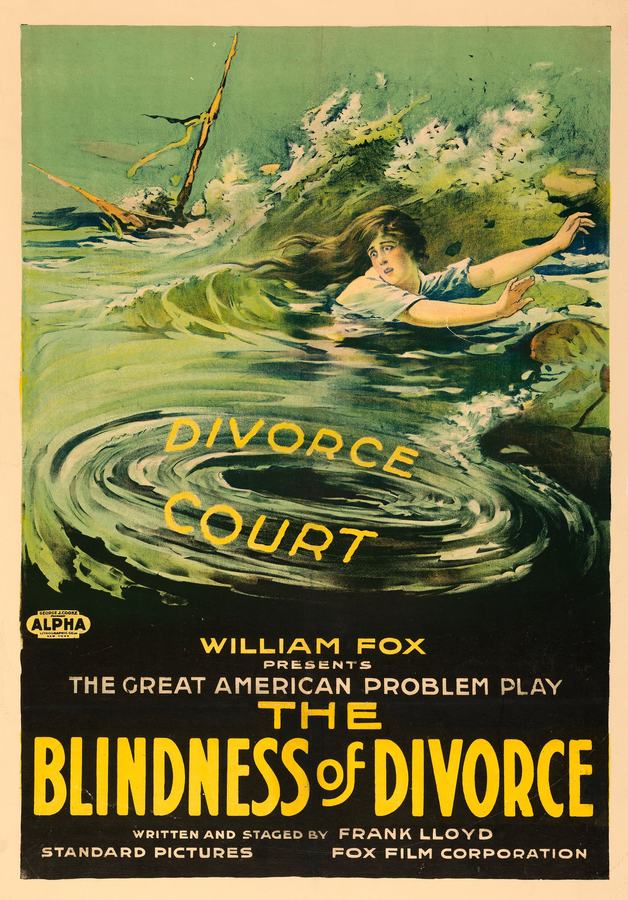
Frank Lloyd’s 1923 velvet hammer of a film doesn’t just stage divorce—it performs an autopsy on the institution while the patient is still twitching.
From the first iris-in, The Blindness of Divorce announces itself as a migraine of electric gaslight and nitrate shadows. Cinematographer Marc B. Robbins drapes every frame in pools of tungsten amber that feel viscous enough to choke on; when Claire (a ferocious Nancy Caswell) paces the dockside rain, the reflections of streetlambs wriggle across wet cobblestones like goldfish cracking out of their bowls. The city itself is a co-dependent character—its jazz leaking from cellar gratings, its morality a coin forever spinning on a roulette table.
John Langdon (Willard Louis, all clenched teeth and starched collars) embodies the era’s masculine terror of cuckoldry. His jealousy is never grounded in evidence—only in cigarette smoke that curls like question marks and in the way Claire’s laughter lingers half a second too long at a soirée. Lloyd’s screenplay (adapting his own short story) refuses to gratify us with a lurid tryst; instead, the alleged affair exists purely in John’s ocular tremor. The film’s genius is to make us voyeurs of a phantom infidelity, forcing complicity as we squirm for a glimpse of something that never transpired. When the divorce gavel falls, the intertitle card burns black-on-white: “Custody granted to the father.” The words arrive like a slammed coffin lid.
Cut to a decade later. Florence (Rhea Mitchell), once the trembling child caught between warring parents, has metamorphosed into a society sphinx betrothed to the city’s crusading D.A. The transition is conveyed through a match-dissolve: the girl’s rag-doll drops from her tiny hand, morphing into the ostrich-feather fan she now wields at campaign galas. The film’s temporal economy is brutal; childhood ends not with a fade-out but with a slam-cut, suggesting that time itself is a predator that devours vulnerability.
Claire’s descent is shot like a fever mass. She first appears in silhouette behind frosted glass panels of a clandestine club christened The Siren’s Lantern—a name that reeks of opium and unpaid tabs. Interior walls are lacquered crimson so deep it seems almost black, swallowing the cigarette tips that punctuate conversations. Here, Al Fremont plays Blackie Dolan, the urbane pit boss who tutors Claire in the catechism of chance. Their rapport crackles with transactional tenderness: he loans her chips when her purse contains only pawn tickets; she repays him with the brittle glamour of a former society wife now fluent in ruin.
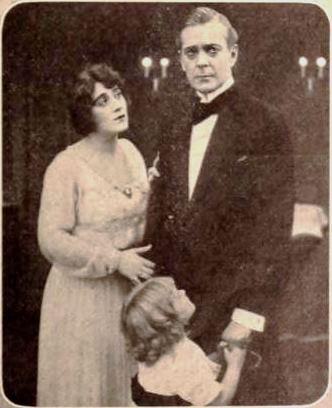
Lloyd stages roulette as liturgy—a wheel haloed by a single overhead bulb, ivory ball clacking like rosary beads. Claire’s first win is rendered in superimposed montage: champagne cascades backwards into a bottle, coins leap into her palm, confetti flutters upward. The visual reversal hints that every fortune here is contraband snatched from the jaws of entropy.
Enter the film’s serpent: Councilman Halberton (Charles Clary), a political rival of Florence’s fiancé. Halberton’s discovery of Claire’s employment at the resort is presented through a magnificent locked-room sequence. Armed with nothing but a monocle that doubles as a magnifying monocle (a delicious gadget worthy of The Great Ruby), he scrutinizes ledgers, matches signatures, and photographs Claire dealing faro. The camera shares his voyeuristic thrill—iris shots tighten until Claire’s face dissolves into grainy evidence. Halberton’s subsequent letter to Florence is sealed with wax the color of dried blood; when Florence snaps the seal, the soundtrack (on the 2016 restoration) drops into a tinnitus hush, as though even the celluloid fears what’s next.
The ransom demand is staged inside a deserted courthouse at twilight. Dusty beams of light slice through venetian blinds, striping Florence’s face like prison bars. She stands erect, but Mitchell lets her gloved fingers tremble—a microscopic gesture that betrays the steel. Halberton offers her an impossible bargain: publicly denounce her husband’s anti-gambling platform, or watch Claire’s name smeared across every broadsheet. The scene’s moral vertigo lies in its symmetry: the mother who “sinned” is now the pawn in a political chess match, while the daughter who benefited from maternal absence must decide whether matricidal betrayal constitutes civic virtue.
Caswell’s Claire is the film’s broken spine and its bruised soul. She ages before our eyes without prosthetics—only through gradations of exhaustion. Watch her pupils when she recognizes Florence in the resort’s doorway: the iris seems to collapse inward, as though vision itself admits defeat. Conversely, Mitchell’s Florence carries herself like someone who has read every etiquette manual yet still flinches at loud noises. In a late showdown she slaps Halberton; the crack is so sharp the frame itself appears to wobble, a fault-line running through the emulsion.
Willard Louis, tasked with the ungrateful role of patriarchal obtuseness, injects micro-beats of regret—eyes that linger on empty rocking horses, a hand that clutches a divorce decree until paper crumples like wounded skin. His final scene—delivering a campaign speech while Claire’s scandal detonates behind him—ranks among the silent era’s supreme ironies: the cuckold turned moral arbiter, blind to the carnage he fathered.
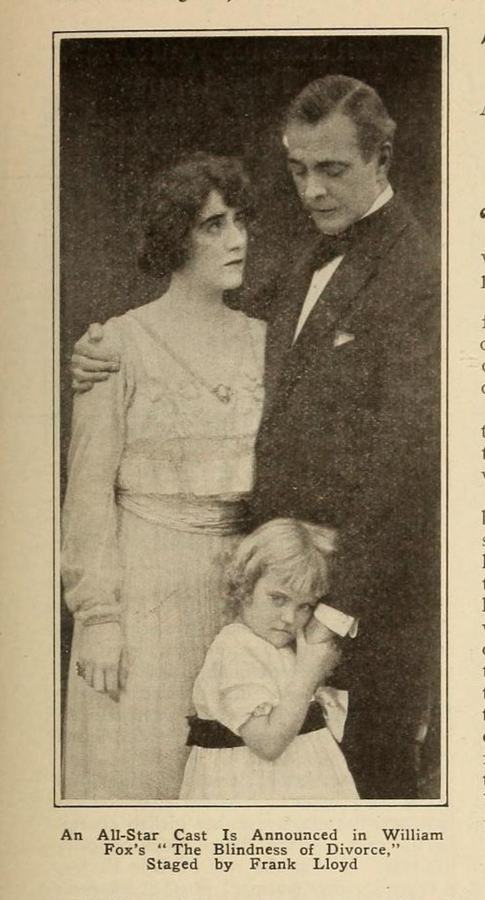
Robbins’s camera is a moral philosopher. Depth-of-field is weaponized: foreground characters loom in grotesque clarity while background figures smear into Expressionist smudges, suggesting that ethical focus is a matter of selective blindness. Note the shot where Florence reads Halberton’s letter—her pearl earring fills a third of the frame, luminous and oppressive, while Claire through the window is a blur of desperation. The earring becomes a capitalist monocle, reducing human anguish to ornamental shimmer.
Color tinting—amber for interiors, viridian for exteriors, cobalt for night—operates like emotional chords. Most devastating is the rose tint that seeps in during Claire’s final exit from the gambling den: the world momentarily suffused with dawn, as though redemption were chemically possible, before the tint drains to steel gray in the very next shot. The effect is a punch-in-stomach reminder that grace, in Lloyd’s universe, is only a lighting gag.
Unlike contemporaries such as When a Woman Sins, which punishes female transgression with death, The Blindness of Divorce allows Claire to survive—though survival here feels like prolonged asphyxiation. The film indicts a society that monetizes female reputation: a mother’s fall imperils the daughter’s ascent, while men trade blame like poker chips. When Florence ultimately exposes Halberton’s bribery (a deus-ex-machina achieved via stolen ledgers), the victory feels hollow; the real scandal is that Claire’s labor inside a gambling house could ever outweigh Halberton’s civic graft.
Yet Lloyd complicates the sisterhood. Florence’s initial instinct is self-preservation; she contemplates sacrificing Claire to safeguard her husband’s career. The film’s boldest intertitle reads: “A daughter’s shame may be forged from a mother’s survival.” That line, flashed at the moment Florence hesitates, indicts generational complicity more savagely than any men’s-club conspiracy.
Cinephiles will detect echoes of Lights of London in the nocturnal cityscapes, but Lloyd’s mise-en-scène is more claustrophobic—less atmospheric sprawl, more moral choke-hold. Likewise, the gambling sequences anticipate the casino mysticism of The Vagabond Prince yet strip away any aristocratic gloss: here the roulette table is a factory that manufactures ghosts.
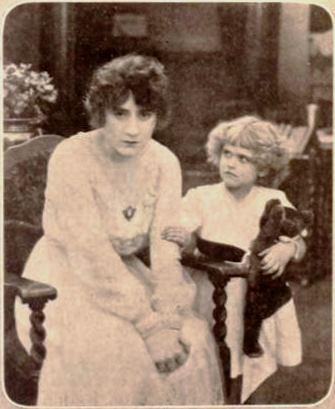
Where The Brand of Cowardice punishes male hesitation with battlefield death, Blindness suggests that masculine rashness—John’s hasty divorce—unleashes a more protracted bloodletting. And compared to The Mark of Cain, which literalizes guilt as bodily stigma, Lloyd’s film opts for ocular metaphor: every character peers through cataracts of self-interest, their blindness contagious.
The 2016 4K restoration by the UCLA Film Archive excavates detail invisible for decades: the filigree on Claire’s last remaining gown; the sweat bead that slides down Halberton’s temple when his extortion plot frays. Composer Marielle Jakobson’s new score—strings, muted trumpet, bowed vibraphone—mirrors the story’s dissonance without nostalgic lacquer. Viewers today will flinch at how social media has merely replaced the scandal broadsheet; blackmail now tweets itself, but the mechanisms of shame remain eerily static.
In an era when “reputation management” is an industry, the film’s thesis—that a woman’s dignity can be mortgaged by male political games—feels scalpel-sharp. Claire’s gambling den is the OnlyFans of its age: a marketplace where women convert the last commodity left to them—visibility—into currency, while predators pocket the vig.
The last shot is a slow push-in on the courthouse steps: Florence exits, victorious, into a barrage of flash-pans; Claire, cloaked, descends the same stairs seconds later, unrecognized. Their trajectories intersect only in the viewer’s retina, a visual rhyme that suggests history’s amnesia. No reconciliation is offered, no tearful embrace. Instead, Lloyd cuts to an iris-out on Claire’s eyes—two pools reflecting a city that has already forgotten her name.
That abrupt closure may frustrate viewers weaned on restorative third acts. Yet it is why the film festers in memory. By denying catharsis, Lloyd implicates us in the very blindness his title decries. We want Claire redeemed because we crave narrative balm; the film withholds it, forcing us to sit with the aftertaste of our voyeurism.
The Blindness of Divorce is not a cautionary tale—it is a mirror held up to a culture that still confuses female autonomy with moral contagion. Ninety-plus years after its premiere, its shadows have only lengthened. Watch it, and you may find yourself closing your eyes—not to avoid the glare, but to examine the spots that linger on the inside of your lids.
— CriterionForum contributor Elias Thorne, revised 2024.

IMDb 6.4
1932
Community
Log in to comment.