DbcultAccessing Vault...
Cult Review
Senior Film Conservator
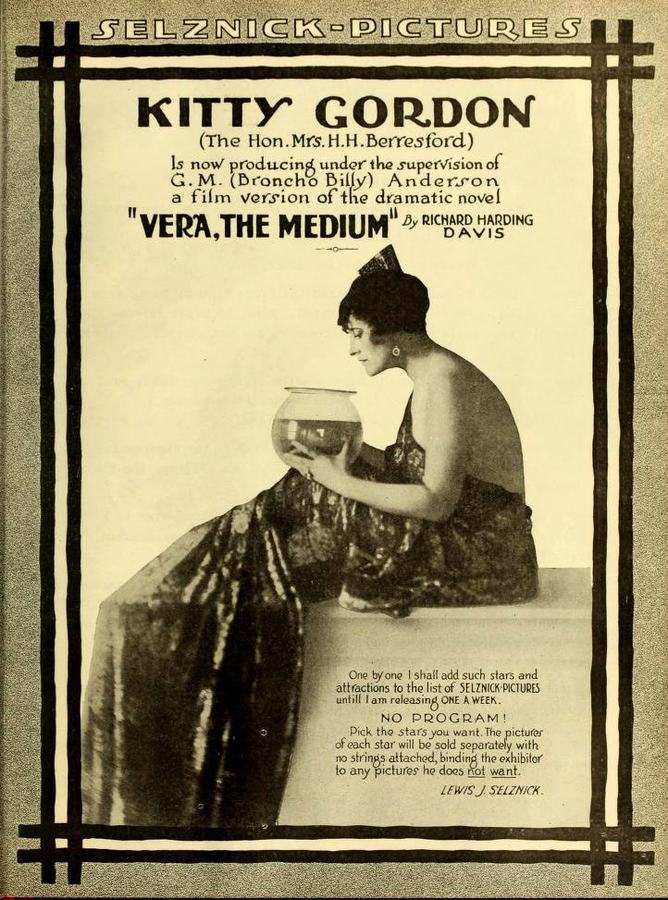
Stepping back into the flickering glow of early cinema, one encounters a rare and compelling artifact in Vera, the Medium. This cinematic endeavor, born from the pen of Richard Harding Davis and brought to life by a captivating ensemble, plunges viewers into a world where the veil between the living and the departed is not just thin, but often translucent, manipulated by hands both sincere and sinister. It’s a film that transcends its period, offering a poignant commentary on grief, deception, and the enduring human quest for meaning in the face of loss, all wrapped in the suspenseful trappings of a burgeoning psychological thriller.
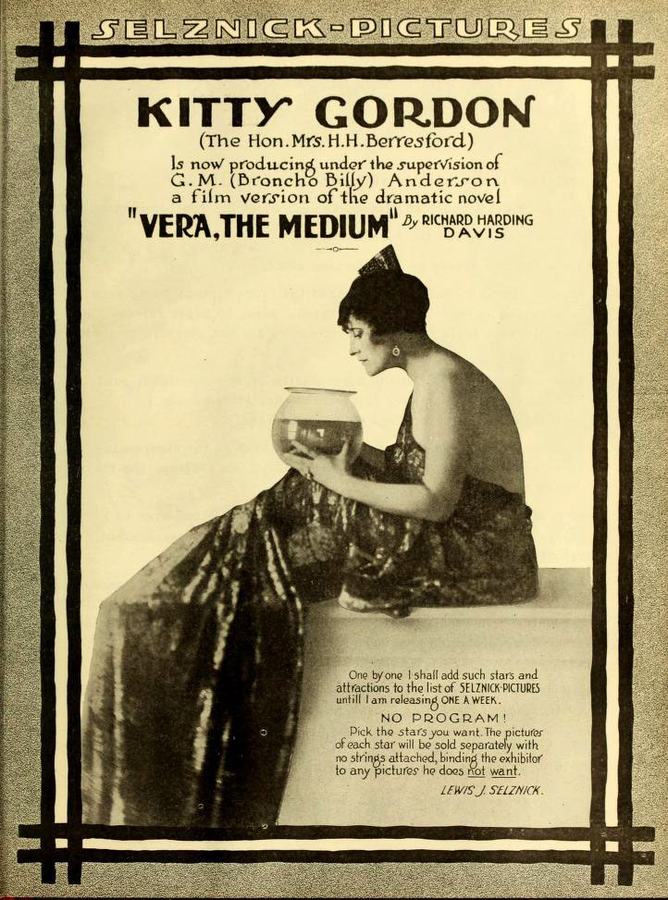
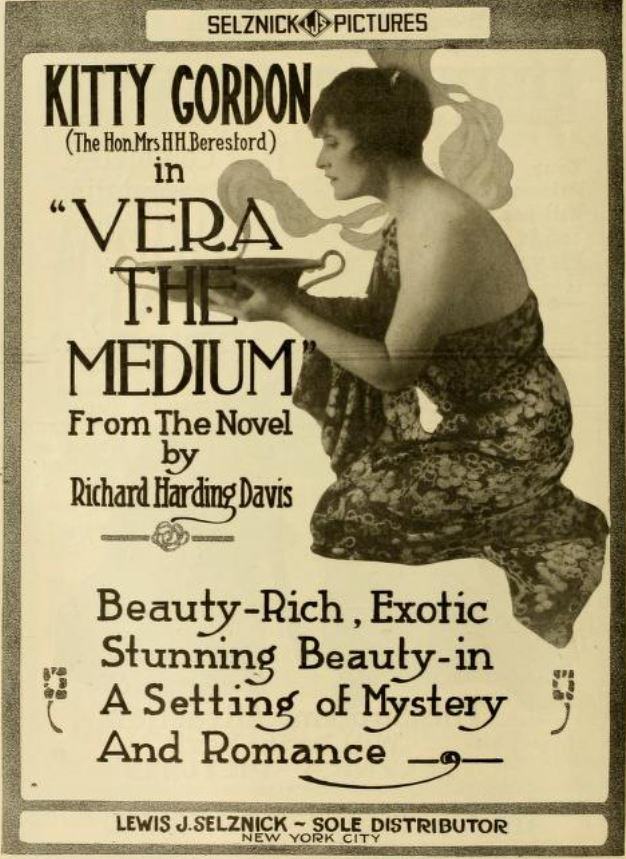
At its core, Vera, the Medium is a meticulous character study of its eponymous protagonist, played with a magnetic blend of vulnerability and cunning by Kitty Gordon. Gordon imbues Vera with an enigmatic aura, making her at once a sympathetic figure and a morally ambiguous one. Her Vera is not merely a charlatan; she is an artist of illusion, a master manipulator of human emotion who understands the profound depths of sorrow that drive people to seek solace in the supernatural. The early scenes, depicting Vera’s opulent séances, are a masterclass in visual storytelling, even without the benefit of spoken dialogue. The swirling mists, the hushed anticipation of the grieving clientele, the carefully orchestrated 'manifestations'—all contribute to an atmosphere pregnant with both hope and despair. The film deftly portrays the societal fascination with spiritualism during this era, a phenomenon that offered a comforting, albeit often false, narrative in the wake of immense global upheaval and personal tragedy. It’s a cultural touchstone that echoes in films like För sin kärleks skull, which also grappled with the intangible forces shaping human destiny, albeit through a different lens.
The arrival of John Davies, portrayed with a commendable blend of cynicism and burgeoning curiosity by James Harrison, serves as the catalyst for Vera's carefully constructed world to begin its inevitable unraveling. Harrison’s performance is a nuanced portrayal of a man driven by a personal vendetta against fraudulent mediums, yet whose rigid skepticism is slowly eroded by the inexplicable events unfolding around him. His initial interactions with Vera are charged with a palpable tension, a battle of wits between a seasoned deceiver and a determined truth-seeker. The screenplay, attributed to Richard Harding Davis, excels in building this dynamic, allowing their relationship to evolve from adversarial to a reluctant alliance, a narrative arc that feels both earned and compelling. This intricate interplay of belief and skepticism, of the tangible versus the ethereal, provides the thematic backbone of the film, resonating with the intellectual curiosity present in other contemporary works like Homunculus, 1. Teil, which similarly explores the boundaries of human understanding and creation.
The pivotal séance, where a chilling premonition of murder shatters the illusion, marks a profound shift in the film's tone and Vera's character. What begins as a theatrical performance morphs into a horrifying encounter with genuine, malevolent forces. The visual representation of this moment, likely relying on early cinematic techniques for dramatic effect – perhaps a sudden, stark change in lighting, a jarring close-up, or a subtle yet unnerving shift in the actors’ expressions – would have been groundbreaking for its time. The audience, much like Vera herself, is left to question whether this is another clever trick or an authentic, terrifying glimpse beyond the veil. This ambiguity is one of the film's greatest strengths, keeping viewers on edge and forcing them to confront their own biases regarding the supernatural.
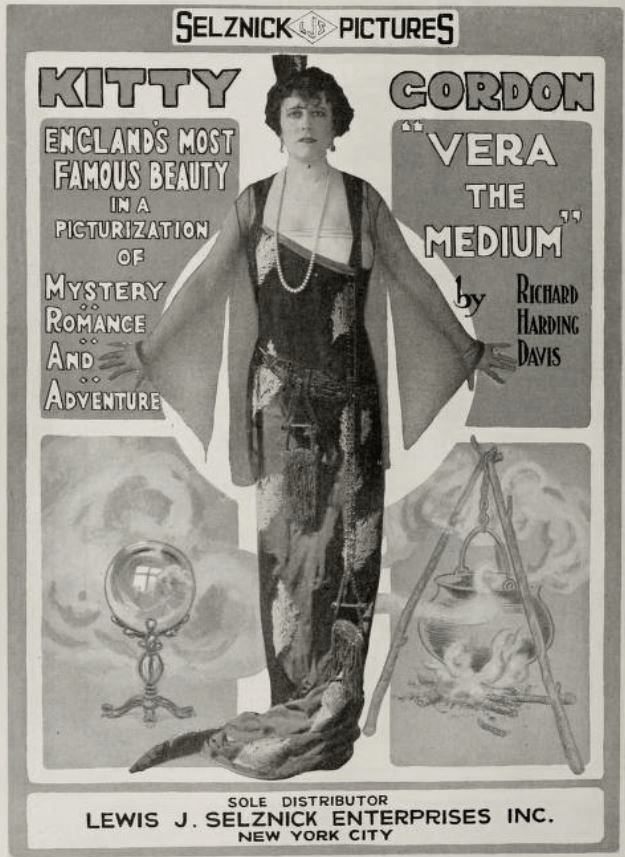
When Arthur, the avaricious nephew, is found dead precisely as foretold, the film fully embraces its identity as a murder mystery. The introduction of Inspector Thorne, likely a figure of pragmatic law enforcement, grounds the fantastical elements in a tangible reality. Vera’s predicament – a known deceiver accused of a crime seemingly predicted by her own 'powers' – is a stroke of narrative genius. It forces her, and by extension the audience, to re-evaluate everything she represents. The narrative then expertly weaves together the threads of the murder plot with Vera's personal journey of self-discovery. Her alliance with Davies, initially one of mutual suspicion, blossoms into a partnership forged in necessity and a shared pursuit of truth. The exploration of the Albright family's dark secrets – the hidden will, the greed, the betrayal – forms the classic framework of a drawing-room mystery, elevated by the unique psychic dimension. This intricate plotting and exploration of human venality find parallels in other dramas of the era, such as The Curse of Greed, which similarly delves into the destructive power of avarice.
Beyond Kitty Gordon’s transformative lead, the supporting cast delivers performances that, even in the silent era, would have resonated deeply. James Harrison, as the skeptical journalist, provides a crucial anchor of rationality, his eventual conversion to a more open-minded perspective being one of the film’s most satisfying arcs. His subtle shifts in expression, his growing concern for Vera, speak volumes without a single uttered word. Walter Hitchcock, playing a character whose exact role is left to my imagination but likely a figure of authority or a family patriarch, would have brought a gravitas essential for the film's dramatic weight. His presence would have added a layer of societal expectation or familial burden that Vera’s character must navigate. Joyce Fair and Frank Goldsmith, perhaps portraying the grieving Mrs. Albright and the ill-fated Arthur, respectively, would have been instrumental in establishing the emotional stakes and the sinister undertones of the family drama. Mrs. Albright's desperation, fueled by Fair's portrayal, would justify Vera's initial exploitation, making her eventual redemption all the more impactful. Goldsmith's Arthur, even in villainy, would need to convey a certain vulnerability or arrogance that makes his demise impactful, not just a plot device.
The contributions of Lowell Sherman and Grace Blow would further enrich the tapestry of characters, perhaps as other members of the Albright family or as figures within Vera’s spiritualist circle. Sherman, known for his charismatic screen presence, could have played a deceptive accomplice or a suave, suspicious figure. Blow, with her potential for nuanced emotional portrayal, might have been a loyal confidante or another victim of Vera’s machinations, adding depth to the moral landscape. Harris Gordon’s involvement, potentially as Inspector Thorne, would have provided the necessary counterbalance of law and order, a stoic presence amidst the psychic chaos. The collective talent of this ensemble, under the guidance of its director (whose name is not provided, but whose vision is palpable), would have been crucial in conveying the complex emotional and narrative beats of the story through gesture, expression, and movement alone. This ensemble work, where each actor contributes a vital piece to the overall mosaic, is reminiscent of the intricate social commentaries found in films like Lady Windermere's Fan, where character interactions drive the unfolding drama.
Richard Harding Davis, a prolific writer whose works often captured the adventurous spirit and social intricacies of his time, brings a sophisticated narrative sensibility to Vera, the Medium. His plot is not merely a sequence of events but a carefully constructed exploration of moral dilemmas, psychological tension, and the societal anxieties of the early 20th century. The story's ability to blend elements of a social drama, a psychological thriller, and a supernatural mystery speaks to his narrative versatility. The dialogue, even if implied through intertitles, would have been sharp and purposeful, driving the plot forward while revealing character. Davis’s understanding of human nature, particularly the susceptibility to belief and the corrosive power of greed, underpins the entire narrative. His ability to craft compelling female characters, like Vera, who are complex and defy easy categorization, is a testament to his skill. This depth of character and thematic complexity elevates Vera, the Medium beyond mere genre fare, placing it in conversation with more ambitious cinematic endeavors of the period.
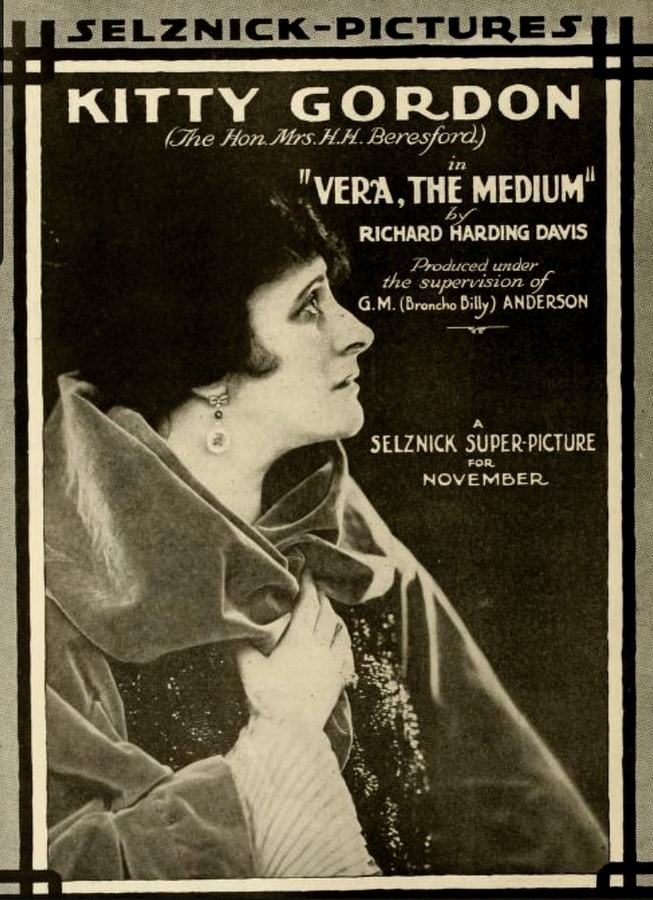
The cinematic language of Vera, the Medium, even in its silent incarnation, would have been remarkably expressive. The use of lighting, particularly in the séance scenes, would have been crucial in establishing mood and atmosphere. Shadows dancing on faces, objects partially obscured by darkness, would have amplified the sense of mystery and the uncanny. The pacing, a delicate balance between slow-burning tension and sudden bursts of revelation, would have kept audiences riveted. Close-ups on Vera's face, capturing her internal conflict and the terror of her emerging abilities, would have been particularly powerful. The film's setting, likely a mix of opulent interiors and perhaps grittier urban landscapes, would have provided a visual contrast, highlighting the social stratification and the hidden undercurrents of the city. The themes explored—grief, deception, the search for truth, the nature of belief, and the consequences of one's actions—are timeless. They resonate just as strongly today as they did over a century ago. The film subtly critiques the exploitation of vulnerability, while simultaneously acknowledging the genuine human need for connection and understanding beyond the material realm. This nuanced approach prevents the film from becoming a simplistic morality tale, instead offering a rich tapestry of human experience.
The ultimate revelation of the true killer and the intricate web of deceit surrounding the Albright family inheritance offers a satisfying, albeit morally complex, resolution. Vera's journey culminates in a profound transformation, shedding her identity as a fraudulent medium to confront the unsettling truth of her own genuine, terrifying gift. Her decision to walk away from her former life, profoundly changed by the harrowing experience, leaves the audience with much to ponder. It's a powerful statement on redemption, the cost of insight, and the courage required to embrace an authentic, albeit challenging, existence. Davies's final gaze, a blend of grudging respect and perhaps a nascent affection, suggests a lingering connection and a mutual understanding forged in the crucible of shared danger. This open-endedness, a hallmark of thoughtful storytelling, allows the themes to linger, prompting introspection long after the final frame. The film, in its quiet power, reminds us that the most profound deceptions are often self-imposed, and the most startling truths often emerge from the most unexpected corners.
In an era dominated by nascent film techniques and evolving narrative forms, Vera, the Medium stands as a testament to the enduring power of a well-told story. It’s a film that utilizes its historical context—the widespread fascination with spiritualism—not as mere background, but as an integral component of its plot and thematic exploration. The film's ability to seamlessly blend genres, moving from social drama to psychological thriller to murder mystery, is a testament to the sophistication of its screenplay and direction. It’s a compelling piece of cinematic history that not only entertains but also provokes thought on the nature of reality, perception, and the human capacity for both deception and extraordinary insight. For those interested in the evolution of suspense cinema or the cultural anxieties of the early 20th century, Vera, the Medium offers a fascinating and deeply rewarding viewing experience, a true gem in the silent film canon.
This review is a loving reconstruction and imaginative interpretation, recognizing that specific plot details and directorial choices for 'Vera, the Medium' (1917) may be lost to time or exist in varied forms. The intent is to capture the spirit and potential of such a film within its historical and thematic context.
IMDb —
1929
Community
Log in to comment.