DbcultAccessing Vault...
Cult Review
Senior Film Conservator
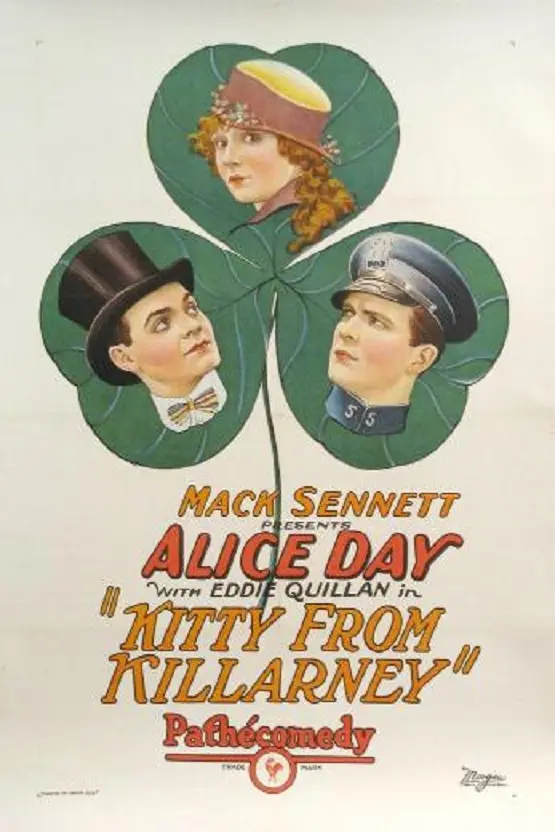
Is Kitty from Killarney a lost silent masterpiece or just a frantic relic of a bygone era? Short answer: It is a fascinating, if messy, cultural artifact that provides more sociological insight than actual laughs, though the final act is undeniably energetic. This film is for silent comedy enthusiasts and those interested in early 20th-century immigrant narratives; it is definitely not for those who demand narrative logic or high-definition polish.
This film works because it captures the frantic, survivalist energy of the 1920s New York immigrant experience through the lens of pure physical comedy.
This film fails because its plot relies on a series of increasingly absurd coincidences that even for the slapstick genre feel strained and poorly motivated.
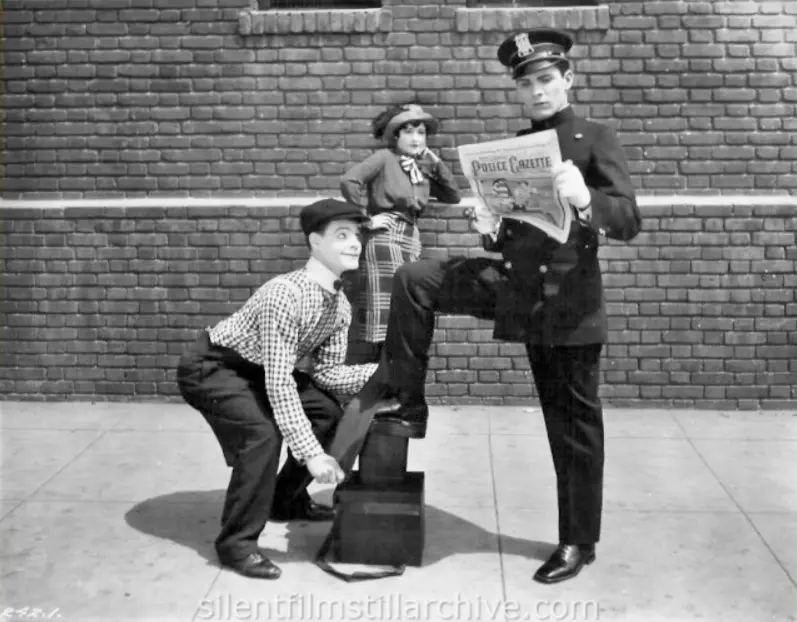
You should watch it if you want to see how early cinema navigated the intersection of Irish and Jewish immigrant cultures with a side of vegetable-based violence.
The film opens with a surprisingly tense premise. Kitty is the 'one person too many' for the immigration quota. In modern cinema, this would be a social drama like The Pitfall, but here, it is the catalyst for a heist-like escape. Kitty’s decision to hide among a Jewish family is the film's first strong choice. It bypasses the typical 'Irish vs. Everyone' trope and suggests a communal immigrant struggle.
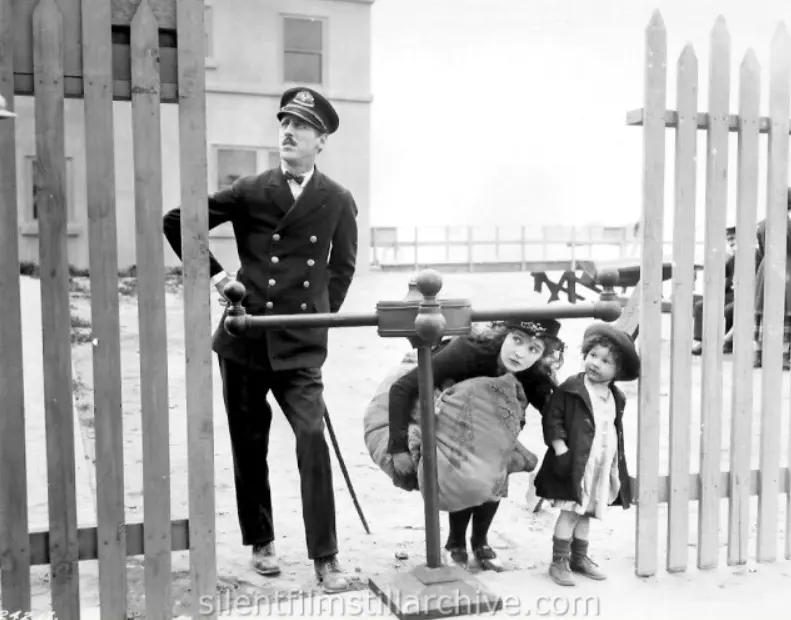
The way Alice Day plays the desperation of the gateman scene is subtle. She doesn't just act scared; she acts resourceful. When she slips through, it’s not a moment of grace; it’s a moment of grit. This grit defines the character throughout the film, even when things get ridiculous.
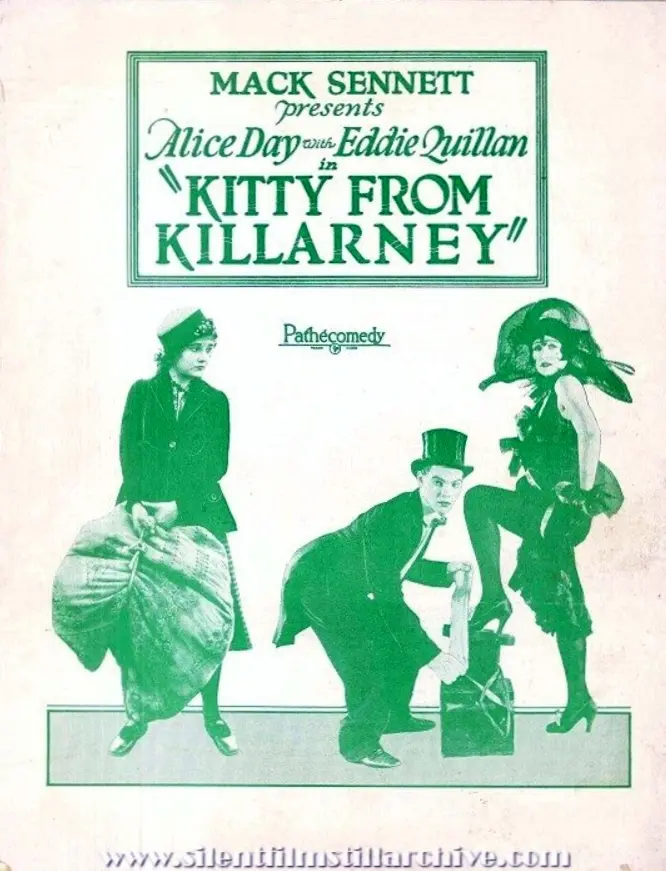
However, the transition from the docks to the Ghetto is jarringly fast. The film doesn't breathe. It sprints. This is a common trait in shorts of this era, but here it feels like we missed a chapter of Kitty’s assimilation. One moment she is a refugee; the next, she is the belle of the beat cop’s eye.
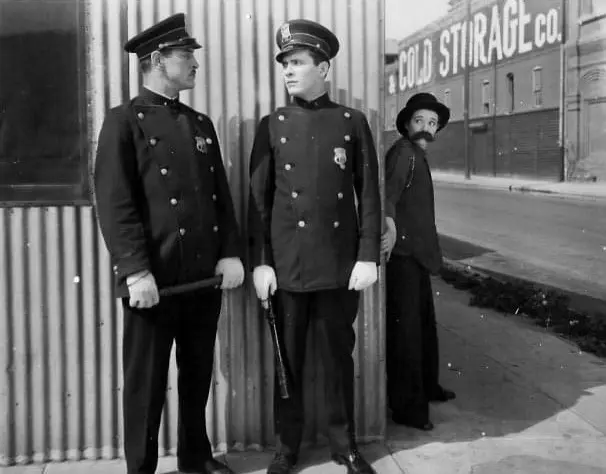
The middle act introduces a plot device that is as old as Shakespeare: the female-to-male disguise. After an altercation involving a thrown vase—a scene that lacks the precision of a Keaton gag but makes up for it in sheer volume—Kitty dons a derby and a fake mustache. It’s a flimsy disguise. It works. But it’s flawed.
The mustache itself becomes a character. In one specific moment, Kitty has to adjust it while flirting with Danny the cop. The tension isn't about being caught; it’s about the absurdity of the situation. Alice Day’s physical commitment to the 'manly' stride is the highlight here. She doesn't just put on a hat; she changes her entire center of gravity.
This sequence reminds me of the identity play found in Sherlock's Home, where the disguise is less about fooling the audience and more about giving the actor a new playground. It’s a bold, debatable choice to spend so much time on this gag, but it pays off by heightening the tension for the theater climax.
If you are watching this for one reason, it is the theater scene. This is where the film sheds any pretense of being a 'story' and becomes a pure exercise in slapstick carnage. Eddie’s dance routine is intentionally mediocre, but the audience’s reaction is legendary. We aren't talking about a few boos; we are talking about a barrage of watermelons, cabbages, and tomatoes.
The specific moment where Kitty throws a potato so hard her mustache falls off is a masterclass in timing. It’s the ultimate 'reveal' through violence. The ensuing chase across the stage is messy and uncoordinated, which actually makes it feel more authentic than the polished stunts of Fighting Blood. It feels like a real riot broke out and the camera just happened to be there.
The use of 'catsuppy tomatoes' as a weapon of war is a recurring motif in Christie comedies, but here it feels personal. When Eddie hits Kitty back, the romantic subtext is effectively dead. This isn't a film about rekindling old flames; it’s about moving on through mutual assault. It’s a cynical take on romance that feels surprisingly modern.
The cinematography is utilitarian. There are no sweeping vistas or experimental angles like you might find in The Virgin of Stamboul. The camera stays at eye level, capturing the action in medium shots that prioritize the physical gags over emotional depth. This is a blue-collar film made for a blue-collar audience.
The pacing is relentless. At times, this works in its favor, creating a sense of urban claustrophobia. At other times, it feels like the writers—all five of them—were fighting for space. The involvement of Max Davidson and Billy Gilbert suggests a pedigree of comedy that isn't always fully utilized. Gilbert, in particular, is underbaked here, though his presence adds a layer of 'Vaudeville royalty' to the proceedings.
Yes, but only as a study of 1920s energy. If you are looking for a cohesive narrative, look elsewhere. If you want to see a woman in a fake mustache throw a potato at her ex-boyfriend in the middle of a vegetable riot, this is the pinnacle of cinema. It is a loud, silent movie that captures the anxiety of the immigrant experience through the safety valve of laughter.
Pros:
+ Alice Day’s energetic and transformative performance.
+ A rare, early look at inter-ethnic cooperation in the Ghetto.
+ The vegetable riot is genuine, chaotic fun.
+ Fast-paced enough that it never becomes boring.
Cons:
- The plot is paper-thin and relies on extreme coincidences.
- Some of the ethnic humor hasn't aged gracefully.
- The character of Danny the Cop is mostly a cardboard cutout.
- The technical quality of surviving prints can be a barrier.
Kitty from Killarney is a wild, unpolished gem of the silent era. It lacks the sophistication of a Chaplin feature or the structural brilliance of a Keaton short, but it possesses a raw, street-level vitality that is infectious. It treats the serious subject of immigration quotas with the same irreverence it treats a failing dance act. It’s not a masterpiece. It’s a riot. And sometimes, a riot is exactly what you need. While it doesn't reach the dramatic heights of Enemies of Women, it remains a punchy, 20-minute explosion of 1920s spirit. Watch it for the history, stay for the potatoes.

IMDb 7
1934
Community
Log in to comment.