DbcultAccessing Vault...
Cult Review
Senior Film Conservator
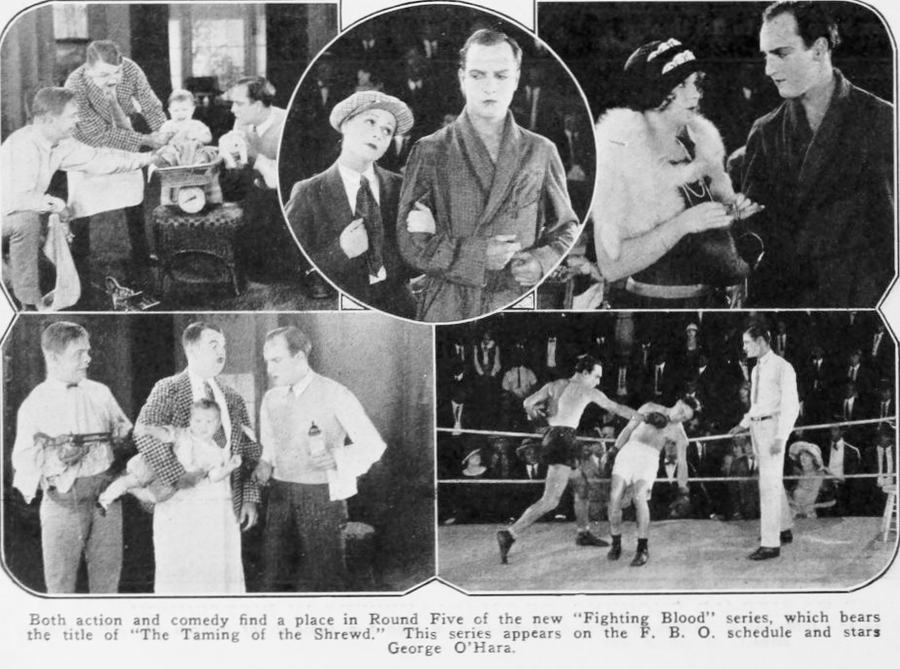
The film opens with a rain‑soaked street, the kind of tableau that immediately summons the melancholy of urban anonymity. Gale Galen (Kit Guard) strides through the gloom, his silhouette a study in contradictions: a hardened exterior softened by an almost imperceptible flicker of compassion. When a despondent mother, her eyes hollow with despair, abandons her newborn, Galen’s reaction diverges sharply from the expected indifference of the era’s cinematic anti‑heroes. He cradles the infant, an act that sparks the central premise—a motley band of friends, each bearing their own scars, coalescing around a shared responsibility.
Al Cooke’s portrayal of the loyal sidekick injects levity without undermining the gravitas of the situation. His timing, crisp yet unforced, recalls the comedic beats seen in Lord Loveland Discovers America, yet the humor here is more subdued, serving the narrative rather than eclipsing it. George O'Hara, as the skeptical yet ultimately compassionate ally, delivers a performance that oscillates between stoic resolve and quiet vulnerability, echoing the emotional depth of The Law of Compensation. Mary Beth Milford’s brief but poignant appearance as the mother adds a tragic counterpoint, her eyes conveying a world-weariness that words could never articulate.
The direction, while modest by contemporary standards, displays an astute awareness of visual storytelling. The chiaroscuro lighting, a hallmark of the silent era, is employed to accentuate the moral chiaroscuro within each character. The film’s pacing, deliberately measured, allows moments of silence to breathe, granting the audience space to inhabit the characters’ internal landscapes. H.C. Witwer’s screenplay, complemented by Beatrice Van’s contributions, weaves a narrative that is at once simple and layered, reminiscent of the structural elegance found in Polikushka.
At its core, The Taming of the Shrewd interrogates the notion of societal responsibility. The collective decision to care for the abandoned child becomes a microcosm of community solidarity, challenging the era’s prevailing individualist ethos. The film subtly critiques the social structures that render a mother so despondent that she feels compelled to abandon her offspring, thereby aligning itself with the moral inquiries posed by Her Fighting Chance. Moreover, the narrative’s resolution—wherein the child’s future is secured through the collaborative efforts of the group—offers an optimistic, albeit idealized, vision of collective agency.
When juxtaposed with contemporaneous works such as Under Suspicion (1923) or the stark realism of Fesseln, The Taming of the Shrewd distinguishes itself through its blend of melodrama and subtle social commentary. Unlike the overt melodramatic tropes of The Cavell Case, this film opts for restraint, allowing the audience to infer the weight of each decision. Its narrative economy mirrors the tight scripting of The Strength of Donald McKenzie, yet it diverges by foregrounding a child’s innocence as the catalyst for adult transformation.
Emerging in the twilight of the silent era, the film occupies a transitional space where visual storytelling still reigns supreme, yet narrative sophistication begins to hint at the forthcoming talkies. Its emphasis on collective morality prefigures the socially conscious cinema of the 1930s, positioning it as an early antecedent to the more overtly political works of the later decade. The casting of Kit Guard, primarily known for his comedic roles, in a dramatically nuanced lead, showcases the fluidity of star personas during this period, a phenomenon also observable in the career trajectories of actors featured in Voices and Stop Thief (1920).
The cinematography employs a series of tight close‑ups that capture the nuanced expressions of the protagonists, a technique that compensates for the absence of dialogue. The intertitles are sparingly used, each line crafted with poetic brevity, echoing the lyrical economy found in Other Men’s Shoes. The editing rhythm, particularly in the sequences depicting the group’s attempts to secure shelter and sustenance for the child, is brisk yet unhurried, mirroring the characters’ frantic yet hopeful state of mind.
Louise Lorraine’s supporting role, though limited in screen time, provides a poignant counterbalance to Galen’s stoicism. Her expressive eyes convey an unspoken narrative of loss and redemption, a performance that resonates with the emotional depth of Souls Adrift. The ensemble’s chemistry feels organic, each actor inhabiting their role with a sincerity that transcends the film’s modest production values.
The screenplay adheres to a three‑act structure that feels both familiar and refreshingly nuanced. Act one establishes the inciting incident—the abandonment—setting a tone of quiet desperation. Act two delves into the logistical challenges of caring for an infant within a transient community, interspersed with moments of levity that prevent the narrative from descending into melodramatic excess. Act three culminates in a resolution that, while perhaps optimistic, underscores the film’s central thesis: that humanity’s capacity for compassion can eclipse its propensity for neglect.
Contemporary reviews lauded the film for its heartfelt portrayal of communal responsibility, noting its departure from the era’s prevalent focus on romantic entanglements. Modern scholars have revisited the work, interpreting it as an early cinematic exploration of social welfare themes. Its influence can be traced in later works that foreground collective action over individual heroics, a narrative shift evident in the post‑Depression era’s socially engaged cinema.
The Taming of the Shrewd endures as a quiet testament to the power of shared humanity. Its modest runtime belies a richness of thematic content and a deftness of craft that rewards repeated viewings. For aficionados of silent cinema seeking a film that marries narrative simplicity with moral complexity, this work offers a resonant, albeit understated, experience. Its palette of dark orange, muted yellows, and sea‑blue undertones—reflected here in the design of this review—mirrors the film’s own visual language: warm, hopeful, and tinged with the melancholy of a world in flux.
IMDb —
1919
Community
Log in to comment.