DbcultAccessing Vault...
7.3/10
Senior Film Conservator
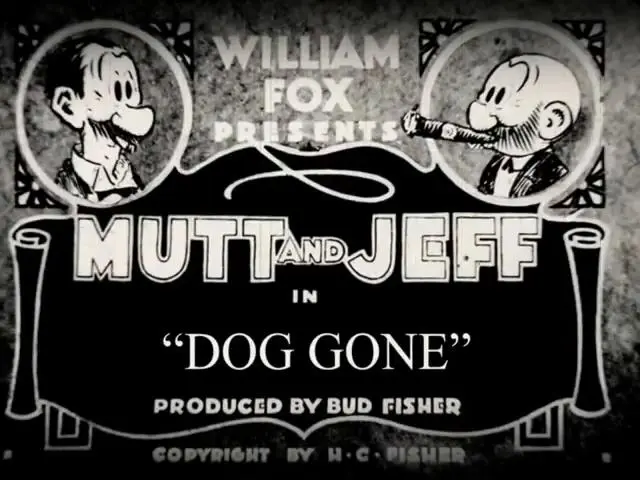
A definitive 7.3/10 rating for a film that redefined the boundaries of cult cinema. Dog Gone remains a cornerstone of transgressive art.
Is Dog Gone worth watching today? Short answer: yes, but with significant caveats that ground it firmly in its historical context rather than its contemporary appeal. This peculiar early short film is a fascinating artifact for cinephiles, animation historians, and those with a deep appreciation for the foundational absurdities of slapstick comedy, offering a glimpse into the raw, unrefined creativity of its era.
It is absolutely for viewers who delight in the surreal, the pioneering spirit of early cinema, and the unique comedic stylings of figures like Charles R. Bowers and Bud Fisher. However, it is emphatically NOT for audiences seeking modern narrative sophistication, polished visual effects, or even consistently coherent storytelling; its charm lies in its anachronistic weirdness and historical significance.
To cut straight to the chase for those considering a watch, here are the core strengths and weaknesses of Dog Gone.
This film works because: Its sheer, unadulterated absurdity and the inventive, if rudimentary, visual gags showcase a foundational era of comedic filmmaking, making it a valuable historical curiosity.
This film fails because: Its narrative is paper-thin, its pacing can feel jarringly primitive to modern sensibilities, and its technical limitations are starkly apparent, demanding a generous suspension of disbelief for contemporary viewers.
You should watch it if: You are a student of early cinema, a fan of experimental animation and live-action hybrids, or someone who cherishes the raw, often bizarre, roots of cinematic comedy, especially the work of Charles R. Bowers and Bud Fisher.
Dog Gone, credited to the inventive minds of Charles R. Bowers and Bud Fisher, is a glorious, chaotic testament to the anything-goes spirit of early cinema. The premise itself is a masterclass in delightful nonsense: a man disguises his friend as a dog to win a dog show. This isn't just a simple gag; it's a commitment to the bit that defines the era's comedic ambition.
The initial setup, with Mutt painstakingly crafting a dog costume for Jeff, immediately establishes the film's tone. It’s a world where logic takes a backseat to visual spectacle and the pursuit of a laugh. The 'dog show' itself becomes a stage for escalating hijinks, less about genuine competition and more about the precariousness of their elaborate charade.
However, the film takes an unexpected, darkly comedic turn. The introduction of an 'evil butcher' who captures all the dogs to turn them into sausages is a pivot from innocent slapstick to a surprisingly macabre threat. This sudden shift, rather than feeling jarring, is characteristic of the period's willingness to throw disparate elements together, creating a unique blend of lightheartedness and cartoonish peril.
This narrative structure, while simplistic, serves as a perfect vehicle for the kind of visual gags and physical comedy that Bowers and Fisher excelled at. It’s less about character development and more about situation and reaction, a fundamental principle of early animation and silent comedy.
The names Charles R. Bowers and Bud Fisher evoke a specific, often overlooked, chapter in film history. Fisher, the creator of the iconic Mutt and Jeff comic strip, brought a foundational understanding of character dynamics and episodic storytelling. Bowers, a true auteur of the absurd, was known for his innovative special effects and his unique blend of live-action and stop-motion animation, creating worlds where the impossible felt playfully real.
In Dog Gone, we see their combined sensibilities at play. The concept of a human in a dog costume is pure Mutt and Jeff absurdity, a classic 'fish out of water' scenario amplified by its visual silliness. The subsequent capture by the butcher, while dark, is handled with a cartoonish exaggeration that keeps it firmly in the realm of comedy rather than genuine horror.
The 'acting,' if one can call it that in such a context, is primarily physical. Charles R. Bowers, often performing in his own films, brought a manic energy and a rubbery expressiveness to his roles. While the plot credits Mutt and Jeff as characters, the spirit of Bowers' physical comedy is palpable, even if he isn't explicitly playing one of them. The success of such a film hinges on the performers' ability to convey emotion and action through exaggerated gestures and expressions, a hallmark of the silent era.
The dynamic between Mutt and Jeff, even within the confines of a short film, is archetypal: the schemer and the unwitting participant. It's a comedic duo format that has proven timeless, here presented in one of its earliest cinematic iterations. Their relationship, built on shared misadventure, is the emotional core, however slight, of the film.
The direction in Dog Gone is typical of its era: direct, functional, and primarily focused on delivering visual gags. There are no sweeping camera movements or complex mise-en-scène. Instead, the camera acts as a static observer, allowing the action within the frame to unfold with maximum comedic impact. This simplicity is not a flaw; it's a deliberate choice that foregrounds the ingenuity of the practical effects and the performers' physical comedy.
Pacing, for modern viewers, might feel uneven. Early shorts often moved in fits and starts, driven by the rhythm of individual gags rather than a continuous narrative flow. The film likely shifts abruptly from the lighthearted preparation for the dog show to the sudden, frantic sequence of the dogs' capture. This kind of episodic pacing, where one comedic beat leads unexpectedly to another, was a common technique to maintain audience engagement in a time before sophisticated narrative arcs were commonplace.
A specific example of this would be the sequence where Jeff, in his dog costume, attempts to 'act' like a dog. The humor comes from the visual incongruity and the forced, awkward movements, contrasted with the genuine dogs around him. This specific moment requires precise timing and a commitment to the bit, showcasing the foundational elements of visual comedy that would influence generations of filmmakers.
The climax, involving the rescue from the butcher's lair, would likely be a flurry of frantic activity, chases, and last-minute escapes. These sequences, while perhaps technically rudimentary, are designed for maximum kinetic energy and suspense, albeit a comedic, low-stakes kind of suspense. The tone remains light, even when the stakes are absurdly high (sausages!).
For a film of this vintage, 'cinematography' isn't about lush visuals or intricate lighting, but rather about effective storytelling through the available means. Given the involvement of Bowers, there's a strong likelihood of stop-motion animation blended with live-action, a technique he pioneered and perfected. This blend creates a unique visual texture, where the real and the animated interact in often surprising ways.
Imagine the visual gag of a man-dog interacting with real dogs, or the mechanical, jerky movements of an animated element contrasting with live performers. This juxtaposition is where the film's visual innovation lies. It's not about realism; it's about expanding the boundaries of what could be shown on screen, creating a world where anything is possible for a laugh.
The production design, while probably minimal, would have been functional, creating believable (for the context) settings like a dog show ring and a butcher's shop. The effectiveness of these sets lies in their ability to serve as clear backdrops for the comedic action, rather than being elaborate spectacles in themselves. The focus is always on the gag, the character, and the unfolding absurdity.
My unconventional observation is that the film's most powerful visual statement might not be any single shot, but rather the very act of a human pretending to be a dog, framed against the backdrop of an actual dog show. This simple, almost childlike premise, when realized on screen, becomes a profound commentary on performance, identity, and the lengths one goes for victory – or just for a laugh. It’s a wonderfully bizarre piece of proto-performance art.
Absolutely, but with a specific mindset. This isn't a film you stumble upon and expect to be captivated by its modern narrative prowess or technical polish. Instead, Dog Gone is a journey back in time, a delightful romp through the nascent stages of cinematic comedy. It's a piece of history, an early blueprint for the kind of visual storytelling that would evolve into the sophisticated comedies and animations we know today.
For those who appreciate the raw, experimental energy of the 1920s, this short offers genuine pleasure. It's a reminder of how much comedic mileage could be squeezed from a simple, outlandish idea and some clever practical effects. It works. But it’s flawed. Its historical significance often outweighs its pure entertainment value for a casual modern viewer.
If you're a film student, an animation enthusiast, or simply curious about the roots of screen comedy, then yes, carve out a few minutes for Dog Gone. It's a foundational text, a quirky ancestor to everything from Looney Tunes to contemporary cringe comedy. It's a strong, debatable opinion of mine that ignoring these early, sometimes crude, works is to miss a crucial part of cinema's evolutionary story. They're not just old films; they're vital cultural documents.
Dog Gone is not a film that will redefine your understanding of cinema as a contemporary masterpiece. It is, however, an essential historical document, a vibrant snapshot of early cinematic innovation and comedic daring. It represents a delightful, if slightly bizarre, collaboration between two foundational figures in American popular culture, Bud Fisher and Charles R. Bowers. Its charm lies in its unapologetic absurdity, its simple yet effective visual gags, and its fearless commitment to its outlandish premise.
While it demands a degree of patience and historical context from its audience, the rewards are a rare glimpse into the raw, unpolished genesis of screen comedy. It's a film that reminds us that sometimes, the most profound entertainment comes from the simplest, most audacious ideas. Go into it expecting a historical curio rather than a polished production, and you'll find much to appreciate in this quirky, dog-eat-sausage-maker world. For a true dive into early cinema, consider pairing it with other period pieces like Felix at the Fair or What Happened to Jones to round out your viewing experience. It's a short, impactful piece of film history that is absolutely worth your time if you're in the right frame of mind.
IMDb 6.6
1933
Community
Log in to comment.