DbcultAccessing Vault...
7.7/10
Senior Film Conservator
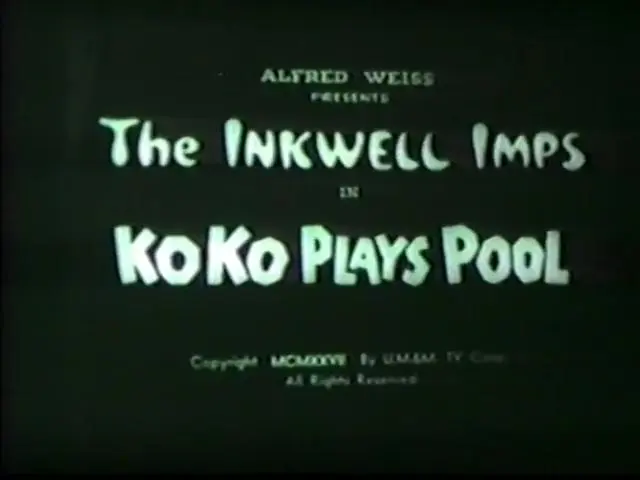
A definitive 7.7/10 rating for a film that redefined the boundaries of cult cinema. Ko-Ko Plays Pool remains a cornerstone of transgressive art.
Is 'Ko-Ko Plays Pool' a film you should prioritize in today's crowded streaming landscape? Short answer: yes, but with significant caveats. This early animation gem is an absolute treasure for film historians, animation students, and those fascinated by the genesis of the art form, but its primitive nature and lack of narrative will likely deter casual viewers seeking modern entertainment.
It’s a foundational text, a cinematic fossil, offering invaluable insights into the very mechanics of how animation began to breathe. For those willing to engage with it on its own terms, its rewards are profound; for others, it will feel like a curiosity, nothing more.
Absolutely, if your interest lies in the historical development of cinema. 'Ko-Ko Plays Pool' is not just a film; it's a living artifact, a direct link to the innovative spirit of the early 20th century. It offers a unique window into the technical wizardry and creative ambition of the Fleischer Brothers, who were, in many ways, just as significant to animation's infancy as Walt Disney would be to its adolescence.
This film works because it is a direct, unfiltered demonstration of revolutionary animation techniques. It works as a historical document.
This film fails because its primary appeal is academic. It lacks the narrative sophistication, character depth, or comedic timing that modern audiences expect, making it a difficult recommendation for anyone not specifically interested in animation history.
You should watch it if you are an animation student, a film historian, or simply someone captivated by the origins of moving pictures. You should skip it if you're looking for compelling storytelling, character development, or high-octane entertainment.
'Ko-Ko Plays Pool' isn't merely an animated short; it's a testament to innovation, a raw, unfiltered peek into the very crucible of cinematic magic. Released as part of the Fleischer Brothers' groundbreaking 'Out of the Inkwell' series, this particular short stands as a stark reminder of animation's humble, yet audacious, beginnings. It's easy, in our era of CGI blockbusters and hyper-realistic digital effects, to overlook the sheer audacity of what Max and Dave Fleischer achieved with ink and celluloid.
The film's plot, if one can even apply such a sophisticated term, is wonderfully straightforward: Ko-Ko the Clown engages with a pool table. But beneath this surface simplicity lies a technical marvel: rotoscoping. This technique, patented by Max Fleischer in 1917, involved tracing over live-action footage, allowing animators to achieve incredibly fluid and realistic movement for their characters. Watching Ko-Ko move across the table, interact with the balls, and even seemingly defy gravity with a playful bounce, is to witness the very first sparks of animation's potential to convincingly integrate drawn characters into a live-action world.
The Fleischer Brothers weren't just creating cartoons; they were conducting experiments in visual perception. They were asking: how real can we make the unreal? How can we blur the lines between what is filmed and what is drawn? 'Ko-Ko Plays Pool' is a direct answer to these questions, a bold declaration of animation's capacity for illusion.
The visual style is distinctively Fleischer. Ko-Ko, with his stark black-and-white design and perpetually surprised expression, is instantly recognizable. The integration of the drawn character into the live-action background, while rudimentary by today's standards, was nothing short of revolutionary. Consider the scene where Ko-Ko taps a pool ball. The weight, the trajectory, the bounce – all rendered with a fidelity that was unprecedented for its time. This wasn't merely tracing; it was an act of translation, bringing human movement into the two-dimensional realm.
While 'director' in the modern sense might be an anachronism for such early shorts, the creative vision of Max and Dave Fleischer is undeniable. Their approach was less about conventional storytelling and more about showcasing the marvel of their patented process. The pacing of 'Ko-Ko Plays Pool' is deliberate, almost instructional. It takes its time, allowing the viewer to absorb the novelty of Ko-Ko's existence within a 'real' environment. There's a certain pedagogical charm to it, as if the Fleischers are guiding us through their workshop, revealing the magic trick one frame at a time.
The tone is playful, whimsical, and deeply curious. There's no dramatic tension, no complex character arc. Instead, the film invites viewers to simply wonder, to marvel at the impossible made visible. This simplicity is its strength; it allows the technical achievement to shine without the distraction of narrative complexities. It's a pure demonstration, unburdened by the demands of conventional filmmaking.
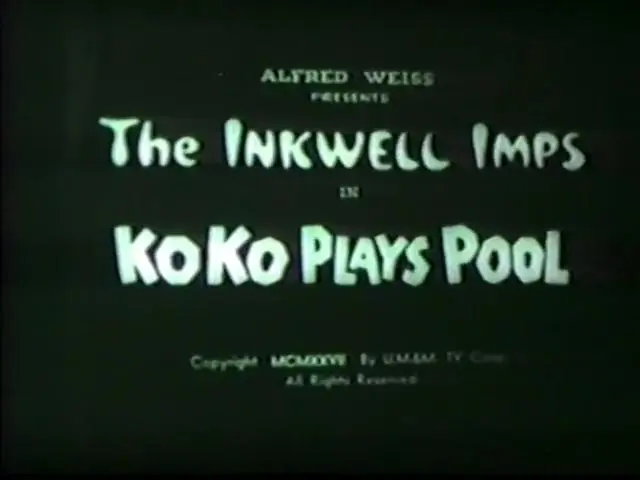
Cinematography, in the traditional sense, is limited. The camera is static, serving primarily to capture the interaction between Ko-Ko and the pool table. However, the 'cinematography' of the animation itself is where the true artistry lies. The fluidity of Ko-Ko's movements, the subtle shifts in perspective as he leans over the table – these are the 'shots' that truly impress. It's a testament to the meticulous frame-by-frame work that went into bringing Ko-Ko to life. The film’s visual language is entirely dictated by the innovative process of rotoscoping, a technique that would profoundly influence animation for decades, albeit often uncredited.
"The Fleischer Brothers' work was a direct challenge to the very definition of 'reality' on screen, pushing the boundaries of what a camera could capture and what an artist could create."
One might not typically discuss 'acting' in the context of an early animated short, but Ko-Ko's 'performance' is central to the film's appeal. Animated by the Fleischer Brothers themselves, Ko-Ko embodies a fascinating blend of human-like fluidity and cartoonish exaggeration. Thanks to rotoscoping, his movements are remarkably naturalistic, lending a surprising weight and presence to a character made of ink.
Yet, Ko-Ko isn't merely a traced figure. There's a distinct personality that emerges – a mischievous curiosity, a playful disregard for the laws of physics, and an almost childlike wonder at his own existence. When he interacts with the pool balls, there's a sense of genuine engagement, a feeling that this character is truly exploring his environment. This early form of character animation, while rudimentary, lays the groundwork for all animated performances that would follow, from Mickey Mouse to Bugs Bunny.
His expressiveness, though limited by the technology of the era, is conveyed through his posture and the broad strokes of his design. The way he leans into a shot, the slight tilt of his head – these are subtle touches that imbue him with a sense of consciousness. It’s a remarkable achievement for a character who is, at his core, a series of hand-drawn lines. This is where the human element, the 'performance,' truly shines through the technical process.
'Ko-Ko Plays Pool' emerged from an era of explosive cinematic experimentation. Before the dominance of Disney's narrative-driven animation, the Fleischer Brothers were carving out their own niche, focused on spectacle and technical marvel. Their 'Out of the Inkwell' cartoons were a sensation, captivating audiences with the novelty of their 'rotoscoped' characters interacting with the live-action world. This was, in many ways, the precursor to modern special effects, a primitive but powerful form of visual trickery that captivated audiences.
The film's impact cannot be overstated. It solidified rotoscoping as a viable and influential animation technique, one that would be adopted and adapted by countless animators in the decades to come. While its direct influence might not be immediately apparent in today's digital animation, the underlying principle – bringing realistic movement to animated characters – remains a cornerstone of the craft. It taught animators that realism, even in fantasy, could be achieved through careful observation and innovative techniques.
Furthermore, 'Ko-Ko Plays Pool' contributed to the burgeoning understanding of animation as a distinct art form, separate from live-action cinema. It demonstrated that animation wasn't just about moving drawings; it was about creating worlds, characters, and interactions that could challenge and expand the viewer's perception of reality. It opened doors to imaginative possibilities that were previously unattainable.
My unconventional observation is this: for all its technical innovation, the most radical aspect of 'Ko-Ko Plays Pool' isn't the rotoscoping itself, but the implicit trust it places in the audience's willingness to suspend disbelief for something so overtly artificial. It’s a foundational lesson in the magic of cinema: that we *want* to believe the impossible, even when we know it's a trick. This film doesn't just show a trick; it celebrates the very act of being tricked.
'Ko-Ko Plays Pool' is not a film you watch for entertainment in the conventional sense. It is a historical document, a technical demonstration, and a profound testament to the ingenuity of early animators. It is a vital piece of cinematic archaeology, offering unparalleled insight into the birth of a medium.
For those with a genuine interest in the history of film and animation, this short is an absolute must-see. It’s a chance to witness the very moment animation began to truly stretch its limbs, to break free from static drawings and interact with the world. It’s a fascinating, if somewhat dry, journey into the past.
However, for the casual viewer, its appeal will be limited. Without context or a specific appreciation for its historical significance, 'Ko-Ko Plays Pool' might simply appear as a quaint, slow, and ultimately unengaging curiosity. It works. But it’s flawed.
My strong opinion is that judging films like 'Ko-Ko Plays Pool' purely by modern entertainment metrics is a disservice. Its value lies not in its ability to compete with today's blockbusters, but in its foundational role, its radical ideas that paved the way for everything that followed. It's a cornerstone, not a capstone, and should be appreciated as such.
In conclusion, 'Ko-Ko Plays Pool' earns its place in cinematic history not through narrative brilliance, but through sheer, unadulterated technical innovation. It's a foundational text, a glimpse into the very first steps of a giant. Seek it out if you want to understand where animation truly began. Otherwise, you can respectfully pass.

IMDb 6.8
1929
Community
Log in to comment.