DbcultAccessing Vault...
5.5/10
Senior Film Conservator
A definitive 5.5/10 rating for a film that redefined the boundaries of cult cinema. The Star Prince remains a cornerstone of transgressive art.
Ah, the timeless allure of a fairy tale! There's something inherently captivating about narratives that plunge us into worlds where morality is starkly delineated, where virtue is ultimately rewarded, and where even the most egregious flaws can be pruned away through hardship and a touch of the divine. Madeline Brandeis's cinematic offering, The Star Prince, stands as a quintessential exemplar of this tradition, a film that, despite its vintage, continues to resonate with its profound exploration of character, consequence, and the redemptive power of selflessness. It’s a narrative tapestry woven with threads of arrogance, penance, and ultimately, a triumphant return to grace, delivered with a visual earnestness characteristic of its era.
Our story begins not in a gilded palace, but in the humble dwelling of a woodcutter, where a child of celestial origins, a true star prince, is being raised. One might expect such an upbringing to temper any inherent royal hubris, to ground the young heir in the realities of common life. Yet, paradoxically, this rustic environment seems to have nurtured a particularly virulent strain of self-importance. The prince, portrayed with a compelling blend of youthful petulance and underlying vulnerability by Zoe Rae in his early, cruel phase, grows into a figure defined by his utterly insufferable cruelty. He is a character who embodies the adage that power, even perceived power over those beneath him, corrupts absolutely. His actions are not merely mischievous; they are born of a deep-seated disdain for others, a chilling lack of empathy that sets the stage for the dramatic upheaval to come. This initial portrayal of the prince’s character is crucial, as it establishes the moral deficit that must be rectified. It’s a bold move to present a protagonist so unlikable at the outset, demanding a significant arc of transformation for the audience to invest in his eventual redemption.
The screenplay, penned by Brandeis herself, doesn't shy away from depicting the prince's transgressions in vivid detail, allowing the audience to fully grasp the depth of his fallibility. This unflinching portrayal makes the subsequent divine intervention not merely a plot device, but a necessary consequence, a cosmic correction. The narrative effectively builds a case for why such a drastic measure is warranted, preparing us for the arrival of the fairy, the arbiter of justice in this fantastical realm.
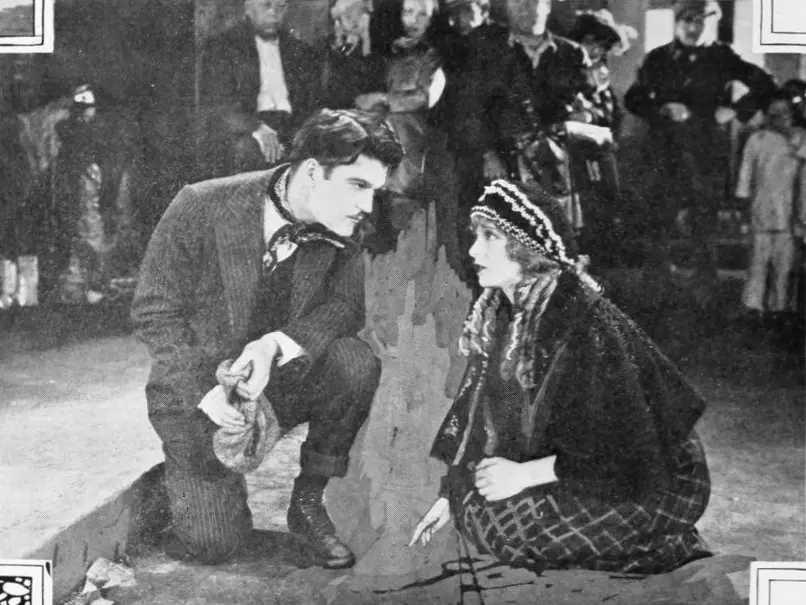
Enter the fairy, a figure of ethereal power and stern benevolence, whose role is pivotal in initiating the prince's journey toward enlightenment. Her appearance is not a gentle nudge but a seismic shift, a direct response to the prince's unbridled malice. In a moment of striking visual allegory, she strips him of his princely beauty, transforming him into a pauper. This transformation is not merely physical; it is a complete divestment of his identity, forcing him to experience life from the very bottom, among those he once scorned. The visual language employed here, even in the silent era, must have been impactful, conveying the sudden, stark contrast between his former glory and his new, wretched state. This narrative mechanism is a common, yet powerful, trope in literature and film, designed to force introspection and empathy upon a character who previously lacked both. One might draw a thematic parallel to stories like The Count of Monte Cristo, where profound suffering and loss of identity precede a powerful transformation, albeit in a different genre and with a different moral compass guiding the protagonist.
This act of punishment is, paradoxically, an act of grace. It's the universe's way of offering a second chance, albeit a harsh one. The prince, now a mere shadow of his former self, is forced to confront the direct repercussions of his actions and, more importantly, to understand the plight of the common folk. This segment of the film is where the true character development begins, where the external transformation mandates an internal one. It's a testament to Brandeis's narrative skill that she uses this fantastical element to drive a deeply human story of growth and atonement.
Stripped of his former life, the pauper-prince embarks on a quest, not for riches or power, but for his true mother. This search for his origins is a potent symbol of his deeper search for identity, a quest to understand who he truly is beyond the superficial trappings of status. It's a journey that takes him through the unforgiving landscapes of the world, testing his resilience and forcing him to rely on his wits and burgeoning compassion rather than his lineage. This odyssey is the crucible in which his true character is forged, where the dross of his former arrogance is burned away, leaving behind the nascent gold of genuine virtue. The performances, particularly from Dorphia Brown and Gulnar Kheiralla, who likely played supporting roles in depicting the world the prince traverses, would have been crucial in grounding this fantastical journey in a believable reality.
It is during this arduous pilgrimage that he encounters a princess, held captive by a malevolent dwarf. This is a classic fairy tale setup, a clear delineation between good and evil, and a definitive test for our protagonist. The dwarf, a figure of pure, unadulterated villainy, provides the perfect foil for the now-humble prince. The princess, likely portrayed with grace and vulnerability by an actress like Edith Rothschild or Marjorie Claire Bowden, represents innocence in peril, a damsel in distress whose rescue will signify the prince's complete moral turnaround. This isn't about rescuing a princess for personal gain or glory; it's an act born of genuine courage and selflessness, a stark contrast to his earlier callousness. The confrontation with the dwarf is not just a physical battle but a symbolic one, where the prince actively fights against the forces of evil, both external and, by extension, the internal evil he once harbored.
The act of saving the princess is the pivotal moment of his redemption. It is the definitive proof that the fairy's harsh lesson has been learned, that the seeds of goodness have taken root and blossomed within him. This heroic deed, performed not out of obligation but out of genuine empathy and bravery, triggers the final, magical transformation. The fairy, observing his profound inner change, restores his princely form, allowing him to reclaim his rightful place in the world. This moment of restoration is deeply satisfying, not because he regains his looks, but because he has earned them through his trials and tribulations. His external beauty now reflects his internal transformation.

The narrative culminates in a joyous union: the prince marries the princess he saved, cementing a bond forged in adversity and mutual respect. This marriage is more than just a happy ending; it signifies a new beginning, a reign founded on wisdom, compassion, and justice. And, in a final flourish of fairy tale justice, the malevolent dwarf is transformed into a pig, a symbolic degradation that perfectly encapsulates his vile nature. This transformation of the villain serves as a satisfying closure, ensuring that evil is not merely defeated but utterly diminished and rendered harmless. The film effectively uses these fantastical elements to underscore universal truths about morality and the consequences of one's actions.
Madeline Brandeis, credited as the writer, demonstrates a keen understanding of the fairy tale genre and its inherent power to convey complex moral lessons through accessible narratives. Her script for The Star Prince is a testament to her ability to craft a story that is both enchanting and didactic. The thematic depth, particularly the exploration of humility, empathy, and the consequences of unchecked arrogance, elevates it beyond a simple children's story. Brandeis’s work here showcases a thoughtful approach to storytelling, where every plot beat serves a purpose in the protagonist’s moral education. One can see echoes of similar moralistic narratives from the period, perhaps less fantastical but equally focused on human behavior, like The Perils of Divorce or The Marriage Bond, though Brandeis here uses the canvas of fantasy to paint her lessons.
In an era where cinema was still finding its voice, Brandeis's ability to imbue a seemingly simple plot with such profound meaning is commendable. The film likely relied heavily on visual storytelling, given the silent nature of early cinema, and the clarity of the narrative arc suggests a strong directorial hand, even if Brandeis was primarily the writer. The film’s success would have hinged on its ability to communicate these transformations and emotional states without dialogue, a challenge that early filmmakers often met with innovative uses of mise-en-scène, acting, and intertitles.
The cast, though perhaps not household names today, would have been instrumental in breathing life into these archetypal characters. Zoe Rae, in the pivotal role of the young prince, needed to convey both the initial, repellent arrogance and the subsequent, hard-won humility. This demands a nuanced performance, relying on facial expressions and body language to communicate a complex emotional journey. Dorphia Brown, Gulnar Kheiralla, Edith Rothschild, John Dorland, and Marjorie Claire Bowden would have filled out the supporting roles, each contributing to the rich tapestry of the narrative. John Dorland, perhaps as the wise woodcutter or the nefarious dwarf, would have had a significant impact, his portrayal providing either a moral anchor or a stark contrast to the prince's evolving character. The effectiveness of a silent film often rests on the ability of its actors to project emotion and intent with clarity and conviction, and in a story so dependent on moral transformation, these performances would have been paramount.
Consider the challenge of portraying a fairy's ethereal power or a dwarf's malevolence without spoken words. The actors would have relied on exaggerated gestures, expressive eyes, and carefully crafted movements to convey their characters' essence. This physical storytelling is a hallmark of early cinema, and The Star Prince would have been a masterclass in this art form, bringing Brandeis's vivid characters to life. The emotional weight of the prince's transformation, from a haughty youth to a compassionate leader, would have been entirely in Rae’s hands, requiring a performance that could subtly shift from contempt to sorrow, and finally, to genuine kindness.
While perhaps not as widely known today as some of its epic contemporaries like A Daughter of the Gods or the historical dramas such as For Napoleon and France, The Star Prince holds an important place in the lineage of cinematic fairy tales and moral fables. Its strength lies in its universal themes: the dangers of pride, the necessity of humility, and the redemptive power of selfless action. These are lessons that transcend time and culture, making the film's core message as relevant today as it was upon its release. It’s a narrative that speaks to the inherent human capacity for both cruelty and compassion, and the transformative journey from one to the other.
The film contributes to a rich tradition of cinematic storytelling that uses fantastical elements to illuminate human truths. It stands alongside other allegorical works, not necessarily in genre, but in its narrative intent, much like Creation explores origins or The Call of Her People examines societal roles. Its simple yet profound narrative structure makes it an accessible entry point into understanding the storytelling sensibilities of early cinema. It reminds us that even without the technological marvels of modern filmmaking, a compelling story and well-developed characters can capture the imagination and impart lasting wisdom.
In conclusion, The Star Prince is more than just a quaint relic from a bygone era; it is a vibrant, moralistic fairy tale brought to life through the nascent art of cinema. Madeline Brandeis’s vision, realized through the dedicated performances of her cast, crafts a narrative that is both enchanting and instructive. It is a story that champions the idea that true royalty lies not in birthright or outward appearance, but in the nobility of one's character and the compassion one extends to others. It’s a film that, in its quiet way, continues to shine as a beacon of timeless storytelling and ethical instruction.
IMDb 5.4
1922
Community
Log in to comment.