DbcultAccessing Vault...
7.6/10
Senior Film Conservator
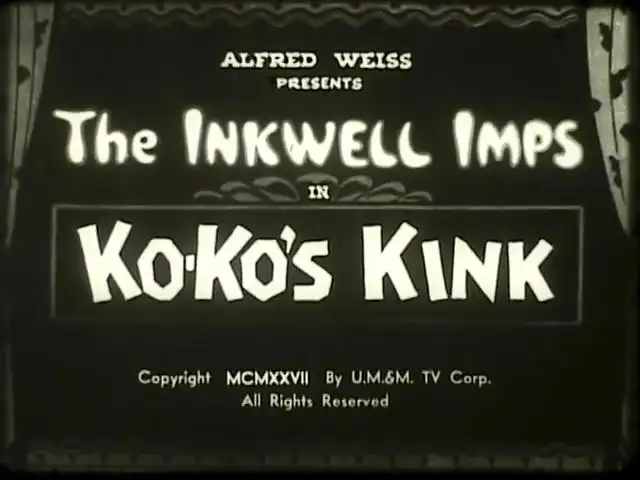
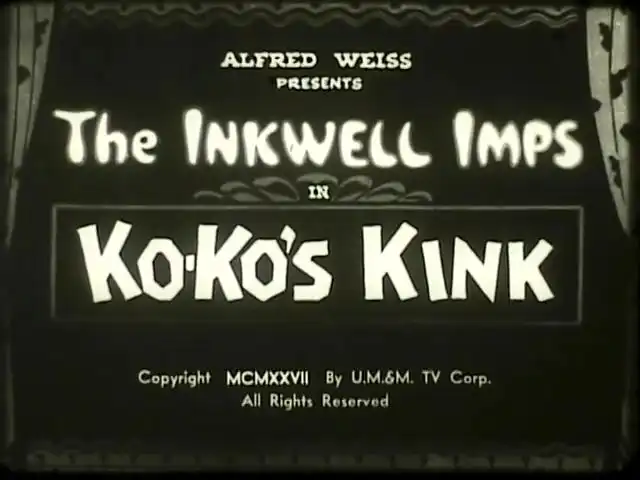
A definitive 7.6/10 rating for a film that redefined the boundaries of cult cinema. Ko-Ko's Kink remains a cornerstone of transgressive art.
Alright, so let's be upfront: Ko-Ko's Kink isn't for everyone. If you're looking for narrative depth or polished storytelling, you'll probably hate it. This is deep-cut, early animation stuff from Dave Fleischer, a real historical curiosity. But if you’ve got a soft spot for the surreal, for the raw, unhinged energy of animators just figuring things out, and for the kind of visual gags that predate any real 'rules,' then yeah, you absolutely should give it a shot. It’s a glimpse into the bizarre birth of a medium.
The first thing that hits you is just how… *loose* everything is. Ko-Ko the Clown, freshly drawn from an inkwell, doesn't so much move as he warps. His limbs stretch, his body contorts, and the entire landscape around him feels like it's made of rubber. There’s a moment early on where he tries to lift something, and his arm just elongates into this impossibly thin noodle. It’s not just cartoon physics; it’s like the very lines of the drawing are fighting with each other, and Ko-Ko is the poor, elastic victim.
And then there’s the ‘kink’ implied in the title, which really just means ‘weirdness.’ This short isn't afraid to get a little unsettling. Ko-Ko isn't always charming; sometimes he's almost menacing in his ability to transform. There’s a sequence where he seems to be trying to 'escape' the frame, stretching himself into these disturbing, elongated shapes, almost like a creature trying to break free from its creator’s will. It’s hard to tell if it’s supposed to be funny or just visually jarring, but it definitely leaves an impression.
The pacing is all over the place, but in a way that feels organic to the medium at the time. Some gags linger a beat too long, letting the strangeness sink in, while others flash by so quickly you almost miss the full absurdity. You get the sense Fleischer was just throwing ideas at the wall, seeing what stuck, and then animating it with this frantic, pioneering energy. It’s a controlled chaos, but just barely.
What really works, though, is the interaction with the animator’s hand. This was a Fleischer signature, of course, but here it feels particularly playful and a little bit sinister. The hand draws Ko-Ko, then erases him, then draws something else entirely. Ko-Ko reacts, sometimes with fear, sometimes with defiance. It's a meta-narrative before anyone even knew what that word meant, a constant reminder that what you’re watching isn’t just a story, but an act of creation and destruction, all happening on the same sheet of paper.
There's one particular shot where Ko-Ko is trying to climb out of a bottle, and the animator's hand just taps the bottle, sending him sliding back down. It’s a simple gag, but the way Ko-Ko’s tiny, frantic struggle contrasts with the giant, indifferent hand above him is pretty effective. It makes you feel a tiny bit sorry for the little guy, even though he's just an ink drawing.
Honestly, the whole thing feels like a fever dream sometimes. There’s no real resolution, just a series of escalating visual non-sequiturs. You watch it and think, 'What was even happening?' But then you find yourself remembering specific transformations or Ko-Ko’s wide, expressive eyes even hours later. It’s not a film you 'understand' so much as one you experience, a raw, unfiltered burst of creativity from an era when animation was truly a wild frontier. Go in with an open mind, and prepare to be slightly baffled, but in a good way.
IMDb 7.6
1922
Community
Log in to comment.