DbcultAccessing Vault...
Cult Review
Senior Film Conservator
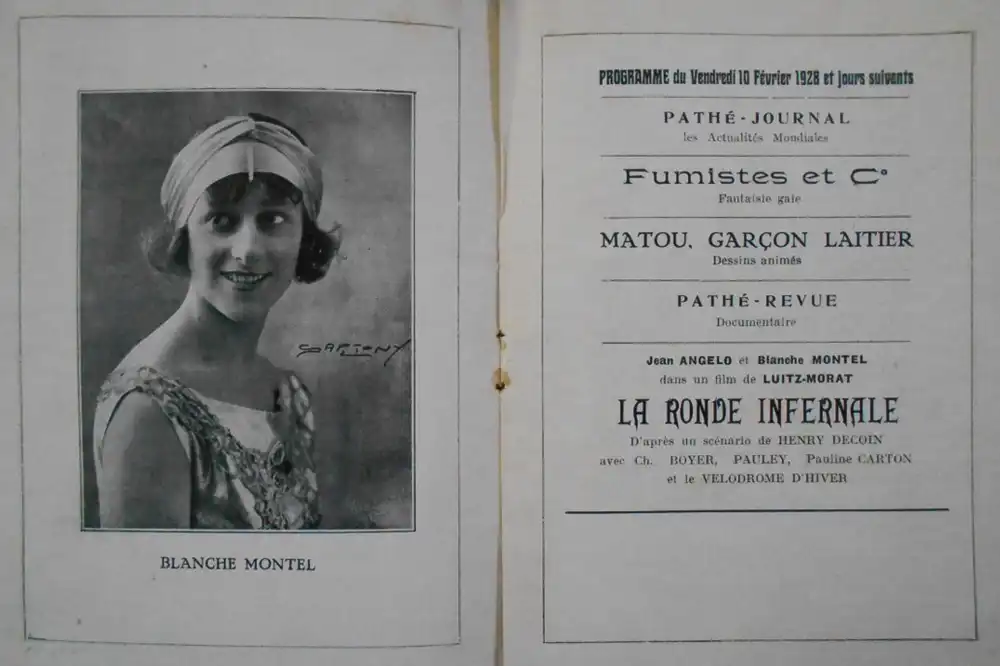
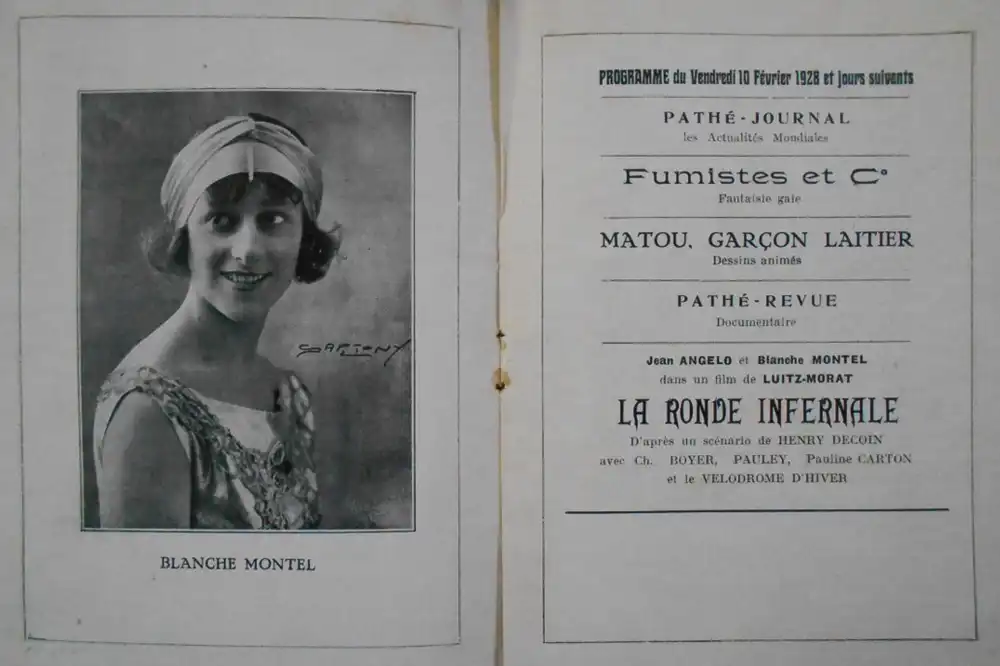
Alright, so if you've got a soft spot for silent movies, especially the kind where emotions are writ huge across faces, then Henri Decoin's 1928 French flick, La Ronde Infernale, might just be a *weird* little treat. It's definitely not for everyone, though. If flickering images and melodramatic stares aren't your jam, you'll probably find this a bit of a slog. But for those who appreciate old cinema's raw energy, there are some really fascinating, almost uncomfortable, bits here. 🚴♂️
The story is simple enough: a cyclist, André (Jean Angelo), is in the middle of this super intense six-day race at the Vel d'Hiv. But his head isn't really in the game. He's convinced his wife, Hélène (Blanche Montel), is being unfaithful.
You see André on the track, pedaling hard, but his eyes keep darting to the stands. He's searching for her face, *obsessively* so. It makes you feel a bit claustrophobic, honestly, even though he's in this huge arena.
Hélène herself, she's got this nervous sort of energy. She's talking to other men, laughing, and André just *sees* it all wrong. Or maybe he doesn't? The film keeps you guessing, which is pretty clever for its age.
There's this moment where André is doing a lap, looking utterly drained, and then BAM, they cut to Hélène having a good time with some other fella. The contrast is really sharp. It’s a very effective way to show his spiraling thoughts.
The intertitles, they really hammer home his inner turmoil. You get lines like, "She is false! False!" flashing across the screen. It's direct, almost blunt, but it totally works for silent film drama. 💔
The physicality of the bike race, all that grueling effort, it feels like a mirror for André's mental state. He's going around and around, literally on the track, and figuratively in his head with these jealous thoughts. He can't escape either.
At one point, he almost wipes out, completely distracted. You can practically feel the *danger* of him losing focus. It's not just his heart breaking; his body is at risk too.
And get this: Charles Boyer pops up in a small role, just a face in the crowd. Barely there, but still, *Charles Boyer*! It's a fun little spotting for classic film nerds.
Pauline Carton, who always brings a little something extra, plays a friend trying to calm things down. She’s like the voice of reason amidst all this escalating drama, which is a nice touch.
A lot of the film feels like it’s happening inside André’s mind. The way certain interactions are framed, it’s all about his perception, his paranoia. It kinda makes you wonder if *anything* is real.
The crowd noise, even without sound, is so well implied. Quick cuts, frantic gestures from the extras. You almost hear the roar. It's a neat trick.
The ending isn't all tied up in a neat bow. It leaves you feeling a bit unsettled, which I thought was pretty bold for 1928. No easy answers here. 🤷♀️
You can almost smell the sweat and the dust from that old velodrome. The film really puts you right there, in the grit of the race and the anxiety of the character.
Sure, some of the acting is super exaggerated, the way they did it back then. You might want to chuckle at times. But then you remember the era, and it just becomes part of the charm, part of a different way of telling a story.
One shot of André, grimacing as he pedals, really sticks with you. His face isn't showing effort, it's just this mask of pure suspicion. That’s the movie in a nutshell, really.
IMDb 6.7
1927
Community
Log in to comment.