DbcultAccessing Vault...
Cult Review
Senior Film Conservator
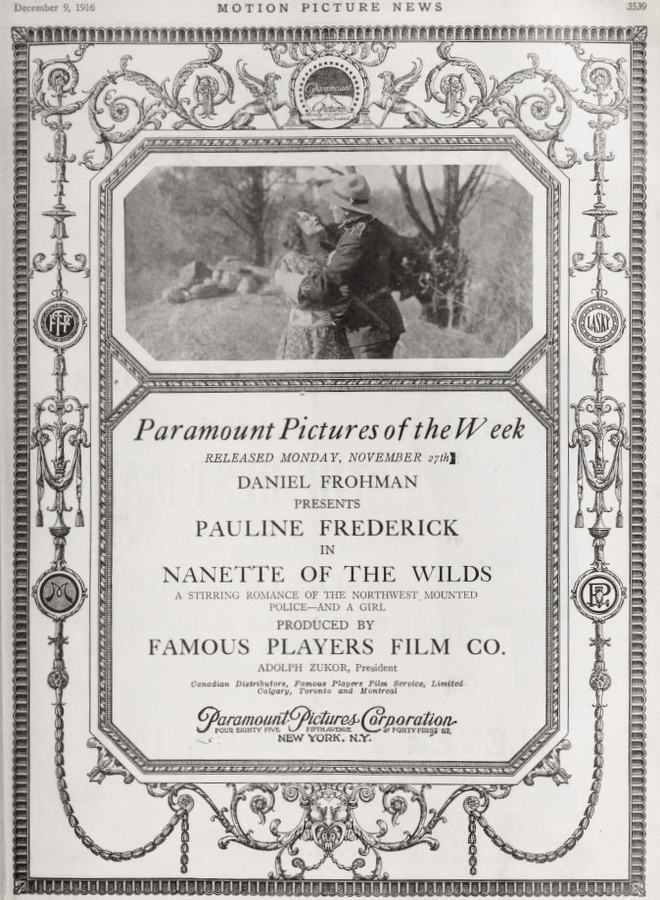
Stepping back into the cinematic landscape of 1916, one encounters Nanette of the Wilds, a compelling silent drama that, even over a century later, resonates with a raw emotional intensity and a narrative sophistication often underestimated in films of its era. Directed with a keen eye for both grand vistas and intimate human drama, this picture plunges viewers into the rugged, often unforgiving, Canadian frontier, a setting that serves as more than mere backdrop but an active participant in the unfolding narrative of love, loyalty, and the relentless pursuit of justice.
The film introduces us to Nanette, brought to life with remarkable depth and nuance by the incomparable Pauline Frederick. Frederick, a true luminary of the silent screen, imbues Nanette with an arresting blend of innocence and formidable inner strength. Her Nanette is a creature of the wilderness, yet untouched by its inherent lawlessness, despite being the daughter of a prominent whiskey bootlegger. This paradoxical existence forms the bedrock of her character, a young woman whose moral compass remains surprisingly unskewed amidst the ethically ambiguous world her father navigates. It’s a testament to Frederick’s artistry that she conveys such complex emotional states without uttering a single word, relying instead on the subtle shifts of her gaze, the eloquent language of her body, and the profound expressiveness of her face.
The tranquility of Nanette’s world is irrevocably shattered by a brutal act: the murder of a woman by Baptiste, a 'half-breed' member of her father’s illicit gang. This shocking event draws the attention of Constable Thomas O'Brien of the mounted police, portrayed by Wallace MacDonald. MacDonald brings a commendable blend of upright authority and burgeoning tenderness to his role. His arrival is not merely to investigate a heinous crime but also to dismantle the pervasive smuggling operations that underpin Nanette's father's domain. The stage is thus set for a classic conflict: law versus lawlessness, duty versus desire.
The blossoming romance between Nanette and Thomas is handled with a delicate touch, avoiding the saccharine sentimentality that could have easily derailed such a narrative. Their connection feels organic, a quiet understanding forged amidst the swirling tensions of the frontier. It’s a love born of shared humanity, transcending the rigid boundaries of their respective worlds. However, this burgeoning affection is complicated by Nanette’s unwitting complicity in Baptiste’s escape. Her initial assistance to him, born from a profound ignorance of the true extent of his depravity, highlights the film’s exploration of loyalty – to family, to community, and ultimately, to one’s own moral code. This moral ambiguity is a fascinating element, reminiscent of the complex loyalties explored in films like The Story of the Kelly Gang, where the lines between outlaw and folk hero blur based on perspective.
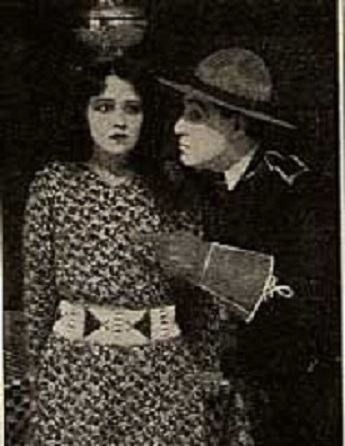
The film truly hits its stride when Nanette confronts the horrifying truth of Baptiste’s actions. This revelation serves as a pivotal turning point, stripping away her naiveté and forcing her to make an agonizing choice. Frederick’s portrayal of this internal struggle is masterful, conveying a palpable sense of betrayal, shock, and burgeoning resolve. It's a moment that could easily be melodramatic, but under her command, it feels profoundly authentic. The shift from misguided allegiance to a fierce commitment to justice transforms Nanette from a passive figure into an active agent of change.
Her decision to assist Thomas in Baptiste’s capture is not without its own set of moral quandaries. She makes a crucial stipulation: the safety of her father and his gang from prosecution. This condition adds a fascinating layer of complexity to her character. It’s not a simple abandonment of her past but a strategic negotiation, a testament to her enduring familial loyalty even as she embraces a more stringent moral code. This pragmatic approach to justice, where personal relationships and family ties influence the application of the law, echoes the moral dilemmas found in films like Judge Not; or the Woman of Mona Diggings, where societal judgment and individual circumstances often clash.
Willard Mack, credited as the writer, deserves significant recognition for crafting such a robust and morally intricate narrative. Mack's screenplay avoids simplistic black-and-white morality, instead presenting a world where good people can be entangled in illicit activities, and love can blossom in the most unlikely of places. His characters are flawed, driven by a mix of self-interest, love, and loyalty, making them feel remarkably human. This approach to character development was progressive for its time, moving beyond mere archetypes to explore the psychological nuances of individuals living on the fringes of society.
The supporting cast, including Macey Harlam as Nanette’s father and Willard Mack himself in a role (likely Baptiste, given the plot details), deliver performances that complement Frederick’s brilliance. Harlam, in particular, portrays the bootlegger father with a gruff tenderness, ensuring he is not merely a villain but a complex figure whose actions are driven by a need to provide, however illicitly. The dynamic between Nanette and her father is a core strength of the film, showcasing the powerful, often conflicting, bonds of family.
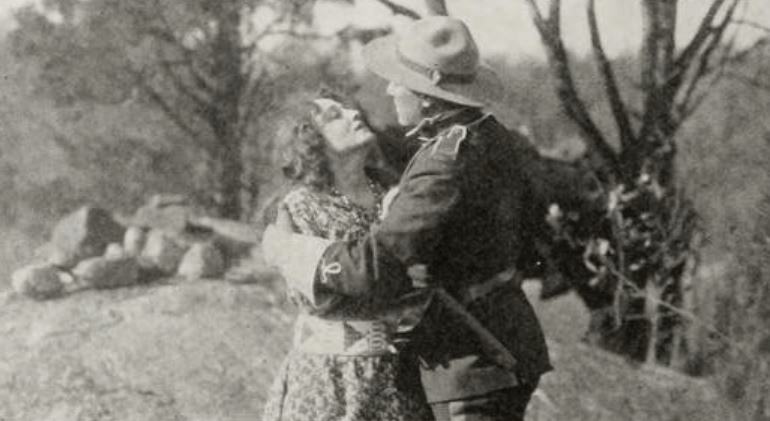
Nanette of the Wilds taps into a timeless fascination with frontier narratives, much like Burning Daylight, which also explores the rugged individualism and moral challenges of untamed territories. The Canadian wilderness, with its vast, untamed beauty, acts as a powerful symbolic force throughout the film. It represents freedom, danger, isolation, and the raw, unvarnished truth of human nature. The cinematography, though limited by the technology of the era, effectively captures the sweeping landscapes, lending an epic scope to what is fundamentally an intimate human drama. The visual storytelling, characteristic of the silent film era, relies heavily on these evocative settings to convey mood and amplify the emotional stakes.
The film’s resolution, with Thomas successfully apprehending Baptiste and promising to return to Nanette for marriage, provides a satisfying, if somewhat conventional, conclusion. Yet, it’s the journey to this point – the moral compromises, the difficult choices, and the evolution of Nanette’s character – that truly elevates the film beyond a simple romance or crime drama. It speaks to the enduring power of love to navigate treacherous waters and the human capacity for redemption and growth, even when faced with profound personal and ethical dilemmas.
For modern audiences, Nanette of the Wilds offers a window into the narrative sophistication and emotional depth that silent cinema was capable of achieving. It’s a film that challenges preconceptions about the 'primitive' nature of early filmmaking, demonstrating a nuanced understanding of character motivation and plot construction. Pauline Frederick’s performance alone is reason enough to seek out this cinematic treasure. Her ability to convey such a rich inner life without spoken dialogue is a masterclass in silent acting, making her a formidable presence alongside contemporaries like Mary Pickford or Lillian Gish.
The themes explored – justice, loyalty, the corrupting influence of illicit trade, and the transformative power of love – remain as relevant today as they were over a century ago. The specific portrayal of Baptiste as a 'half-breed' character, while reflecting the racial attitudes and terminology of the era, also serves as a point of historical discussion, reminding us of the evolving societal perspectives depicted in cinema over time. It’s a complex piece, inviting both appreciation for its artistic merits and thoughtful reflection on its historical context.
In a landscape often dominated by grander, more widely remembered epics of the silent era, Nanette of the Wilds stands as a quiet yet powerful testament to the era's storytelling prowess. It's a film that deserves to be rediscovered, not just for its historical significance but for its enduring human drama, its compelling performances, and its unwavering belief in the possibility of love and justice prevailing, even in the most untamed corners of the world. Its narrative complexity and emotional resonance mark it as a film that transcends its time, offering a rich viewing experience for anyone interested in the foundational works of cinema. The film, much like the challenging environment it depicts, asks its characters to navigate moral wildernesses, and in doing so, reveals the enduring strength of the human spirit. It's a journey well worth taking, promising both thrills and thoughtful introspection, a true gem from the nascent years of moviemaking that continues to shine brightly.
IMDb —
1919
Community
Log in to comment.