DbcultAccessing Vault...
Cult Review
Senior Film Conservator
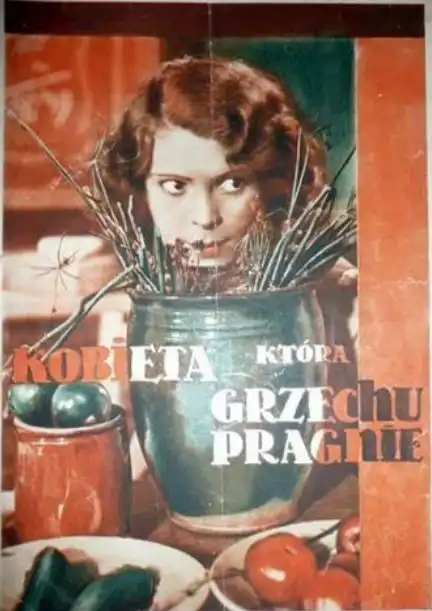
Look, if you're not already into old silent movies, Kobieta, która grzechu pragnie might be a tough sell. It’s a Polish melodrama from 1929, so expect lots of dramatic gazes and big gestures.
But if you’ve got a soft spot for that era, or just curious about early European cinema, there's definitely something here worth your time. You'll probably skip it if you need constant dialogue or fast action.
This one asks for a bit of patience. 🙏
The movie kicks off with Nora Ney, who plays this character who, well, *wants* something more. You can see it in her eyes, even through the old film grain.
She's not just a pretty face; there's a real spark there, a defiance that feels pretty modern for the late 20s. Her struggle feels less about outright "sin" and more about just being herself in a world that doesn't quite get it.
There's this one scene, early on, where she's at a fancy party. The camera just sticks to her face for a good long moment.
Everyone else around her is kind of blurry, chattering away. But she's just... observing. It’s a small detail, but it says a lot without a single intertitle.
Oktawian Kaczanowski, playing the sort of *cad* you expect in these films, does a lot with just a smirk. He doesn't need to say anything; his posture just oozes trouble.
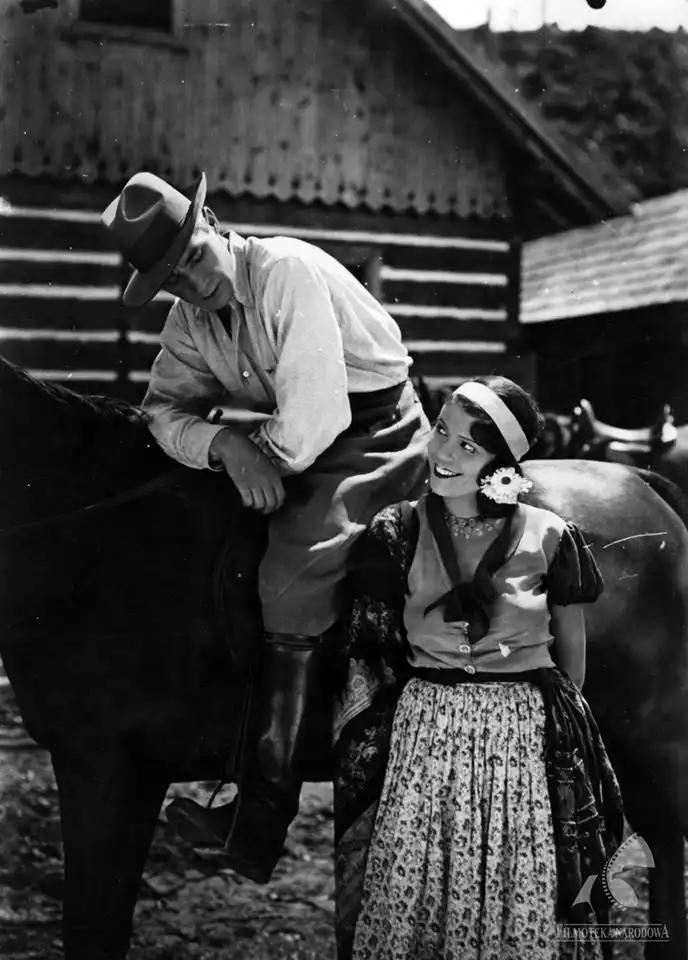
And the way he leans against a doorway, watching her? Very effective, even today. You just know he's going to complicate things.
Director Wiktor Bieganski sometimes lets moments breathe. Like when she’s walking alone through a park, and the leaves are falling. It’s quiet, you know?
Just her and the world. No big title card explaining her feelings, just the image. I liked that particular choice.
Some parts drag a little, though. There's a court scene, or maybe it's a formal interrogation, that just felt like it went on forever.
Lots of stern faces. You can almost feel the movie trying to impress upon you the gravity of her situation. It does the job, sure, but it could've been trimmed. My eyes definitely wandered to the curtains on the screen at that point. 👀
The sets are pretty lush for the era. Lots of velvet and big, heavy furniture. It gives a good sense of the world she's trying to escape, or at least challenge.
The contrast between her simpler, often dark dresses and the ornate surroundings is pretty stark. It really highlighted her isolation.
And the ending... well, it’s a silent film ending. Don’t expect a neat bow. It’s more ambiguous, leaves you thinking.
Which, honestly, is kinda cool. Not every story needs to tell you exactly how to feel about everything.
One little thing that stuck out: a particular shot of a street vendor selling flowers. It has nothing to do with the main plot, really.
Just a quick cut. But it adds a slice of life, a brief glimpse of ordinary Warsaw, that makes the whole world feel a bit more real. It’s easy to miss, but I appreciated it.
Alma Kar has a small role, but her glare is something else. She doesn't have many scenes, but when she's on screen, you feel her judgment.
Very powerful, without a single word. It kinda chills you to the bone, honestly.
So, yeah. If you're up for a peek into a different kind of filmmaking, and you appreciate the art of silent storytelling, give it a shot.
It's not perfect, but it's got heart, and a lead performance from Nora Ney that really shines. Don't go in expecting a modern pace, obviously.
But if you let it wash over you, there are some really strong moments. It's a movie that asks you to watch it, not just passively consume it. 👍
IMDb 5.4
1928
Community
Log in to comment.