DbcultAccessing Vault...
7.5/10
Senior Film Conservator
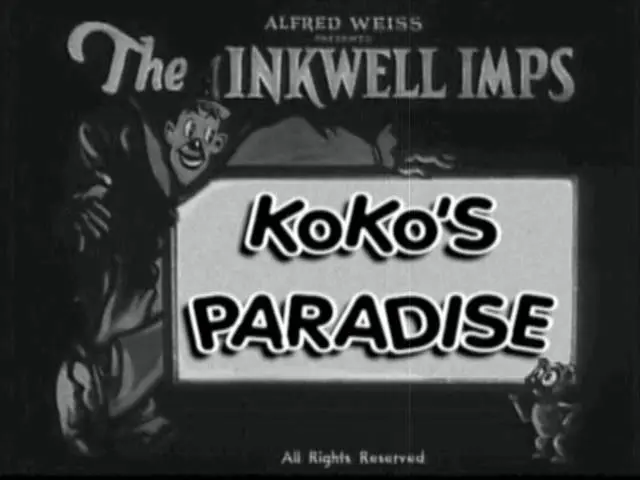
A definitive 7.5/10 rating for a film that redefined the boundaries of cult cinema. Koko's Paradise remains a cornerstone of transgressive art.
Is Koko's Paradise worth your time today? Short answer: absolutely, if you approach it as a vital historical artifact of early animation, brimming with raw, unbridled imagination. This film is an essential viewing experience for animation scholars, cinephiles, and anyone fascinated by the genesis of cinematic surrealism, but it will likely prove too abstract and narratively sparse for casual viewers accustomed to modern storytelling conventions.
Max Fleischer's early work rarely offered straightforward narratives, and Koko's Paradise is no exception. It is a testament to the period's experimental spirit, a brief, dreamlike journey that prioritizes visual ingenuity and conceptual daring over conventional plot development. To truly appreciate it, one must recalibrate expectations, accepting its unique language of movement and metamorphosis.
The Fleischer Studios, under Max Fleischer's inventive guidance, consistently pushed the boundaries of what animation could achieve, often venturing into territory far more surreal and adult than their contemporary, Walt Disney. Koko's Paradise, though brief, encapsulates this spirit perfectly. It’s not just a cartoon; it’s a peek into the mind of an animator grappling with the very fabric of reality, using his medium as a canvas for the subconscious.
The film's most striking quality is its seamless, almost nonchalant, transition between disparate realities. One moment, we are in a seemingly ordinary studio, the next, we are soaring through celestial realms. This fluidity, a hallmark of Fleischer's early work, imbues the short with a dreamlike logic that defies easy categorization. It’s an embrace of the impossible, rendered with a charming, hand-drawn innocence that belies its sophisticated conceptual underpinnings.
This film works because of its pioneering spirit and Max Fleischer's audacious willingness to blend live-action with animation in a way that feels both technically groundbreaking and artistically liberated. The sheer inventiveness of the visual gags and the surreal shifts in environment are captivating.
This film fails because its narrative is deliberately fragmented, offering little in the way of conventional character development or plot resolution. For modern audiences seeking a clear story arc, it might feel more like a series of disjointed vignettes than a cohesive film.
You should watch it if you have an interest in animation history, the evolution of surrealism in cinema, or if you simply appreciate the raw, unpolished charm of early 20th-century filmmaking that dared to be different.
The film opens with Max Fleischer himself, a live-action figure, interacting with his animated creations. This technique, the Rotoscope, was a Fleischer innovation, allowing for remarkably fluid and lifelike animation. Here, it’s not just a technical marvel but a narrative device, establishing a playful, yet ultimately fraught, relationship between creator and creation.
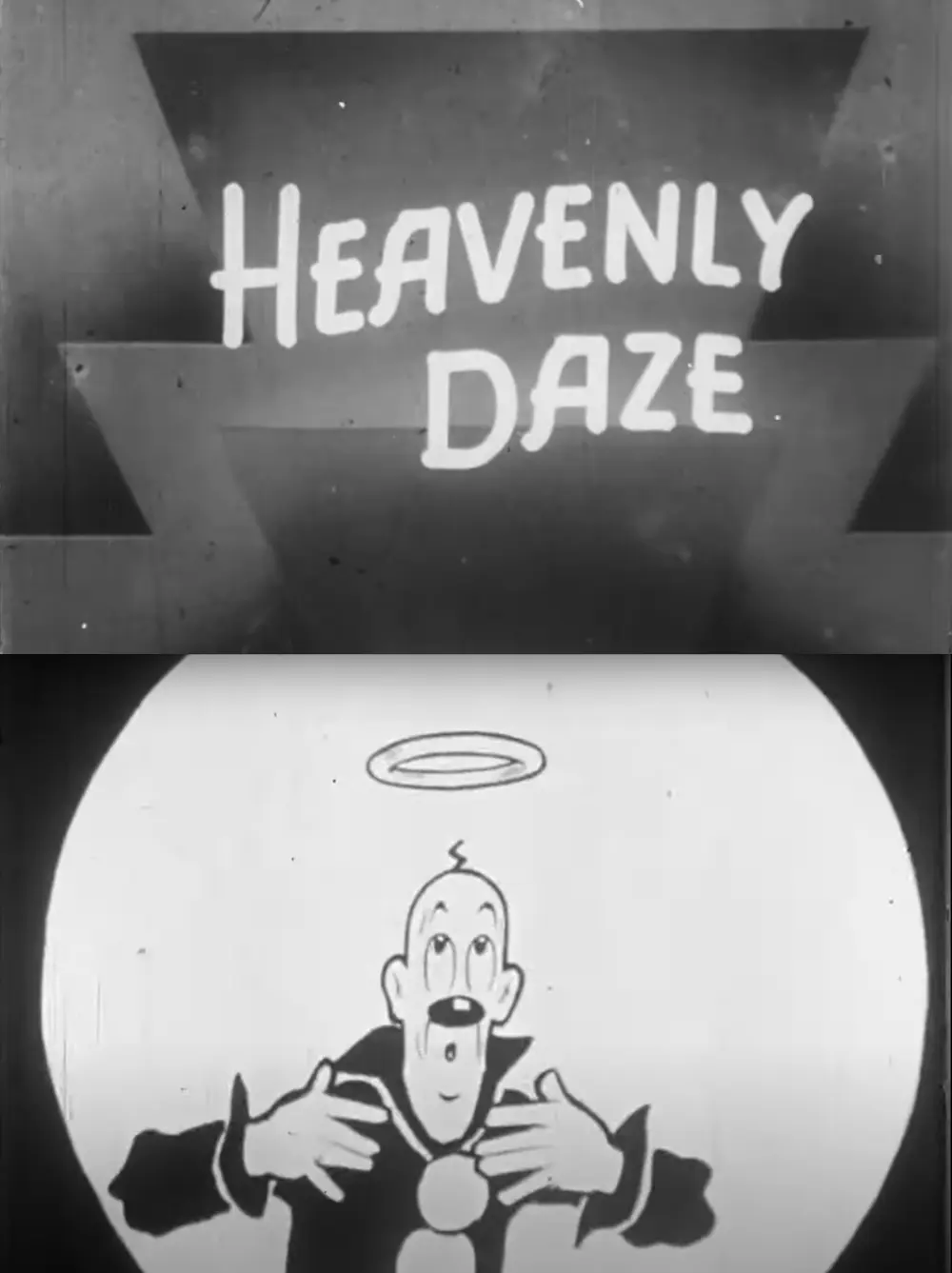
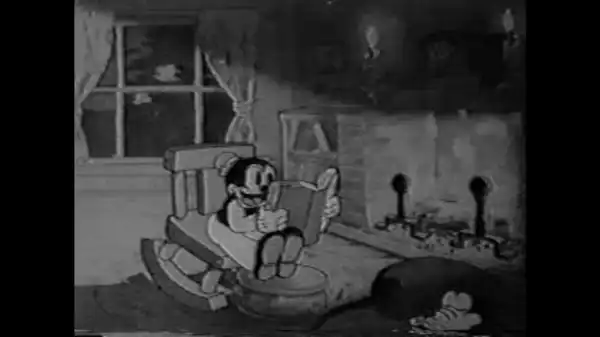
The ascension of KoKo and Fitz to 'heaven' is a particular highlight. It’s a beautifully rendered sequence, where the characters, initially bewildered, begin to adapt to their new, angelic forms. The visual gags are subtle but effective, demonstrating a nascent understanding of character comedy through movement. The fluffy clouds, the harps, the halos – all are rendered with a simplicity that belies the complexity of the underlying animation process.
This ethereal interlude serves as a stark contrast to the film’s conclusion. The sudden return to Earth, specifically to a live-action duck-shooting gallery, is jarring and brilliant. It's a moment of delightful, almost cruel, irony where the divine bliss is replaced by the very real threat of bullets. This shift underscores Fleischer’s willingness to disrupt audience expectations, creating a sense of genuine unpredictability.
The visual language of the shooting gallery sequence is surprisingly intense for a cartoon of this era. The bullets are real, the danger palpable, even as KoKo and Fitz retain their cartoonish resilience. This fusion of the animated and the actual is not merely a technical flex; it's a thematic exploration of vulnerability and invincibility, a question posed to the very nature of what it means to be a 'character.'
The pacing of Koko's Paradise is brisk, almost frenetic, a characteristic of many early animated shorts designed to entertain quickly before feature films. There’s little time for lingering, as one bizarre tableau quickly gives way to the next. This speed, however, contributes to its dreamlike quality; events unfold without explanation, demanding the viewer simply accept the unfolding strangeness.
The tone oscillates wildly, from playful to profound, from whimsical to genuinely perilous. This tonal ambiguity is one of its most fascinating aspects. Is it a lighthearted romp, a philosophical meditation on life and death, or a dark comedy about a creator's capricious power? It manages to be all of these, often simultaneously, without ever settling into a singular, predictable mood.
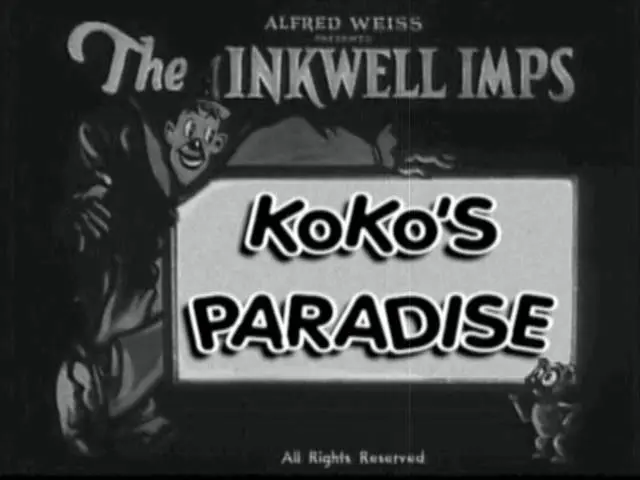
While the concept of a 'writer' in the modern sense might not apply to many early shorts, the conceptual framework here is undeniably strong. The journey from studio to heaven and back to a shooting gallery suggests a deliberate, albeit abstract, exploration of creation, existence, and the precariousness of being. It's a narrative that privileges visual metaphor over dialogue or explicit plot points.
Max Fleischer, often overshadowed by his more commercially successful contemporaries, was an unparalleled innovator. His work, including Koko's Paradise, showcases a singular vision that embraced the surreal, the mechanical, and the darkly whimsical. He understood, perhaps better than anyone at the time, the potential of animation to transcend mere illustration and become a vehicle for complex, often unsettling, ideas.
His characters, from KoKo to Betty Boop, possessed a tangible, almost tactile quality, a result of his meticulous attention to movement and form. In Koko's Paradise, KoKo's reactions to his increasingly bizarre circumstances feel genuine, despite his rubber-hose physics. This is the magic of Fleischer: grounding the impossible in believable emotion.
Comparing Koko's Paradise to other films of its era, such as Artist's Muddle or even early live-action shorts like Such a Little Queen, highlights its unique position. While many focused on simple gags or nascent narrative structures, Fleischer was already delving into meta-narrative and existential play. It's a surprisingly profound piece for its runtime.
Absolutely. Koko's Paradise is more than just an early cartoon; it’s a foundational text in the history of animation and a fascinating example of early cinematic surrealism. Its blend of live-action and animation, its daring tonal shifts, and its unpretentious embrace of the absurd make it a compelling watch. For those interested in the roots of visual storytelling and the creative spirit that defined early cinema, this short offers immense value. It works. But it’s flawed by modern narrative standards.
Koko's Paradise is not merely a film; it is a declaration of intent from one of animation's true visionaries. Max Fleischer crafted a short that, despite its rudimentary technical limitations, pulses with an audacious creativity that remains compelling today. It's a historical gem, a piece of cinematic archaeology that rewards those willing to dig beneath the surface of its brief, bizarre journey. While it may not offer the emotional payoffs or narrative coherence of later animated works, its sheer inventiveness and willingness to play with the very fabric of reality make it an indispensable watch for anyone serious about understanding the roots of the art form. It’s a testament to the fact that true originality often blossoms in the most unexpected, and wonderfully strange, of places.
IMDb 5.9
1936
Community
Log in to comment.