DbcultAccessing Vault...
Cult Review
Senior Film Conservator
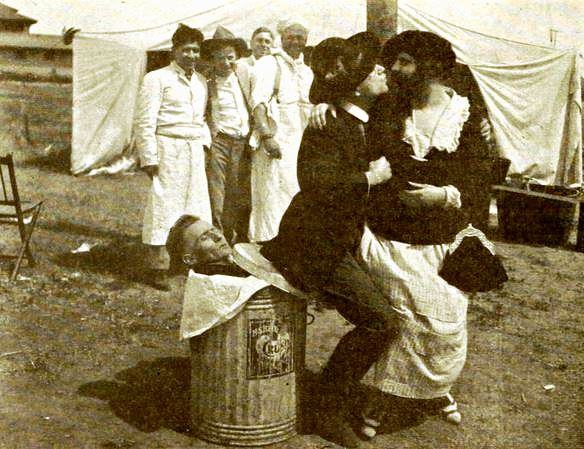
In the bustling, often chaotic, landscape of early 20th-century cinema, where narratives frequently veered between grand melodrama and slapstick farce, a particular gem emerged in 1919: One-Thing-at-a-Time O'Day. Directed by George D. Baker and penned by William Dudley Pelley and Baker himself, this film offers a delightful blend of romantic comedy, underdog triumph, and a charmingly ironic take on personal philosophy. It's a testament to the power of silent storytelling, where exaggerated expressions, physical comedy, and well-crafted scenarios convey a world of emotion and narrative complexity without a single spoken word. The film, starring the earnest Bert Lytell as the titular character, alongside the captivating Eileen Percy and the formidable Bull Montana, presents a narrative that, while seemingly straightforward, cleverly subverts its own central tenet, delivering both laughter and a subtle commentary on the unpredictability of life.
Our protagonist, Stradivarious O'Day, is introduced as a man of inherited means and a peculiar nickname. His mother, perhaps with a touch of exasperated affection, christens him thus for his tendency to "fiddle his time away." Yet, this apparent aimlessness belies a deeper, almost philosophical, commitment to a personal mantra: "one thing at a time and that done well." This motto isn't merely a quaint saying; it's the very bedrock of O'Day's existence, shaping his approach to every task, no matter how trivial. Bert Lytell imbues O'Day with an endearing sincerity, his wide-eyed earnestness making his character instantly relatable despite his initial lack of ambition. He's not a lazy man, but rather one who hasn't yet found a singular purpose worthy of his focused attention. This initial state of comfortable, if somewhat uninspired, existence sets the stage for a transformation that is both comedic and genuinely heartwarming. Lytell's portrayal is a masterclass in silent film acting, conveying a spectrum of emotions from dazed infatuation to resolute determination through nuanced facial expressions and body language.
The catalyst for O'Day's awakening arrives in the form of Prairie-Flower Marie, a bareback rider whose ethereal beauty and daring athleticism instantly captivate him. Eileen Percy, as Marie, brings a vibrant energy to the screen, her spirited performance embodying the freedom and allure of the circus life. Her character is not merely a damsel in distress but a woman of strength and independence, making her a worthy object of O'Day's newfound devotion. The circus itself serves as a magnificent backdrop, a microcosm of vibrant life and transient dreams, starkly contrasting with O'Day's hitherto sedate routine. The initial encounter is a classic 'love at first sight' scenario, but its consequences are far-reaching. O'Day, true to his motto, dedicates himself entirely to pursuing Marie, abandoning his comfortable life to follow the circus's itinerant path. This unwavering commitment, though initially comical in its single-mindedness, showcases the profound impact Marie has on him. His persistence eventually wears down the circus manager, who, perhaps seeing a spark of potential beneath the polite exterior, offers him a job cleaning his Ford.
This pivotal moment marks the beginning of O'Day's practical education. Armed with a manual – a tangible representation of his "one thing at a time" philosophy – he meticulously learns the intricacies of the automobile, transforming from an idle gentleman into a skilled chauffeur. This journey of self-improvement, driven by love, is a core thematic element. It speaks to the idea that passion can ignite dormant talents and propel individuals beyond their perceived limitations. The transition is handled with a light touch, emphasizing O'Day's methodical approach and the inherent humor in his earnest efforts. The narrative elegantly illustrates how a grand, abstract ideal (love) can be pursued through a series of focused, concrete steps (learning to drive). The journey of O'Day, transforming from an idle inheritor to a determined suitor, echoes the spirit of self-reinvention seen in frontier narratives like The Man from Bitter Roots, where protagonists often shed their past to forge a new identity through sheer will and physical prowess. Similarly, the earnest pursuit of a goal against all odds can be seen in The Rail Rider, where persistence is key to overcoming obstacles.
Of course, no romantic pursuit in a silent film would be complete without a formidable rival. Enter Gorilla Lawson, the circus strongman, played with menacing physicality by Bull Montana. Montana, known for his imposing stature and often villainous roles, perfectly embodies the brutish antagonist. Lawson's love for Marie is possessive and aggressive, leading him to physically assault O'Day. This act of violence serves as another crucial turning point. O'Day, facing a challenge that cannot be solved with a manual or a gentle approach, must once again adapt his "one thing at a time" philosophy to a new, more primal skill set: fighting. He enlists the help of his friend, the aptly named boxer Roughneck M'Dool, to learn the art of pugilism. This segment of the film is particularly engaging, showcasing O'Day's methodical dedication to mastering a completely alien discipline. His daily development, meticulously depicted, transforms him from a refined gentleman into a capable contender. The humor here lies in the stark contrast between O'Day's intellectual approach to mechanics and his newfound, gritty commitment to physical combat.
Lawson, witnessing O'Day's rapid and terrifying improvement, becomes increasingly unnerved. The once-confident bully starts to fear the determined scholar. This psychological shift adds depth to the conflict, moving beyond mere physical prowess to a battle of wills. On the day of their scheduled showdown, Lawson, in a cowardly act, steals the circus receipts and O'Day's beloved Ford, attempting to flee. This desperate act sets the stage for the film's climactic pursuit and confrontation. O'Day, now a man of action, gives chase, his mastery of the Ford proving instrumental. The ensuing struggle is both thrilling and cathartic, as O'Day finally confronts and decisively whips Lawson. This victory is not just a physical one; it's a symbolic triumph of perseverance, intelligence, and focused determination over brute force and treachery. This narrative arc of a seemingly ordinary man rising to confront a formidable adversary is a classic trope, reminiscent of the trials faced by heroes in adventure serials or even the moral fortitude displayed in films like The Martyrdom of Philip Strong, albeit with a more lighthearted, romantic bent here. The transformation of O'Day from an intellectual to a man capable of physical defense also brings to mind the journey of characters in Westerns such as Durand of the Bad Lands, where personal mettle is tested and forged through conflict.
The success of One-Thing-at-a-Time O'Day rests heavily on the shoulders of its principal cast. Bert Lytell, a prolific actor of the era, delivers a nuanced performance that allows O'Day to evolve credibly from a slightly naive dilettante to a confident, capable man. His expressions, often wide-eyed and sincere, draw the audience into his journey. Eileen Percy's Prairie-Flower Marie is equally compelling, radiating charm and an independent spirit crucial for a character who inspires such profound change. She avoids the pitfalls of a passive love interest, instead portraying a woman whose strength complements O'Day's developing resolve. Bull Montana, as Gorilla Lawson, is perfectly cast. His imposing physique and ability to convey menacing intent without dialogue make him a truly formidable foe. The supporting cast, including Joseph Kilgour as the circus manager and John Hack as Roughneck M'Dool, contribute significantly to the film's texture, providing both comedic relief and narrative support. The direction by George D. Baker ensures that the pacing is engaging, balancing moments of lighthearted humor with the building tension of O'Day's challenges. The visual storytelling, characteristic of the period, is clear and effective, allowing the audience to fully grasp the emotional arcs and plot developments without the need for intertitles to explain every detail, a mark of skilled silent filmmaking.
The film's most delightful stroke of genius comes in its final moments, providing a humorous twist that elevates it beyond a simple romantic comedy. After O'Day's triumphant victory and his subsequent marriage to Marie, the narrative concludes with the revelation that the staunch adherent of "one thing at a time" has become the father of twins. This ironic denouement is a brilliant comedic payoff, playfully undermining O'Day's lifelong motto. It’s a gentle reminder that life, particularly when intertwined with love and family, rarely adheres to meticulously planned principles. This final scene provides a wonderfully human touch, suggesting that while focus and determination are admirable qualities, life's greatest joys often arrive in glorious, unpredictable multiples. The humor is subtle but profound, celebrating the beautiful chaos that love introduces into even the most orderly existence. This charming subversion of expectation is a hallmark of clever writing and demonstrates the film's ability to engage with its themes on a deeper, more reflective level, much like the unexpected turns in Youth's Endearing Charm, where young love often defies conventional wisdom.
In its essence, One-Thing-at-a-Time O'Day is more than just a silent film; it's a charming exploration of personal growth, the transformative power of love, and the delightful irony that often punctuates the human experience. William Dudley Pelley and George D. Baker crafted a narrative that, despite its period setting, resonates with timeless truths about finding purpose and embracing life's unexpected turns. The film's message, delivered with warmth and wit, suggests that while focus is a virtue, sometimes the greatest rewards come when we are forced to juggle more than just one thing, especially when those things are two adorable infants. The film stands as a delightful example of early cinema's capacity for nuanced storytelling and character development, proving that even without spoken dialogue, powerful and engaging narratives could be conveyed with grace and humor. It reminds us of a simpler time in filmmaking, where character motivations and plot progression were often communicated through gestures, expressions, and well-staged action, demanding a different kind of engagement from the audience. Its enduring appeal lies in its universal themes and its ability to elicit genuine smiles and heartfelt appreciation for its endearing protagonist.
In the grand tapestry of early cinema, "One-Thing-at-a-Time O'Day" stands as a vibrant, if often overlooked, thread. Its gentle humor, earnest performances, and underlying message about focus—and the delightful ways life can challenge it—make it a captivating watch. It reminds us that even the most steadfast principles can be delightfully upended by the unpredictable currents of love and family, leaving us with a smile and a renewed appreciation for the glorious chaos of existence. It’s a testament to the enduring appeal of simple stories told with genuine heart, and a valuable piece of cinematic history that continues to charm and entertain. For those seeking a glimpse into the artistry and thematic richness of silent-era romantic comedies, this film is an absolute must-see, offering a unique blend of character-driven humor and a surprisingly profound take on life's grandest ironies.
IMDb —
1932
Community
Log in to comment.