DbcultAccessing Vault...
Cult Review
Senior Film Conservator
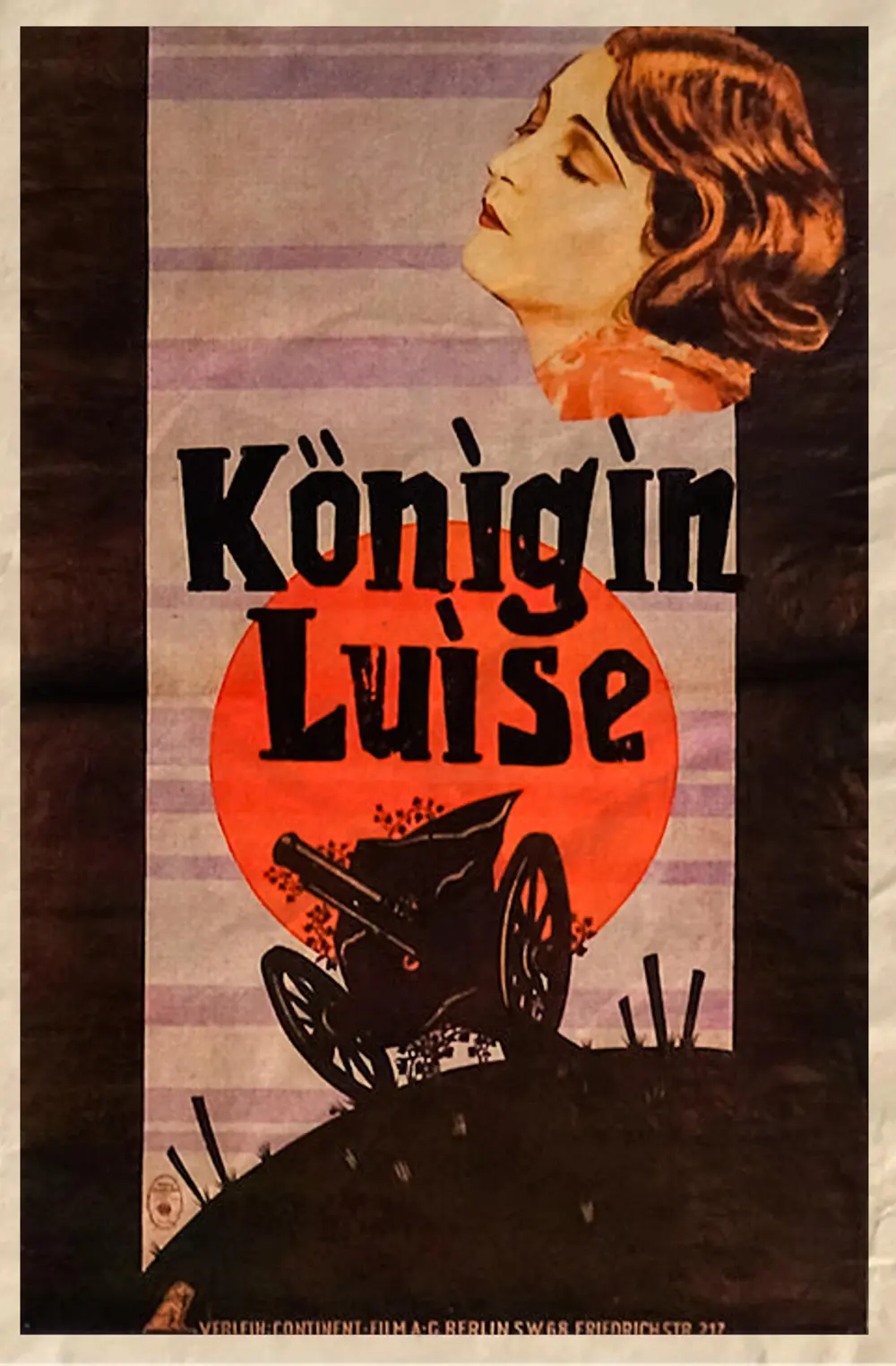
Is 'Königin Luise, 1. Teil - Die Jugend der Königin Luise' worth your time today? The short answer is a resounding yes, but with crucial caveats. This silent era epic offers a rich, if sometimes ponderous, glimpse into historical grandeur and personal sacrifice, making it essential viewing for dedicated classic film enthusiasts and history scholars, yet potentially challenging for those unaccustomed to the pace and stylistic conventions of its time.
This film works because of its ambitious scope, the sheer visual artistry of its production, and Mady Christians' often compelling central performance. It fails because its pacing can be glacial, demanding considerable patience from modern audiences, and its narrative can occasionally feel more like a series of tableaux than a fluid story. You should watch it if you possess a genuine appreciation for early 20th-century filmmaking, a keen interest in European history, and a willingness to immerse yourself in a different cinematic language.
Ludwig Berger’s "Königin Luise, 1. Teil" isn't just a historical biopic; it's a character study draped in the opulent fabrics of Prussian aristocracy. The film opens with Luise as a young woman, brimming with youthful vivacity, almost oblivious to the weighty destiny that awaits her. We see her engage in simple pleasures, moments of unadulterated joy that feel profoundly human, contrasting sharply with the formal rigidity of court life.
The narrative then meticulously charts her transition. It’s less about grand historical events and more about the internal shifts within Luise. Her engagement to Frederick William III, portrayed with a delicate balance of political necessity and budding affection, forms a pivotal axis. The film understands that the 'youth' of a queen is less about frivolity and more about the gradual, often painful, realization of an identity that transcends the personal.
Berger takes his time, allowing scenes to breathe and emotions to simmer. There's a particular sequence where Luise, after a particularly demanding court ceremony, retreats to a private garden. Here, the camera holds on her face, capturing a flicker of weariness, a hint of melancholy, suggesting the burden beneath the regal façade. It’s a moment of quiet power, a testament to the film’s ability to find intimacy amidst grandeur.
Ludwig Berger, a director known for his theatrical background, brings a distinct stage-like quality to "Königin Luise, 1. Teil." His direction is characterized by carefully composed frames, often resembling classical paintings, and a deliberate pace that allows the audience to absorb every detail. This isn't a film that rushes; it invites contemplation.
Berger employs deep focus and layered mise-en-scène to convey the complexity of courtly life. In one memorable scene depicting a royal ball, the foreground features dancing couples, while in the mid-ground, a hushed conversation among ministers unfolds, and in the background, Luise observes from a balcony. This layering visually communicates the constant interplay of personal and political, even in moments of leisure.
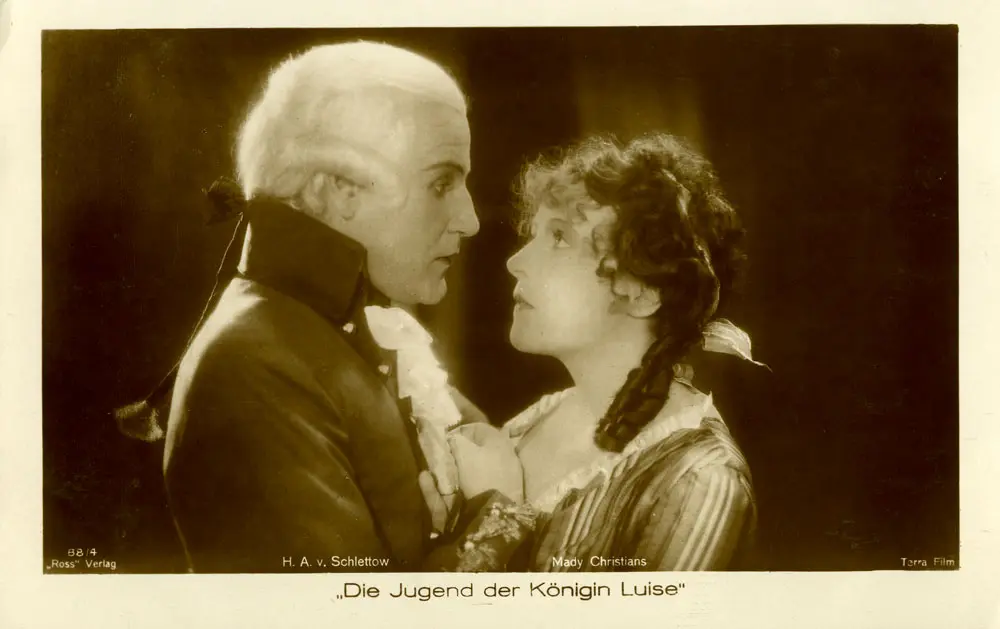
His use of light and shadow, particularly in the interior scenes, is remarkable. Shadows cling to the corners of grand halls, hinting at the unseen machinations of power. This deliberate aesthetic choice, while perhaps feeling slow to modern eyes, is integral to the film's immersive quality, pulling the viewer into a bygone era rather than merely presenting it.
At the heart of the film is Mady Christians as Luise. Her performance is a masterclass in silent film acting, conveying a vast range of emotions through subtle gestures, expressive eyes, and graceful physicality. She embodies the transition from girlish charm to regal gravitas with conviction. Her portrayal of Luise's initial reluctance and eventual acceptance of her fate is genuinely moving.
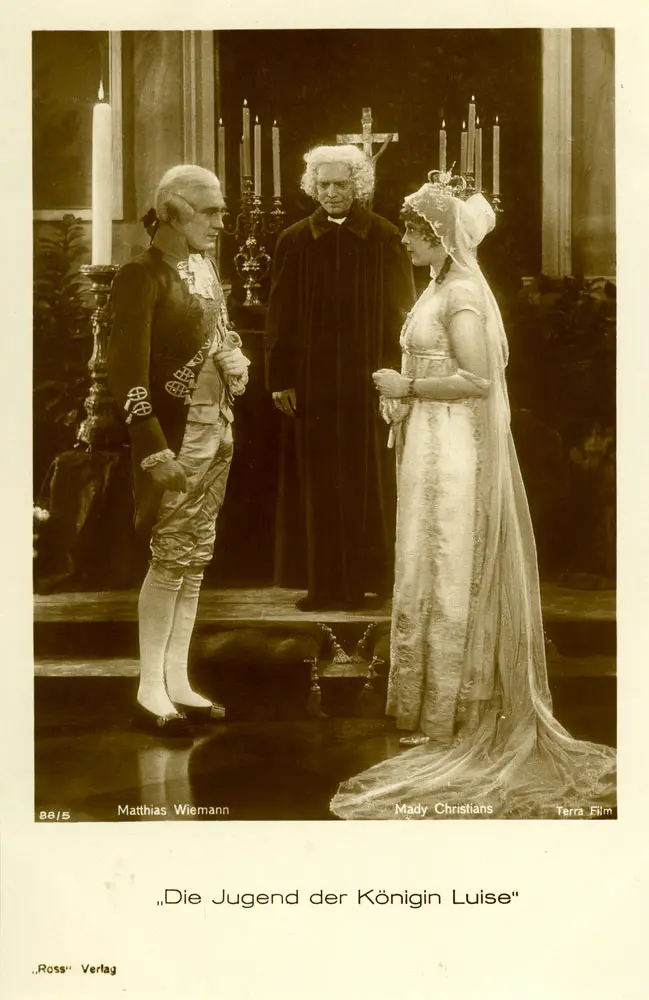
Consider the scene where she first meets Hans Mierendorff's Frederick William III. Christians' initial shyness, conveyed through downcast eyes and a tentative smile, slowly gives way to a more confident engagement, signaling the birth of a genuine connection amidst the formality. Mierendorff, for his part, portrays the future king with a quiet dignity, a man burdened by duty but possessing a gentle spirit, creating a believable dynamic with Luise.
The supporting cast, while given less screen time, adds considerable texture. Adele Sandrock, as a stern but ultimately caring royal figure (perhaps a dowager queen or a governess), provides a grounding presence, her austere expressions hinting at years of courtly wisdom. Even figures like Charles Vanel and Theodor Loos, in their more limited roles, contribute to the film's rich tapestry of characters, each embodying a facet of the Prussian court.
The visual ambition of "Königin Luise, 1. Teil" cannot be overstated. The cinematography, while lacking the dynamic camera movements of later eras, is breathtaking in its scale and precision. Grand sets, meticulously recreated period costumes, and elaborate outdoor sequences transport the audience directly into 18th-century Prussia. It’s a visual feast that demands to be seen on the largest possible screen.
The production design is particularly noteworthy. From the intricate tapestries adorning palace walls to the sprawling gardens where Luise finds fleeting solace, every detail speaks of an era of opulent craftsmanship. The film uses these settings not just as backdrops, but as extensions of the characters' internal states. The vast, echoing halls often mirror Luise's sense of isolation, while the vibrant outdoor scenes reflect her enduring spirit.
There's a specific shot of Luise standing alone in a massive, empty throne room, the camera positioned high to emphasize her smallness within the grandeur. This visual metaphor, simple yet powerful, encapsulates the core theme of individual destiny confronting institutional power. It works. But it’s flawed. The ambition is clear. The execution, sometimes less so, but the effort is undeniably there.
The pacing of "Königin Luise, 1. Teil" is its most significant hurdle for contemporary viewers. It unfolds with a slowness that is characteristic of many silent epics, allowing scenes to play out without the rapid-fire cuts and narrative urgency common today. This deliberate tempo can feel ponderous, especially during expositional sequences or extended reaction shots.
However, this perceived slowness can also be viewed as a strength. It forces the audience into a more contemplative mode, encouraging a deeper engagement with the visual storytelling and the emotional nuances of the performances. The tone is largely reverential and dramatic, occasionally bordering on melodrama, a common stylistic choice for the period.
The film’s reliance on intertitles for dialogue and exposition is, of course, inherent to the silent medium. While well-written, they do break the flow for those unaccustomed. Yet, the strength of the visual narrative often transcends the need for excessive text, allowing the images to speak volumes.
Absolutely, but with a clear understanding of what you’re getting into. "Königin Luise, 1. Teil" is a significant piece of cinematic history and a fascinating exploration of a historical figure. It offers a window into the filmmaking techniques and storytelling sensibilities of the silent era.
It is not a casual watch. It demands patience. It requires an appreciation for a different kind of cinematic rhythm. But for those willing to engage with its unique language, it offers substantial rewards. It's a visually rich, emotionally resonant historical drama that stands as a testament to the ambition of early German cinema.
The film's deliberate slowness isn't a flaw; it's an immersive technique that forces contemplation, a lost art in modern cinema. This is a strong, debatable opinion, as many would argue it simply drags. But I contend it’s a conscious choice to build atmosphere and character depth.
Perhaps the most striking aspect isn't the grandiosity of the sets or the historical sweep, but the subtle, almost documentary-like portrayal of courtly boredom and routine. There are moments where the film lingers on mundane aspects of royal life – the endless procession of greetings, the repetitive ceremonies, the quiet waiting – which humanizes the royals unexpectedly. It strips away some of the myth, showing that even a queen-to-be experiences tedium, making her eventual struggles feel more relatable.
"Königin Luise, 1. Teil - Die Jugend der Königin Luise" is not merely a historical artifact; it is a meticulously crafted cinematic experience that, despite its age and deliberate pace, offers profound insights into the making of a monarch. While its slow burn may deter some, its visual splendor, the nuanced performance of Mady Christians, and Ludwig Berger's thoughtful direction make it an essential watch for those who appreciate the artistry of early cinema and the complexities of historical biography. It's a journey into a bygone era, demanding patience but rewarding it with a rich, contemplative portrait of duty and destiny. For those willing to adjust their expectations to its rhythm, it remains a powerful and relevant piece of storytelling. If you enjoyed the historical grandeur of films like The Awakening or the character focus of Souls Enchained, this will be right up your alley.
Community
Log in to comment.