DbcultAccessing Vault...
5.4/10
Senior Film Conservator
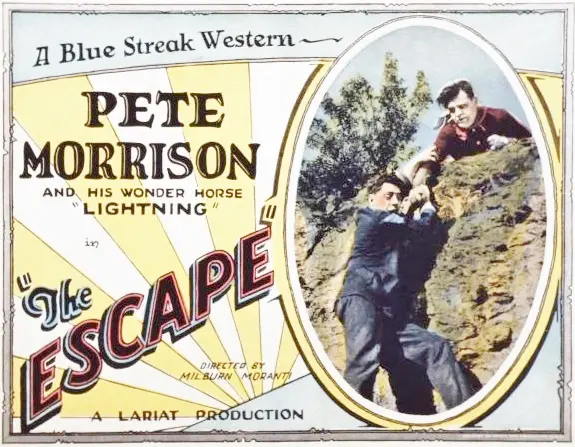
A definitive 5.4/10 rating for a film that redefined the boundaries of cult cinema. The Escape remains a cornerstone of transgressive art.
Is The Escape (1926) worth watching today? Short answer: yes, but with significant caveats that demand a specific viewing mindset, placing it firmly in the realm of historical curiosity rather than essential cinema. This is a film for the dedicated silent film aficionado, the Western history buff, or anyone seeking a glimpse into the foundational tropes of early Hollywood storytelling.
It is not for those accustomed to modern pacing, complex character arcs, or high-definition visual spectacle; its charms are subtle, its narrative straightforward, and its technical execution a product of its nascent era.
To approach The Escape (1926) is to step into a time capsule, a flickering window into the nascent days of the Western genre. Directed by Tex Young, who also takes on the lead role, this silent picture embodies the straightforward heroism and clear-cut villainy that defined much of early cinema. It’s a film that asks little of its audience beyond a willingness to be transported to a simpler narrative landscape, where good and evil are as starkly delineated as the shadows cast by a desert sun.
The film exists as a testament to the enduring appeal of the cowboy archetype, a figure of rugged independence and unwavering moral compass. It's not aiming for the psychological depth of later Westerns, nor the sprawling epic scale that would come to define the genre's golden age. Instead, it offers a distilled, almost primal version of the Western myth, focused on land, loyalty, and love.
This film works because it unapologetically embraces its genre conventions, delivering a pure, unadulterated slice of early Western entertainment. It fails because its simplistic narrative and often rudimentary technical execution struggle to hold the attention of a modern audience without significant historical context. You should watch it if you appreciate the foundational elements of cinema and the charming naiveté of silent film, or if you have a particular interest in the evolution of the Western genre.
The plot of The Escape is, by contemporary standards, remarkably uncomplicated. We are introduced to Jeremiah Grant, a rancher facing the familiar threat of villainous encroachment. Howard Breen, the archetypal mustache-twirling antagonist, conspires with a crooked banker to dispossess Grant of his land, a scheme further complicated by Breen's covetous gaze upon Grant's daughter, Evelyn.
Enter Johnny Bowers, a virtuous cowhand, equally smitten with Evelyn, who, along with his extraordinary horse, Lightning, becomes the sole bulwark against Breen's nefarious plans. It's a classic setup: innocent landowner, dastardly villain, damsel in distress, and a heroic cowboy riding to the rescue. There are no moral ambiguities here, no shades of grey to ponder. The lines are drawn, and the audience is immediately aware of who to root for and who to despise.
This narrative simplicity is both the film's strength and its most significant limitation. For viewers accustomed to the intricate plotting of modern thrillers or the character-driven dramas of prestige television, The Escape might feel almost rudimentary. Yet, within its own historical context, this straightforward approach was precisely what audiences expected and enjoyed. It allowed for clear emotional beats and easily digestible action sequences, a formula that proved incredibly popular in the silent era.
The film's reliance on clear-cut villains feels almost quaint now, a testament to a simpler narrative era, but also a slight detriment to any lasting dramatic impact. The stakes, while clear, rarely feel truly dire because the outcome is never truly in doubt. It’s a comfort food Western, predictable but satisfying in its predictability, much like revisiting an old, familiar folk tale. The narrative serves its purpose, moving the characters from one perilous situation to another, always culminating in the inevitable triumph of good.
The cast of The Escape delivers performances entirely in keeping with the conventions of silent cinema. Tex Young, as Johnny Bowers, embodies the stoic, rugged hero with a quiet determination. His expressions are broad enough to convey emotion without the aid of dialogue, yet never descend into caricature. You see his resolve in his posture, his concern for Evelyn in a subtle furrow of his brow.
Barbara Starr, as Evelyn Grant, fulfills the role of the spirited yet vulnerable heroine. Her portrayal, while not groundbreaking, is earnest, capturing the innocence and resolve expected of a leading lady of the era. Frank Norcross, as the villainous Howard Breen, revels in his role, his sneers and gestures leaving no doubt as to his malevolent intentions. It’s a performance designed to elicit boos from the audience, and it achieves that with gusto.
However, the true star, the undeniable scene-stealer, is Lightning the Horse. Listed first in the credits, and for good reason, Lightning is an absolute marvel. His intelligence, agility, and seemingly intuitive understanding of the action elevate every scene he’s in. Whether he’s carrying Johnny to safety, outsmarting villains, or simply standing majestically, Lightning commands the screen with a charisma that often eclipses his human counterparts. It’s an unconventional observation, but his performance is genuinely the most captivating aspect of the film, a testament to the extraordinary animal actors of the silent era. For anyone who appreciates animal performances in cinema, akin to the charm found in a film like Horse Sense, Lightning is a must-see.
The supporting cast, including Pete Morrison and Elmer Dewey, provide solid, if not particularly memorable, contributions, filling out the world with reliable archetypes. Their roles are functional, driving the plot forward and providing context for the central conflict. The acting, overall, is a masterclass in silent film communication, relying heavily on exaggerated gestures, expressive eyes, and physical comedy or drama to convey the story without a single spoken word.
Tex Young's direction of The Escape is competent, if not particularly innovative. He understands the mechanics of a silent Western: clear action, effective use of landscapes, and straightforward framing. The camera work, while limited by the technology of 1926, effectively captures the expansive beauty of the Western setting. Wide shots of galloping horses across open plains are a recurring motif, designed to evoke the freedom and grandeur of the frontier.
There's a raw, almost documentary-like quality to some of the outdoor sequences, particularly those involving the horses. The cinematography, credited to L.V. Jefferson, prioritizes clarity and action over artistic flourish. Shots are typically static, allowing the action to unfold within the frame, with occasional tracking shots to follow a speeding horse or a fleeing character. This utilitarian approach ensures that the audience always understands what is happening, a crucial element in silent storytelling.
One could argue that the film lacks the visual poetry of a Griffith or the innovative editing of a Kuleshov, but that would be to misjudge its intent. The Escape is a populist Western, designed for mass appeal, and its visual language reflects that goal. It’s about delivering a story efficiently and entertainingly, using the visual tools available at the time. The intertitles are well-placed, providing necessary dialogue and exposition without bogging down the pace. They act as a narrative bridge, guiding the audience through the story's twists and turns.
The use of natural light is evident, giving the outdoor scenes an authentic feel. While there are no grand set pieces in the vein of a biblical epic like La suprême épopée, the chase sequences, especially those featuring Lightning, are surprisingly dynamic and well-executed, showcasing the skill of both the riders and the animal performers. The limitations of early film technology are apparent, of course, with occasional graininess or less-than-perfect exposure, but these are minor quibbles that add to the film’s historical texture rather than detract from its enjoyment.
The pacing of The Escape is brisk for a silent film, yet might feel deliberate to modern viewers accustomed to rapid-fire editing. The narrative moves forward with a steady momentum, punctuated by moments of suspense and action. There are no lingering, introspective scenes; every sequence serves to advance the plot or heighten the tension. The film understands its audience's desire for action and adventure, delivering chase scenes, daring escapes, and confrontational showdowns at regular intervals.
The tone is consistently adventurous and heroic, with a clear moral compass. There's a refreshing earnestness to the film, a lack of cynicism that is almost endearing. It’s a world where good triumphs over evil without question, where courage is rewarded, and villainy is always punished. This unwavering optimism is a hallmark of many early Westerns and provides a comforting, escapist quality.
While the film doesn't attempt the raw, visceral energy of a contemporary sporting event captured on film, like Stecher-Caddock Wrestling Match, its action sequences are well-staged for their time. The tension builds through cross-cutting between the villains' schemes and Johnny's efforts to thwart them, creating a sense of urgency that propels the story forward. The musical accompaniment, which would have been live in theaters, would have undoubtedly played a crucial role in enhancing the emotional beats and maintaining the desired pace.
It works. But it’s flawed. The film's reliance on intertitles to convey significant plot points can occasionally disrupt the flow, but this is an inherent characteristic of the medium. Overall, the pacing is effective for its genre and era, ensuring that the audience remains engaged in the unfolding drama, even if that drama is relatively predictable.
For the casual moviegoer, The Escape (1926) might be a challenging watch. Its silent format, broad acting styles, and simple narrative demand an adjustment in viewing expectations. Modern audiences, desensitized by complex plots and advanced visual effects, may find its charm elusive.
However, for those with an appreciation for film history, for scholars of the Western genre, or for anyone curious about the foundational elements of cinematic storytelling, this film offers significant value. It provides a pure, unadulterated example of early Hollywood's approach to popular entertainment.
It's a testament to the enduring power of classic tropes: the hero, the villain, the damsel, and the trusty steed. Watching it is less about being on the edge of your seat and more about understanding where so many familiar cinematic conventions originated. It’s an educational experience as much as it is an entertaining one, a window into a bygone era of filmmaking.
If you enjoy historical films like The Heart of the Hills or simply have a soft spot for the foundational Western, then yes, carve out some time for this one. It won't redefine your cinematic palate, but it will enrich your understanding of its origins.
Pros:
- Authentic Glimpse: Offers a genuine look at early Western filmmaking and silent era storytelling.
- Charming Performances: Tex Young's stoic hero and Frank Norcross's clear villain are effective, with Barbara Starr providing a sympathetic heroine.
- Lightning the Horse: A truly exceptional animal performer who elevates every scene. His actions are often more compelling than the human drama.
- Clear Narrative: Easy to follow, with well-defined good and evil, making it accessible even to those new to silent film.
- Historical Value: Important as an example of a foundational genre film, demonstrating common tropes and production techniques of its time.
Cons:
- Simplistic Plot: Lacks the depth and complexity modern audiences expect, leading to predictable outcomes.
- Dated Pacing: While brisk for its era, it can feel slow by today's standards, potentially testing the patience of some viewers.
- Technical Limitations: As a 1926 film, it exhibits inherent technical limitations in cinematography and editing that may not appeal to all.
- Lack of Nuance: Character motivations are straightforward, leaving little room for moral ambiguity or complex emotional arcs.
- Limited Replay Value: While historically significant, its entertainment value for repeated viewings is primarily for dedicated enthusiasts.
The Escape (1926) is more than just a dusty relic; it's a foundational piece of cinema that, while certainly showing its age, still possesses a quaint charm. Its narrative is straightforward, its characters archetypal, and its technical execution a product of its time. Yet, within these limitations lies its appeal: a pure, unadulterated Western tale of good versus evil, elevated significantly by the remarkable performance of Lightning the Horse.
This isn't a film that will redefine your understanding of cinema or leave you pondering existential questions. It's a delightful, if simple, diversion for those willing to meet it on its own terms. For film historians and silent film aficionados, it’s an essential watch, offering valuable insight into the genre's origins. For everyone else, it’s a curious, often charming, glimpse into a bygone era of storytelling. It stands as a testament to the enduring power of a simple, well-told story, even without a single spoken word.
IMDb 4
1928
Community
Log in to comment.