DbcultAccessing Vault...
6.2/10
Senior Film Conservator
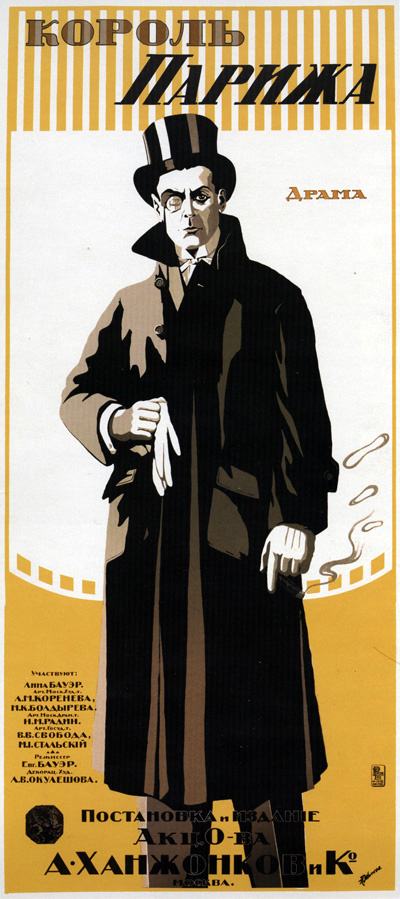
A definitive 6.2/10 rating for a film that redefined the boundaries of cult cinema. Korol Parizha remains a cornerstone of transgressive art.
In the annals of early cinematic history, certain films emerge not merely as relics of a bygone era, but as vibrant, enduring testaments to storytelling prowess and the nascent power of the moving image. Among these, the 1917 Russian silent masterpiece, Korol Parizha – often translated as 'The King of Paris' – stands as a particularly compelling artifact. An adaptation of Georges Ohnet's novel, this film plunges headfirst into the opulent yet morally ambiguous world of Parisian high society, revealing the dark undercurrents that swirl beneath a veneer of sophistication. It’s a narrative rich with intrigue, manipulation, and the intoxicating allure of illicit gain, brought to life by a stellar ensemble cast including Lidiya Koreneva, Vera Karalli, and Nikolai Radin, under the guiding hand of its visionary creators.
The film's central premise revolves around the enigmatic Rascol Venkov, a character of profound cunning and strategic brilliance. Venkov isn't merely a schemer; he is a master architect of human desire and weakness. His gaze, we imagine, pierces through the superficiality of Parisian life, identifying the cracks in its gilded facade. His target: the unsuspecting elite, whose fortunes he intends to siphon away through the art of the cardsharp. This is where Roger Brémond enters the fray, a young man whose natural aptitude for cards is matched only by his ambition. Brémond is not yet hardened by the world; he possesses a youthful audacity that Venkov recognizes as both a powerful asset and a potential vulnerability. Their alliance forms the very backbone of the film, a fascinating study in symbiosis where one provides the intellect and the other the execution, all aimed at plundering the unsuspecting upper echelons of society. This intricate dance of manipulation and ambition offers a stark contrast to the more straightforward narratives of good versus evil prevalent in many films of the era, such as The Terror, where the stakes are often more overtly physical.
What makes Korol Parizha resonate even today is its astute psychological profiling of its characters. Rascol Venkov, portrayed with a compelling intensity by Nikolai Radin, is not a simplistic villain. He embodies a more complex archetype – the social engineer, the one who understands that true power lies not in overt force, but in the subtle manipulation of systems and individuals. His motivations, while seemingly rooted in greed, hint at something deeper: perhaps a past slight, a desire for retribution against a society that may have once scorned him, or simply the thrill of exercising his intellectual superiority. His magnetism is undeniable, drawing Brémond into his orbit with the promise of wealth and status that society otherwise denies him.
Roger Brémond, brought to life by Mikhail Stalski, represents the aspirational youth, a figure often seen in literature and cinema of the period. He is a blank canvas upon which Venkov paints his grand design. Brémond's journey is one of moral erosion, a gradual descent into the labyrinthine world of deceit. His initial enthusiasm for the game, for the sheer challenge of outwitting the wealthy, slowly gives way to a deeper understanding of the ethical compromises he is making. The film, through its visual storytelling, masterfully conveys Brémond's internal conflict, the fleeting moments of doubt that flicker across his face as he executes Venkov's schemes. This nuanced portrayal elevates the film beyond a simple crime drama, positioning it as a profound exploration of human frailty and the corrupting influence of unchecked ambition. It’s a character arc that shares thematic echoes with the descent into moral ambiguity found in works like The Mystery of Edwin Drood, where societal pressures and personal desires lead characters down perilous paths.
The female characters in Korol Parizha, particularly those portrayed by Lidiya Koreneva and Vera Karalli, add layers of emotional complexity and dramatic tension. Koreneva, known for her expressive performances, likely imbues her character with a depth that challenges the male-dominated world of card sharps and high society. Karalli, a celebrated ballerina and actress, would have brought a captivating elegance and perhaps a tragic vulnerability to her role. These women are not mere accessories to the male protagonists' schemes; they are integral to the emotional landscape of the film, often serving as moral compasses, objects of desire, or even catalysts for unforeseen complications. Their presence highlights the broader social dynamics of the era, where women often navigated a treacherous path between societal expectations and personal desires, much like the challenging roles seen in films such as Camille or Madame Butterfly.
Paris, in Korol Parizha, is not just a backdrop; it is a character in itself. The film meticulously captures the essence of early 20th-century Parisian life, from the glittering ballrooms and exclusive casinos where fortunes are won and lost, to the shadowy corners where illicit deals are struck. The visual language of silent cinema, particularly in this period, relied heavily on elaborate sets, costumes, and carefully choreographed crowd scenes to convey atmosphere and social class. We can imagine the film painting a vivid picture of the city's contrasts: the dazzling lights of the Champs-Élysées juxtaposed with the dimly lit back alleys, the sophisticated attire of the elite against the simpler garments of the working class. This visual dichotomy underscores the film's thematic exploration of class disparity and the inherent hypocrisy of a society that prizes wealth above all else.
The casinos, in particular, serve as microcosms of this society. They are spaces where the rules of polite society are momentarily suspended, where greed and ambition are laid bare. The tension at the card tables, the subtle cues exchanged between Brémond and Venkov, the mounting stakes – all these elements would have been masterfully conveyed through close-ups, rapid cuts, and the expressive physicality of the actors. The film, in its portrayal of gambling, doesn't just present it as a game; it frames it as a battleground, a psychological arena where wits clash and destinies are decided. This focus on the psychological intensity of the game resonates with the timeless appeal of stories like Queen of Spades, where fate and fortune are inextricably linked to the turn of a card.
The direction of Korol Parizha, while not explicitly attributed in the provided details, would have been crucial in translating Ohnet's novelistic intricacies into a compelling visual narrative. Silent films often relied on strong visual metaphors, exaggerated gestures, and intertitles to convey dialogue and internal monologues. A skilled director would have leveraged these tools to build suspense, develop character arcs, and articulate the film's deeper themes. The adaptation of a French novel by Russian filmmakers also adds an interesting layer, suggesting a cross-cultural dialogue in cinematic storytelling, perhaps mirroring the transnational appeal of stories like Ramona or The Girl of the Golden West, which adapted American literary works for the screen.
The film's thematic resonance extends beyond mere entertainment. It serves as a critique of social stratification, exposing the ease with which the wealthy can be exploited by those who understand their weaknesses. It questions the very foundations of morality when confronted with the overwhelming temptation of power and riches. Venkov and Brémond, in their own ways, are products of their environment – one, perhaps, hardened by it, the other seduced by its glittering promises. The film encourages viewers to ponder the nature of justice, the blurred lines between right and wrong, and the consequences of unchecked ambition. This nuanced approach to morality distinguishes it from more didactic narratives, offering a complex exploration of human nature that feels remarkably contemporary.
Silent cinema, despite its technical limitations by modern standards, was an era of immense creativity and innovation. Filmmakers were constantly experimenting with visual storytelling techniques, camera movements, and editing to convey emotion and narrative without spoken dialogue. Korol Parizha would have been a product of this fertile period, pushing the boundaries of what was possible. The performances of its cast, particularly Lidiya Koreneva and Vera Karalli, would have been central to its success, relying on their facial expressions, body language, and stage presence to communicate complex emotions and motivations. Their training, often rooted in theatre and dance, provided them with a unique ability to command the screen through sheer physicality.
The film's enduring appeal lies in its exploration of universal themes: the pursuit of wealth, the corrupting influence of power, the intricate dance of deception, and the eternal struggle between social classes. These are themes that transcend time and culture, making Korol Parizha relevant even to contemporary audiences. While it may lack the sound and color of modern cinema, its visual poetry, compelling characterizations, and gripping narrative ensure its place as a significant work in early Russian filmmaking. It stands alongside other socially conscious films of the era, such as Den tredie magt, in its critique of societal structures.
Georges Ohnet's original novel provided a rich tapestry for adaptation, and the filmmakers of Korol Parizha clearly understood the dramatic potential within its pages. The transformation of literary narratives into cinematic experiences was a burgeoning art form in the 1910s, and successful adaptations like this one demonstrated the power of the new medium to capture the essence of a story while imbuing it with a distinct visual language. This process of translation from page to screen is a fascinating aspect of early film history, highlighting the interpretive skills of the directors and writers in shaping a new artistic vision. The success of such adaptations often hinged on how well the filmmakers could distill the core emotional and thematic elements, much like any great adaptation, whether it be Forbidden Paths or The Hand That Rocks the Cradle (though the latter is a very different genre, the principle of adaptation holds).
Ultimately, Korol Parizha offers more than just a thrilling narrative of casino cheats and high society intrigue. It provides a window into the social anxieties and moral complexities of its time. Through the calculated maneuvers of Rascol Venkov and the gradual transformation of Roger Brémond, the film meticulously dissects the mechanisms of power and the seductive, often destructive, pull of ambition. The performances, particularly from its principal cast members like Lidiya Koreneva and Vera Karalli, would have imbued these characters with a vibrant, unforgettable presence, transcending the limitations of the silent medium. It is a film that, even a century later, speaks volumes about the enduring human fascination with wealth, deception, and the often-fragile veneer of civilization. For those seeking to understand the foundational elements of cinematic storytelling, and indeed, the social consciousness embedded within early film, Korol Parizha remains an essential, captivating watch, a testament to the timeless power of compelling narrative.
IMDb —
1933
Community
Log in to comment.