DbcultAccessing Vault...
Cult Review
Senior Film Conservator
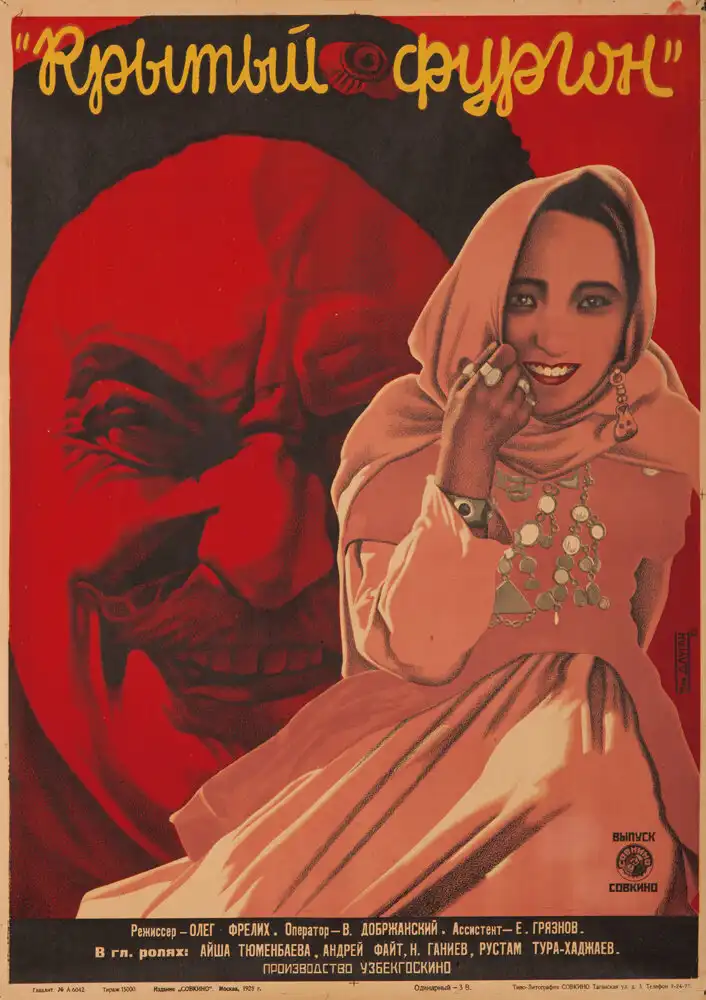
No, not for most people. Krytyi Furgon is a film for a very specific audience, a niche curiosity for those deeply invested in the early days of Soviet cinema or the evolution of film as a medium. If you're looking for narrative sophistication, nuanced performances, or a polished viewing experience, you'll find little to engage you here.
This film works because of its raw, almost accidental honesty about the sheer difficulty of its production era and the simple stories it tried to tell. It fails because that very simplicity often translates directly into dramatic inertness. You should watch it if you possess an academic interest in film history and are prepared for a slow, often unrewarding experience, or if you simply enjoy the peculiar charm of truly primitive filmmaking.
To approach Krytyi Furgon expecting a conventional film experience is to set yourself up for immediate disappointment. This isn't a film that aims to entertain in the modern sense; it's more of a stark, almost accidental record. What we get is a narrative so stripped back it feels less like a story and more like a series of filmed actions: people moving things, people struggling, people looking vaguely determined. There’s a purity to it, certainly, but also a profound lack of anything approaching dramatic propulsion.
The plot, such as it is, revolves around a covered wagon’s journey. The specifics of the cargo or the destination are secondary to the act of movement itself. Director Lolakhan Saifullina seems less interested in the 'why' and more in the 'how' of this arduous task. This focus on process over outcome can be both its most intriguing aspect and its most frustrating. On one hand, it offers an unvarnished glimpse into the physical demands of the era; on the other, it drains the film of any real emotional stake. You watch characters endure, but you rarely feel *with* them.
The performances, led by Andrey Fayt, are largely of their time – broad, often theatrical, with gestures that feel over-emphasized for the camera. Fayt, known for his more menacing roles in other films, here projects a kind of grim resolve that borders on stiffness. Elena Chajka and Rustam Tura-Khodzhaev, alongside Rakhim Pirmukhamedov and Aysha Tjumenbaeva, are competent enough within the limited scope allowed, but no one is given material to truly shine. There's a pervasive sense of functional acting, where each actor serves a purpose in the frame rather than embodying a complex inner life. This isn't necessarily a flaw, but it does mean the film relies heavily on external action to convey meaning, which, when the action is just 'pulling a wagon,' becomes thin quickly.
Cinematically, the film is straightforward. The camera is mostly static, observing rather than participating. There are moments where the vastness of the landscape is captured with a certain stark beauty, particularly in wide shots that emphasize the wagon's isolation. These occasional glimpses of visual poetry are often undercut by a prevailing sense of utilitarianism. The editing is rudimentary, often relying on simple cuts that move the action forward without much finesse. There's no real attempt at building suspense or varying the rhythm. The film just *happens*, frame by frame.
Pacing is the film’s most significant hurdle. It is glacially slow. What might have been intended as a depiction of endurance often feels like an exercise in patience for the viewer. Sequences stretch on, showing the same action from slightly different angles, or simply holding on a scene for too long after its dramatic point has been made. This deliberate speed, while perhaps true to the subject matter, makes the 80-minute runtime feel considerably longer. It's a film that demands a specific kind of engagement, one where you're willing to actively search for meaning in the mundane.
One could argue that the film's lack of conventional narrative drive is its strength, forcing the audience to confront the raw, unglamorous reality of its subject. I find this argument mostly unconvincing. While an unconventional approach can be powerful, here it often feels like a limitation, a result of primitive storytelling rather than a deliberate artistic choice. The film doesn't transcend its technical or narrative constraints; it often succumbs to them. Its value is less in its artistic merit as a finished product and more as a raw document of its making.
There's a curious bluntness to Krytyi Furgon. It doesn't ask for much, and in return, it doesn't give much in the way of emotional payoff or intellectual stimulation beyond the obvious. It’s a film that exists, and that’s about it. Compared to other archival finds, like the energetic Protéa which showcased early action filmmaking, Krytyi Furgon feels far more earthbound, weighed down by its own simplicity.
Krytyi Furgon is a film that exists more as a historical footnote than a cinematic experience to be actively sought out. While it offers a raw, unfiltered glimpse into a particular time and place, its dramatic shortcomings and punishing pace make it inaccessible for all but the most dedicated students of early cinema. It’s a film to be studied, perhaps, but rarely enjoyed. Approach with extreme caution and a healthy dose of academic detachment.
IMDb 6.3
1918
Community
Log in to comment.