DbcultAccessing Vault...
Cult Review
Senior Film Conservator
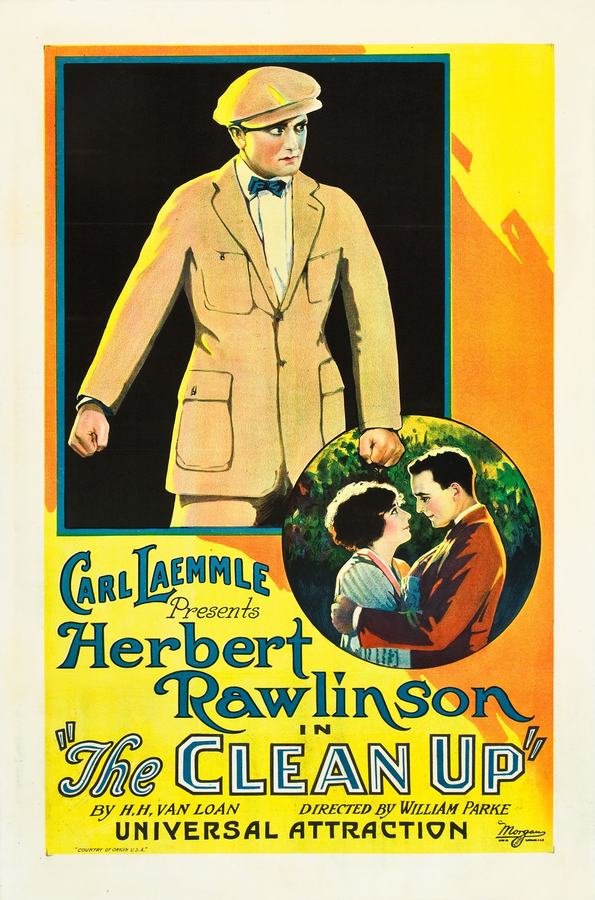
Stepping back into the cinematic landscape of 1923, one encounters a fascinating tapestry of storytelling, where the moving image, still in its relative infancy, captivated audiences with silent narratives of grand ambition, moral quandaries, and burgeoning social commentaries. Among these, 'The Clean-Up' emerges as a particularly intriguing specimen, a film that, despite its vintage, speaks with surprising clarity to contemporary concerns about wealth, responsibility, and the true measure of character. It’s a delightful journey into a bygone era of filmmaking, yet its core message remains remarkably resonant, proving that some lessons are, indeed, timeless.
The narrative thrust of 'The Clean-Up' hinges on a rather ingenious, if somewhat Machiavellian, testamentary act by the wealthy Monte Bixby Senior. From beyond the grave, he orchestrates a social experiment of epic proportions, designed not merely to distribute his fortune but to sculpt the very character of his grandson, young Monte Bixby. The will's stipulations are nothing short of a theatrical flourish: a staggering $50,000 bestowed upon every native-born citizen of the quaint town, a sum that, in 1923, would have been life-altering, a veritable king's ransom for the average person. But for his own grandson, the heir apparent, the inheritance is a cruel jest: a solitary, symbolic dollar. This act of disinheritance is the catalyst, the spark that ignites a chain reaction, propelling Monte Bixby from a life of privileged indolence into an unexpected crucible of self-discovery. It’s a narrative device that immediately grabs attention, setting the stage for both personal transformation and societal upheaval.
Herbert Rawlinson, in the role of Monte Bixby, perfectly embodies the initial portrait of a man accustomed to the soft comforts of inherited wealth, utterly unprepared for the abrupt rug-pull of his grandfather's will. His initial reaction is one of bewildered shock, quickly followed by the crushing realization of his newfound financial precarity. This vulnerability is immediately exploited by his fiancée, Mary Reynolds, a character who serves as a stark embodiment of superficiality and avarice. Her swift abandonment of Monte, once his fortune evaporates into a single dollar, is a pivotal moment, not only for Monte's character development but for the film's commentary on the transient nature of relationships built on material gain. It’s a brutal lesson, delivered with the blunt force of silent-era melodrama, yet it sets Monte on an unforeseen path. The film doesn't shy away from showcasing the harsh realities of social standing dictated by wealth, making Monte's isolation all the more palpable.
Amidst Monte's public humiliation and personal despair, a glimmer of hope, and indeed, genuine character, emerges in the form of Phyllis Andrews, portrayed with understated grace by Claire Adams. As Monte Bixby Senior's secretary, Phyllis possesses an intimate understanding of the late patriarch's mind, perhaps even discerning the true intent behind his seemingly capricious will. Unlike Mary, Phyllis sees beyond Monte's sudden destitution, recognizing a latent potential, a spark of decency that simply needed the right circumstances to ignite. Her unwavering belief in Monte, her quiet support and encouragement, are crucial to his eventual transformation. She represents the moral compass of the narrative, a counterpoint to the town's impending chaos and the superficiality that initially defined Monte's social circle. Her presence elevates the romantic subplot beyond mere convenience, imbuing it with a sense of earned affection and mutual respect, a love forged in adversity rather than prosperity. This relationship provides a much-needed emotional anchor in a story that otherwise explores the more cynical aspects of human nature.
The true genius of 'The Clean-Up' lies in its vivid depiction of the town's reaction to its sudden, collective windfall. The $50,000 inheritance, intended perhaps to highlight the dangers of unearned wealth, instead plunges the community into an exhilarating, then terrifying, maelstrom of profligacy and social disintegration. The film masterfully illustrates how easily prosperity can corrupt, how quickly established norms can crumble under the weight of sudden affluence. The scenes depicting the townsfolk's extravagant spending, their abandonment of work, and their descent into hedonism are both comical and cautionary. Farmers forsake their fields, shopkeepers close their businesses, and the once-orderly community dissolves into a chaotic free-for-all. It's a striking commentary on human nature, suggesting that without the tempering influence of effort and responsibility, wealth becomes a destructive force. This societal breakdown is not merely background noise; it is an active character in the story, a living, breathing testament to the film's central theme.
The narrative here draws parallels with other films that explore the intoxicating, often corrosive, effects of sudden riches. One might consider the allegorical depth found in works where characters grapple with unexpected fortunes, facing moral tests that expose their true selves. The chaos depicted in 'The Clean-Up' serves as a stark reminder of the fragility of social order when individual greed is unleashed without constraint. The visual storytelling, characteristic of the silent era, relies on exaggerated expressions and broad gestures to convey the escalating madness, from boisterous celebrations to burgeoning lawlessness. The townsfolk, initially jubilant, become caricatures of their former selves, their newfound wealth transforming them into figures of excess and self-indulgence. Fred Kohler, often typecast as a villain, might here represent the more unsavory elements that thrive in such an environment, perhaps even a symbol of the unbridled chaos that erupts.
It is precisely this burgeoning chaos that provides Monte Bixby with his opportunity for redemption and self-actualization. Stripped of his privilege, he is forced to confront the harsh realities of a society spiraling out of control. The very people who once looked down upon him, or perhaps envied his former station, are now themselves lost in a sea of their own making. Monte, having experienced both the highs of inherited wealth and the lows of its absence, develops a unique perspective. He recognizes the fundamental need for order, for governance, for a guiding hand to steer the community back from the brink. His decision to appoint himself mayor, though perhaps initially driven by a sense of desperation, quickly evolves into a genuine commitment to public service. This transformation is the heart of the film, showcasing a man who, when faced with adversity, discovers an inner strength and a capacity for leadership he never knew he possessed. He doesn't just restore order; he rebuilds the social fabric, piece by painstaking piece.
This arc of transformation is a classic trope, yet 'The Clean-Up' executes it with a refreshing sincerity. Monte's journey from an aimless socialite to a responsible civic leader is compelling, driven not by a desire for personal gain, but by a nascent sense of duty. His actions demonstrate a profound understanding of the value of stewardship, not just of money, but of community. One could draw a thematic parallel with films like You Can't Believe Everything, where characters also undergo significant personal growth through unexpected trials, or even The Fighting Grin, which often features protagonists who must overcome initial disadvantages to prove their mettle. The film's message here is clear: true leadership is forged in the fires of necessity, not in the comfortable lap of luxury. Monte's 'clean-up' isn't just about restoring order to the town; it's about cleaning up his own life, shedding the superficiality that once defined him.
The ultimate revelation of Monte Bixby Senior's true intentions is the film's thematic crescendo. His will was not an act of cruelty, but a meticulously planned pedagogical exercise, a grand, theatrical lesson designed to teach his grandson the profound difference between mere money and true value. The single dollar was not a punishment, but a catalyst, stripping Monte of his superficial attachments and forcing him to confront the world on his own terms. The chaos that engulfed the town was an unfortunate, but perhaps necessary, byproduct of this lesson, a stark demonstration of what happens when wealth is detached from effort, responsibility, and purpose. The grandfather's foresight, his understanding of human nature, and his deep desire for his grandson to become a man of substance rather than just a man of means, elevate the narrative from a simple rags-to-riches story to a more profound philosophical inquiry.
This twist underscores the film's central thesis: that character, integrity, and a sense of purpose are far more valuable than any inherited fortune. Monte's struggles, his leadership, and his eventual success in restoring order to the town are all testaments to the efficacy of his grandfather's unconventional teaching method. The final reward, a real fortune, now comes not as an unearned gift, but as the rightful recognition of a man who has proven his worth. And, of course, the winning of Phyllis's affections is the ultimate prize, symbolizing a love built on respect, shared values, and mutual admiration, rather than on the ephemeral glitter of wealth. It’s a beautifully wrapped conclusion that ties all the thematic threads together with satisfying precision, reinforcing the idea that true wealth lies within, not in one's bank account. This echoes sentiments in films like The Ornament of the Lovestruck Heart, where intrinsic value often triumphs over superficial allure.
As a silent film, 'The Clean-Up' relies heavily on the expressive power of its actors and the clarity of its visual storytelling. Herbert Rawlinson's performance as Monte is a journey in itself, transitioning from a pampered youth to a man of gravitas, his facial expressions and body language conveying the emotional weight of his transformation. Claire Adams, as Phyllis, offers a more subtle, yet equally impactful, portrayal, her quiet strength and intelligence shining through the often-exaggerated acting styles of the era. The supporting cast, particularly those depicting the chaotic townsfolk, effectively create a vibrant, if unruly, backdrop for Monte's personal drama. The use of intertitles is judicious, providing necessary exposition and dialogue without bogging down the visual flow. The cinematography, while perhaps not groundbreaking for its time, effectively captures the contrast between the town's initial charm and its later disarray, using well-composed shots to convey both intimacy and broad societal scope.
The direction, by an uncredited hand (given the common practice of the time where writers like H.H. Van Loan, Raymond L. Schrock, Eugene B. Lewis, and Harvey Gates often had significant creative input), demonstrates a clear understanding of pacing and dramatic tension. The film builds its narrative effectively, allowing the chaos to escalate before Monte's intervention, making his eventual triumph all the more satisfying. The visual gags and the more dramatic moments are balanced, ensuring that the film maintains an engaging rhythm. One can appreciate the craft involved in conveying complex emotions and a detailed plot without spoken dialogue, relying instead on the universal language of human expression and well-constructed scenes. This era of filmmaking demanded a different kind of artistry, and 'The Clean-Up' delivers a compelling example of it. Compared to other films of the period like The Tin Bronco or The Call of the Cumberlands, which often focused on adventure or frontier narratives, 'The Clean-Up' offers a more focused social satire, highlighting the diverse range of stories being told in the early 20th century.
Decades after its initial release, 'The Clean-Up' retains a surprising amount of relevance. Its exploration of wealth's corrupting influence, the importance of personal responsibility, and the true meaning of leadership resonates perhaps even more strongly in an age grappling with economic disparities and the fleeting nature of digital fortunes. The film serves as a quaint, yet potent, reminder that character is forged in adversity, and that true value is rarely found in the easy acquisition of money. It’s a testament to the enduring power of classic storytelling, proving that a well-crafted narrative, even without the bells and whistles of modern cinema, can offer profound insights into the human condition. For enthusiasts of silent cinema, it’s a delightful discovery, offering both entertainment and food for thought.
The film's legacy might not be as widely celebrated as some of its more famous contemporaries, but its quiet strength and clear moral compass make it a valuable piece of cinematic history. It stands as an example of how early filmmakers tackled complex social issues, often cloaked in accessible dramatic narratives. 'The Clean-Up' is more than just a historical artifact; it's a vibrant piece of storytelling that continues to engage and instruct, reminding us that sometimes, the greatest fortunes are found not in what we inherit, but in what we build ourselves, and the character we cultivate along the way. It’s a charming and insightful watch that proves that the 'clean-up' of one's life often leads to the richest rewards. Much like a hidden gem, it offers a refreshing perspective on themes that echo through cinema history, from Oh, Promise Me's romantic entanglements to In Wrong's comedic mishaps, all contributing to the rich tapestry of early film narratives.
IMDb —
1924
Community
Log in to comment.