DbcultAccessing Vault...
Cult Review
Senior Film Conservator
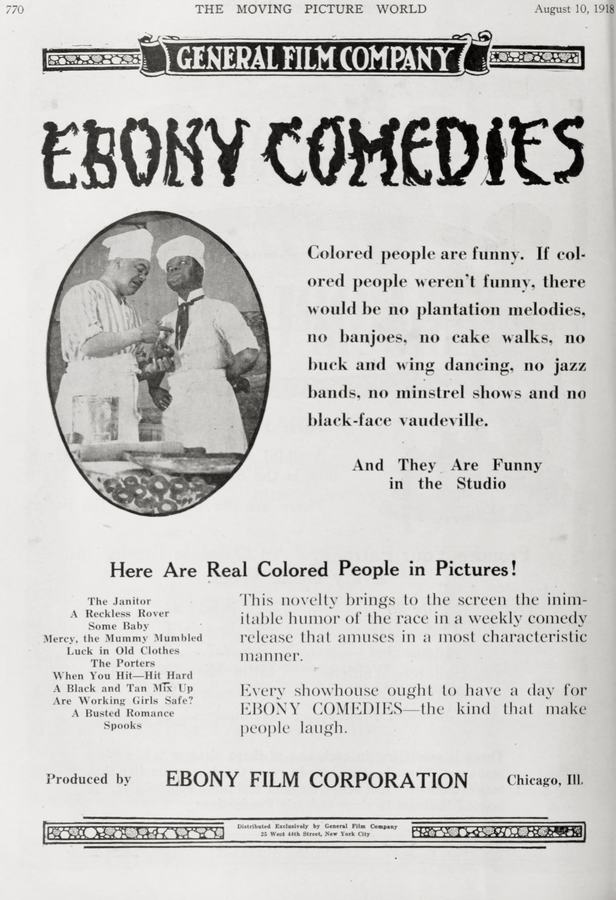
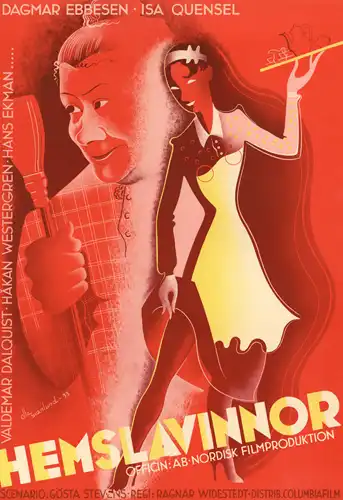
In the nascent years of the cinematic medium, before the gloss of Hollywood’s Golden Age had fully calcified into predictable tropes, there existed a rugged frontier of filmmaking that valued impact over artifice. When You Hit, Hit Hard, directed by the prolific yet often overlooked Robert J. Horner, stands as a testament to this era of unadulterated vigor. It is a film that doesn't merely present a story; it throws a punch. While many of its peers were busy exploring the psychological nuances of social standing—much like the thematic underpinnings of Hans hustrus förflutna—Horner’s work is a direct, almost primitive engagement with the concept of confrontation.
The screenwriting duo of Robert J. Horner and William H. Rice understood the economy of the silent frame. They didn't clutter the narrative with superfluous subplots or unnecessary romantic entanglements. Instead, they focused on the central ethos of the title: the necessity of total commitment in the face of adversity. This isn't the refined, almost balletic violence of modern choreography; this is a clumsy, desperate, and ultimately more honest portrayal of what happens when two men reach the end of their diplomatic tethers. It shares a certain spiritual DNA with the stark realism found in Udar v spinu, where the betrayal is felt as much in the body as it is in the heart.
Samuel 'Sambo' Jacks delivers a performance that demands a re-evaluation of silent-era acting. Often, modern audiences dismiss early screen performances as hyperbolic or pantomime-adjacent. However, Jacks utilizes a stillness that is remarkably contemporary. His presence on screen is heavy, anchored by a sense of impending action that makes the eventual outbursts of movement all the more jarring. He doesn't have the manicured charm of the era's leading men; he has the look of a man who has actually worked the soil and felt the sting of a cold wind. This groundedness provides the film with its much-needed gravity, preventing it from floating into the realm of mere melodrama.
Comparing Jacks to the protagonists in films like Hell Bent reveals a fascinating divergence in the 'tough guy' archetype. Where other films might lean into the mythic hero’s journey, When You Hit, Hit Hard keeps its feet firmly in the mud. Jacks’ character isn't seeking glory; he is seeking a resolution that can only be achieved through physical finality. It’s a performance of necessity, reflecting a time when the screen was a mirror to the harsh realities of survival.
Technically, the film is a fascinating artifact of low-budget ingenuity. Horner, known for his ability to stretch a dollar until it screamed, utilizes natural lighting in a way that feels intentional rather than accidental. The high-contrast shadows and the blown-out skies create a world of binary choices—black and white, right and wrong, hit or be hit. There is an absence of the soft-focus romanticism found in The Bride's Awakening. Instead, we are treated to a visual harshness that mirrors the narrative’s lack of compromise.
"The cinematography doesn't shy away from the dirt. It embraces the grain of the film stock as a metaphor for the grain of the characters' lives. Every frame feels like it was fought for, much like the survival of the protagonist himself."
The editing, likely handled with a razor blade and a prayer, has a rhythmic quality that anticipates the montage theories that would later emerge from the Soviet school. The cuts during the climactic sequences are quick, disorienting, and designed to simulate the chaos of a brawl. It lacks the polish of The Girl Who Came Back, but it replaces that polish with a raw, kinetic energy that is far more visceral. You don't just watch the fight; you feel the impact of the frames colliding.
Will Starks and Sam Robinson provide the necessary friction to Jacks' protagonist. Starks, in particular, embodies a type of calculated villainy that was common in the post-war era's anxieties, perhaps touching upon the same societal fears explored in The Prussian Cur. There is a sense of systemic corruption here—not the grand political machinations of To Hell with the Kaiser!, but a more localized, intimate form of oppression. It’s the kind of bullying that happens in small towns where the law is a suggestion and the strongest arm is the legislature.
Julia Mason, though given less to do in terms of physical action, serves as the moral compass of the piece. Her performance provides the emotional stakes, ensuring that the violence isn't just for the sake of spectacle. She represents the domestic stability that the protagonist is fighting to protect, a theme that resonates with the domestic dramas of A Continental Girl or The Yankee Girl, though here that stability is constantly under threat of being shattered by a closed fist.
What differentiates When You Hit, Hit Hard from a standard revenge flick is its philosophical commitment to its title. In an era where many films were trying to find 'The Light of Happiness' (as seen in The Light of Happiness), Horner’s film suggests that happiness is a luxury that must be defended with ferocity. There is a stoicism here that borders on the nihilistic. The film posits that words are often a mask for cowardice, and that true character is revealed only in the moment of impact.
This theme of 'might making right' is handled with a surprising amount of nuance. It isn't a glorification of the bully, but a celebration of the counter-strike. It asks the audience to consider the moral weight of inaction. If one has the power to stop an injustice and chooses not to, are they not complicit? It’s a question that echoes through the halls of legal dramas like Love or Justice, but Horner answers it with a right hook rather than a closing argument.
Looking back from a century’s distance, When You Hit, Hit Hard feels like a precursor to the hard-boiled noir and the revisionist westerns of the 1960s. It shares that same sense of atmospheric dread and the inevitability of a violent climax. While it may lack the supernatural intrigue of The Woman in Black or the high-stakes gambling tension of Kinkaid, Gambler, it possesses a singular focus that those films sometimes lack. It knows exactly what it is: a lean, mean, 1920s action machine.
The film’s obscurity is a tragedy of film preservation. Like Drakonovskiy kontrakt or the works of The Envoy Extraordinary, these smaller productions often fall through the cracks of history, overshadowed by the giants like Griffith or Murnau. Yet, it is in these 'Poverty Row' style productions that we often find the most honest expressions of the era's anxieties. They weren't making art for the ages; they were making entertainment for the moment, and in doing so, they captured a raw slice of the human experience that more 'prestigious' films often polished away.
To watch When You Hit, Hit Hard today is to engage with a ghost of cinema’s past—a ghost that still has a very solid grip. It is a reminder that storytelling doesn't require a massive budget or complex CGI to be effective. It requires a clear vision, a dedicated cast, and a willingness to confront the darker aspects of our nature. Robert J. Horner might not be a household name, but in this film, he proved he was a master of the visceral.
The film concludes not with a grand speech or a sunset ride, but with the quiet after the storm. The dust settles, the bruises begin to purple, and the world moves on, albeit slightly altered by the force of the protagonist's will. It is a haunting, heavy, and ultimately satisfying conclusion to a film that lives up to its title in every single frame. If you have the opportunity to view a surviving print, do not hesitate. In a world of soft blows and indirectness, this film is a refreshing, if brutal, reminder of what it means to truly commit to a path. It hits hard, and it stays with you long after the screen goes dark.
Written by an enthusiast of the lost and the gritty. For more deep dives into the archives of silent cinema, stay tuned.
IMDb —
1931
Community
Log in to comment.