DbcultAccessing Vault...
Cult Review
Senior Film Conservator
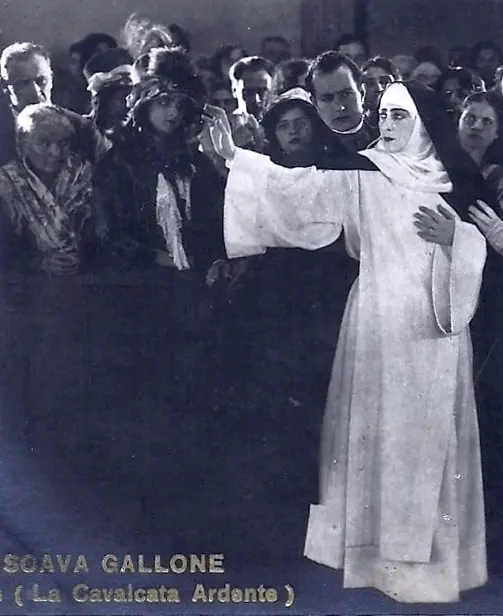
Is La cavalcata ardente a silent film worth unearthing from the annals of cinema history for a modern viewing? Short answer: yes, but with significant caveats. This melodrama, while undeniably a product of its time, offers a compelling glimpse into the visual storytelling and emotional grandiosity that defined early Italian cinema, particularly for aficionados of historical romantic dramas and silent film enthusiasts.
It is unequivocally for those who appreciate the artistry of a bygone era, the power of expressionistic acting, and narratives where passion reigns supreme over dialogue. Conversely, it is decidedly not for viewers accustomed to rapid pacing, complex psychological realism, or those who find the conventions of silent film — intertitles, exaggerated gestures, and a reliance on visual metaphor — to be an insurmountable barrier.
To truly engage with La cavalcata ardente, one must approach it not as a relic, but as a vibrant, if stylistically distinct, piece of art. Directed with a flair for the dramatic, the film plunges viewers into a world where love is an all-consuming fire and betrayal a shadow that stalks every corner. Its narrative, while simple by contemporary standards, is imbued with an emotional urgency that belies its lack of spoken word, relying instead on the potent language of gesture, gaze, and meticulously crafted mise-en-scène.
The film’s central conflict — the spirited Elara (Jeanne Brindeau) torn between the ardent Marco (Emilio Ghione) and the sinister Baron Valerius (Raimondo Van Riel) — serves as a potent vehicle for exploring themes of freedom, possession, and the enduring power of true love. It’s a classic triangle, perhaps, but one executed with a conviction that feels remarkably fresh in its earnestness.
This film works because it commits wholeheartedly to its melodramatic heart, delivering a story of love and pursuit with an almost operatic intensity. Its visual storytelling, particularly in its outdoor sequences, frequently transcends the technical limitations of its period. This film fails because its pacing can feel glacial to the uninitiated, and some of the acting, while expressive, leans into a theatricality that modern audiences might find alienating. You should watch it if you are prepared to surrender to its unique rhythms and appreciate the historical context of its artistic choices.
The performances in La cavalcata ardente are a masterclass in silent film acting. Jeanne Brindeau, as Elara, embodies a captivating blend of vulnerability and defiance. Her wide, expressive eyes communicate volumes, particularly in the scene where she is confronted by Baron Valerius in his study; her subtle flinch, followed by a resolute straightening of her posture, speaks of a spirit unbroken despite overwhelming odds. It’s a performance that doesn’t just show emotion, it *radiates* it.
Emilio Ghione, a titan of Italian silent cinema, brings a raw, almost feral intensity to Marco. His portrayal is less about nuanced dialogue and more about the physical manifestation of passion and desperation. Consider his desperate ride to rescue Elara: Ghione's posture, the frantic energy of his movements, and the fierce determination etched onto his face are far more articulate than any spoken word could be. He is the embodiment of the film's 'ardent ride,' his every muscle conveying urgency.
Raimondo Van Riel's Baron Valerius is the quintessential silent film villain — menacing, calculating, and utterly devoid of remorse. Van Riel’s physical presence, often framed in shadowed, imposing shots, creates a palpable sense of dread. His smirk, a subtle curl of the lip, in the scene where he believes he has trapped Elara, is chillingly effective, a testament to the power of understated villainy even in an era of overt expression.
The direction, while uncredited to a specific individual in some historical records, demonstrates a keen understanding of visual storytelling. The choice of sweeping Italian landscapes is not merely aesthetic; it's integral to the narrative. The vast, open plains and rugged mountains symbolize the freedom Elara and Marco yearn for, contrasted sharply with the claustrophobic interiors of Valerius’s estate.
One particularly striking sequence involves Marco’s pursuit across a rocky terrain. The camera, rather than remaining static, employs a series of dynamic cuts and varied angles, lending a sense of momentum and peril to the chase. This wasn't merely about showing action; it was about immersing the viewer in the urgency of the moment, a technique that felt surprisingly modern for its time.
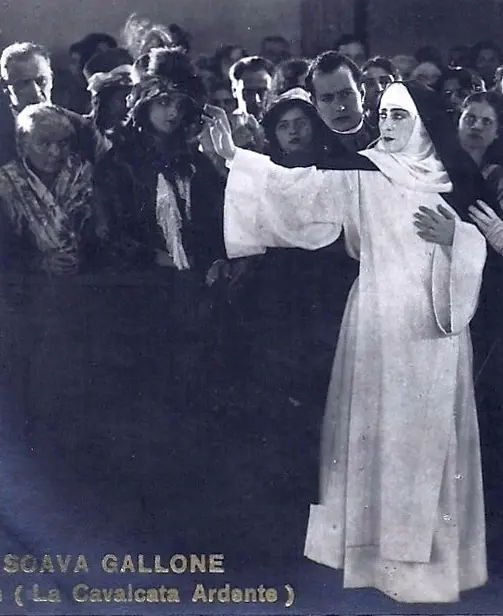
The cinematography, utilizing natural light and stark contrasts, is often breathtaking. Shadows play a crucial role, not just in establishing mood but in delineating character. Valerius is frequently bathed in chiaroscuro, his face half-hidden in darkness, while Elara and Marco, in their moments of pure connection, are often bathed in a softer, more ethereal glow. The visual language here is rich, almost poetic, and demands close attention.
The film's use of deep focus in certain wide shots allows for multiple layers of action to unfold simultaneously, a sophisticated technique that elevates it beyond simpler contemporary productions. For instance, a scene showing Elara gazing out a window in the foreground while Valerius plots in the background creates a powerful sense of impending doom without a single intertitle.
The pacing of La cavalcata ardente is deliberate, a slow burn that builds emotional intensity rather than relying on rapid-fire plot developments. This can be a challenge for viewers accustomed to contemporary narrative speeds. However, within the context of silent film, this measured pace allows for a deeper appreciation of the visual cues and the actors’ nuanced expressions.
The tone oscillates between high romance and tense suspense, with moments of profound despair punctuated by bursts of exhilarating action. The film never shies away from the inherent melodrama of its premise, embracing it fully. This commitment to its dramatic core is arguably its greatest strength, even if it feels excessive to some. It works. But it’s flawed.
A particular scene, where Elara attempts to escape her confinement, is drawn out with excruciating detail. Each furtive glance, each slow step, each creak of a floorboard is amplified by the absence of sound, creating a palpable sense of tension. This sequence, while lengthy, is incredibly effective at immersing the viewer in Elara's desperate plight, showcasing how silent film could manipulate time and perception.
One might argue that the film’s biggest flaw is also its most fascinating aspect: its almost obsessive focus on the physicality of emotion. Every sentiment, from love to rage, is writ large across the actors’ bodies, sometimes to the point of caricature. Yet, this exaggeration is precisely what allows it to transcend language barriers and speak directly to universal human experiences. It’s a bold artistic choice, and one that, for me, largely pays off.
I also hold the debatable opinion that La cavalcata ardente, despite its age, offers a more genuine portrayal of 'ardent' love than many modern romantic dramas. There's an unvarnished, almost primitive honesty to the passion depicted between Elara and Marco. It’s not sanitized; it’s raw, dangerous, and utterly captivating, a stark contrast to the often-tepid romances prevalent today.
An unconventional observation is how the film, perhaps inadvertently, prefigures elements of the Western genre, particularly in its depiction of a lone hero riding across vast, untamed lands to rescue a damsel in distress. The aesthetic of the 'ardent ride' itself, with its emphasis on horses, open spaces, and a clear moral dichotomy, shares more with films like Way Out West or even early American serials than one might initially expect from an Italian melodrama.
La cavalcata ardente is more than just a historical curiosity; it is a vibrant, if demanding, piece of cinematic art. Its raw emotional power, embodied by its expressive cast and the evocative Italian landscapes, still resonates, provided the viewer is willing to meet it on its own terms. It’s a testament to the enduring appeal of a well-told story of love, conflict, and redemption, even without spoken words.
For those who cherish the unique magic of silent film, or for anyone curious about the roots of cinematic drama, this 'ardent ride' is absolutely worth taking. It's an experience that rewards patience with genuine emotion and striking visual poetry, a powerful reminder of how much could be conveyed with just light, shadow, and human expression. Don't expect a modern blockbuster; expect a captivating journey into the heart of early 20th-century passion.
IMDb —
1915
Community
Log in to comment.