DbcultAccessing Vault...
Cult Review
Senior Film Conservator
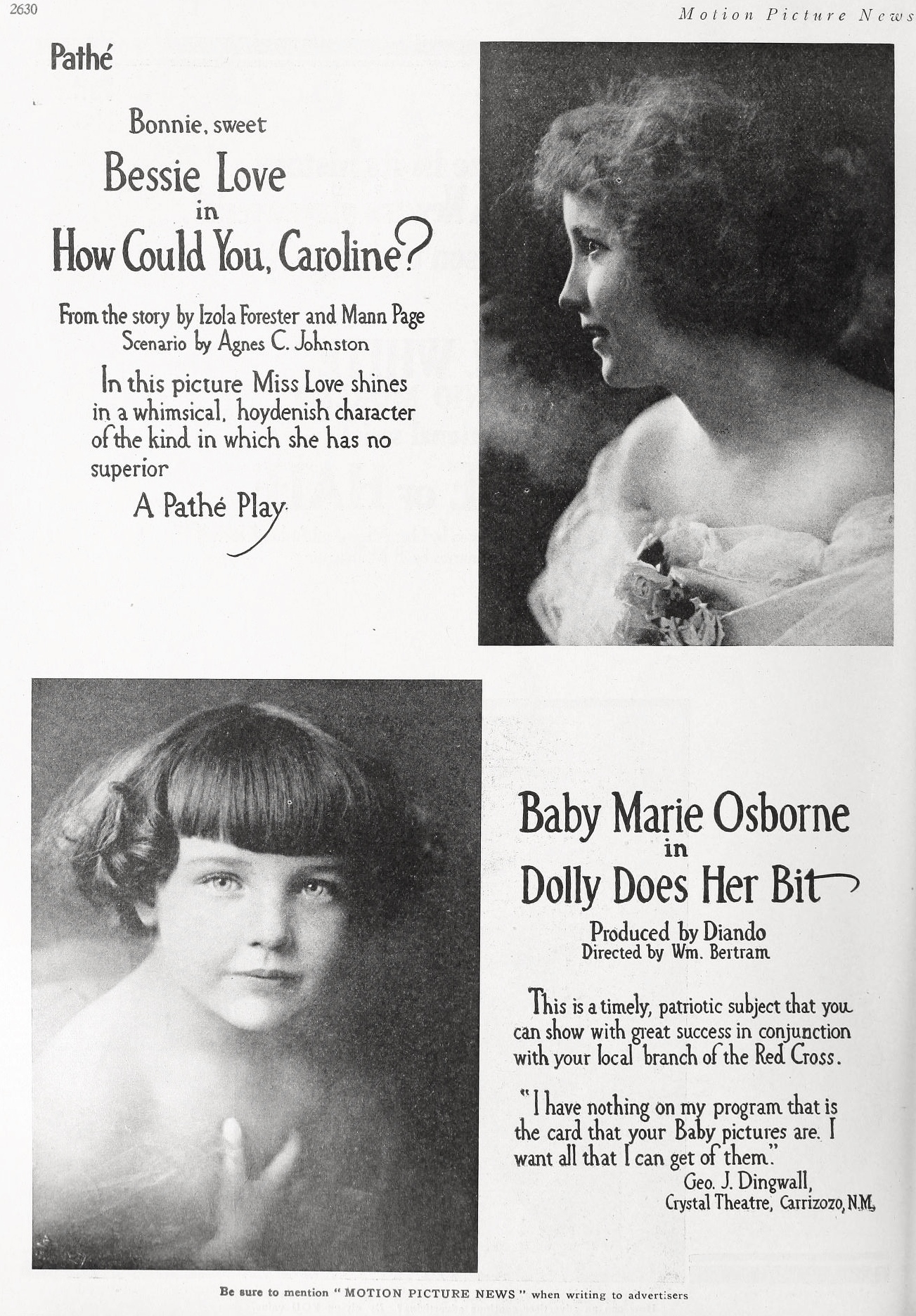
The year 1918 was a temporal crossroads for American cinema. As the shadows of the Great War loomed, the silver screen offered a peculiar blend of escapism and moral instruction. How Could You, Caroline? stands as a fascinating artifact from this period, a film that dances precariously between the lightheartedness of a coming-of-age comedy and the dark undercurrents of a cautionary tale. Directed with a keen eye for the burgeoning 'flapper' archetype, the film presents a protagonist who is less a victim of her circumstances and more a victim of her own literary diet.
Bessie Love, an actress whose career spanned from the silent epics of Griffith to the early talkies, delivers a performance here that is nothing short of foundational. In How Could You, Caroline?, she embodies the 'spirited girl' with a nuance that many of her contemporaries lacked. Unlike the protagonists in The Soul Market, who often seem like pawns in a grander social game, Love’s Caroline is an active, albeit misguided, agent of her own chaos. She isn't just reacting to the world; she is attempting to rewrite it to match the purple prose of the novels she devours.
Her return from boarding school isn't merely a homecoming; it's an invasion. She brings with her a set of expectations derived from 'Twin Souls,' a fictional lurid novel that acts as a meta-commentary on the influence of popular media. This thematic thread—the danger of confusing art with reality—is a recurring motif in early 20th-century storytelling, reflecting a societal anxiety about the 'corrupting' influence of modern fiction on the youth.
The plot hinges on the arrival of Reginald Van Alden. In the lexicon of silent film villains, Reginald is a recognizable type: the fortune-seeker. However, the film adds a layer of irony by having Caroline fall for him specifically because of his 'poetic' name. It’s a brilliant satirical jab at the superficiality of romantic idealism. While The Spindle of Life deals with the threads of destiny in a more traditional sense, How Could You, Caroline? suggests that these threads are often self-spun and tangled in the looms of vanity.
The sequence at the wedding rehearsal is a masterclass in visual storytelling. Caroline’s 'daring' gown is a costume in every sense of the word—a desperate attempt to manifest a 'soul mate' through sheer aesthetic willpower. The cinematography captures the judgmental glances of the wedding guests, creating a palpable sense of social friction. This isn't just a girl acting out; it's a clash between the rigid Victorian sensibilities of her family and the burgeoning, unbridled individualism of the 1920s.
The narrative takes a sharp, almost jarring turn when Reginald takes Caroline to a 'disreputable roadhouse.' In 1918, the roadhouse was the ultimate symbol of moral decay—a place where the rules of polite society were suspended. The tension here is genuine. Caroline’s escape from the clutches of the fortune-seeker is a pivotal moment of maturation, though it leads to one of the most bizarre sequences in silent cinema: her attempted suicide by drinking cologne.
To a modern audience, this might seem absurd, even comical. But within the context of the era’s melodrama, it represents a profound sense of shame and the theatricality of adolescent despair. It’s a moment of 'meretricious tragedy,' where the character tries to perform a grand exit that is as artificial as the novels she reads. This scene elevates the film from a simple comedy to a psychodrama. It’s far more visceral than the stylized suffering seen in Powers That Prey, offering a raw, albeit strange, look at the fragile ego of a young woman.
The final act of the film is a dizzying array of disguises and deceptions. Caroline, now engaged to her old flame Bob Worth (played with a steady, grounding presence by James Morrison), decides to crash his bachelor party dressed as a cabaret dancer. This choice is deeply symbolic. She is once again adopting a persona, but this time, it is within the 'safe' confines of a prank. Or so she thinks.
The 'mock' wedding ceremony that takes place at the party is a fascinating plot device. The revelation that the ceremony was actually legal—presided over by a real judge—is a trope that appears in several films of the era, such as Should a Wife Forgive?. It serves as a narrative 'gotcha' that forces the characters into a commitment they were trying to simulate. In Caroline’s case, it is the ultimate irony: she spent the entire film searching for a 'soul mate' through artifice, only to be legally bound to her true partner through a different kind of performance.
The writing credits for How Could You, Caroline? are a testament to the power of female voices in early Hollywood. Agnes Christine Johnston and Izola Forrester were prolific writers who understood the intricacies of the female experience. Their influence is evident in the way Caroline is written; she is never a caricature. Even at her most ridiculous, there is a core of earnestness that makes her relatable. The dialogue (conveyed through intertitles) is sharp and often self-aware, avoiding the turgid prose found in contemporary works like The Master Passion.
Mann Page’s contribution to the screenplay ensures that the pacing remains brisk. The transition from the domestic comedy of the wedding preparations to the high-stakes drama of the roadhouse is handled with a fluidity that was quite advanced for 1918. The film doesn't linger too long on any single emotion, mirroring the flighty, mercurial nature of its protagonist.
Visually, the film utilizes the standard vocabulary of the time but does so with exceptional clarity. The use of lighting to distinguish between the 'safe' home environments and the 'dangerous' external locations is subtle yet effective. The cabaret scene, in particular, is a highlight. The contrast between Caroline’s dancer costume and the formal wear of the men at the party creates a visual tension that underscores the film's themes of identity and social standing. It’s a starker, more intimate visual style than the grandiosity of The Soul of Buddha, focusing more on character expression than spectacle.
What makes How Could You, Caroline? endure as a subject of study is its refusal to fully condemn its heroine. In many films of the 1910s, a girl who 'went wrong' or acted out would face a much grimmer fate. Here, the 'punishment' is a happy marriage—a subversive ending that suggests Caroline’s spirit hasn't been broken, merely channeled into a more socially acceptable vessel. It’s a precursor to the screwball comedies of the 1930s, where chaos and romance are inextricably linked.
When compared to the more rigid moralism of Her Great Price, this film feels remarkably modern. It acknowledges that young women have inner lives, fantasies, and the capacity for making spectacular mistakes. It doesn't treat Caroline's obsession with novels as a moral failing, but as a stage of life—a phantasmagoria of youth that must be navigated before one can enter the 'real' world.
For those interested in the evolution of female representation on screen, How Could You, Caroline? is essential viewing. It bridges the gap between the Victorian 'damsel' and the modern 'heroine.' It’s a film that understands the power of stories—how they can mislead us, how they can trap us, and ultimately, how they can help us find our place in the world. Bessie Love’s performance remains a beacon of charm, navigating the absurdities of the plot with a grace that keeps the audience firmly on her side.
In the grand tapestry of silent cinema, where films like The Circus of Life or Beyond the Wall often leaned into heavy-handed allegory, How Could You, Caroline? offers a refreshing dose of humanity. It’s a reminder that even a century ago, the struggle to define oneself in a world full of expectations was as vibrant and messy as it is today. The film may be a product of its time, but its heart—the quixotic search for a 'twin soul'—is timeless.
Review by the Art Critic Blogger. All rights reserved. For more deep dives into the archives of silent cinema, stay tuned.
IMDb —
1917
Community
Log in to comment.