DbcultAccessing Vault...
Cult Review
Senior Film Conservator
If you have a soft spot for old black-and-white dramas that take themselves very, very seriously, sure. It’s got that specific earnestness you only find in movies from this era. If you need snappy dialogue or modern pacing, though, you might want to skip it.
It’s a bit like watching a stage play that got lost on its way to the theater. Everyone is very expressive with their hands. Sometimes it feels like they’re shouting at the back row of an empty auditorium.
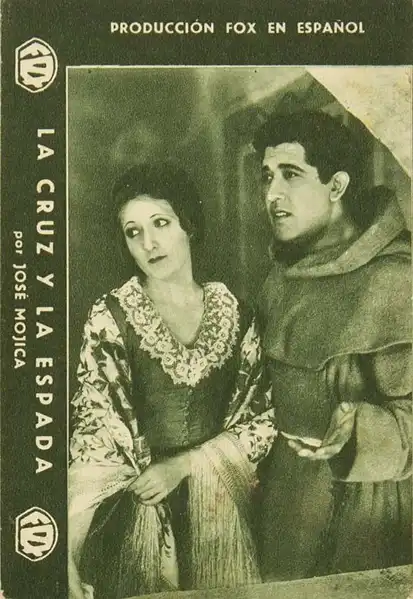
The whole setup is pretty straightforward. José wants gold, Carmela is having second thoughts, and Brother Francisco is just trying to keep his robe clean. It reminded me a little of the simplicity found in Westward Ho!, just with more theology and fewer cowboys.
When Francisco finds the gold in that cave during the storm? That’s the high point. The way the lighting hits his face—it’s very dramatic. He’s clearly struggling with his vows, and the movie *really* wants you to feel that internal tug-of-war. Maybe a bit too much. The imaginary sequence where he burns his clothes? It’s a bit much, guys. We get it, he's tempted.
There’s this moment in the cantina where the local gossip gets started. It’s the classic 'he-said-she-said' trope that always feels like it’s padding the runtime. You’re just sitting there waiting for José to realize he’s being a bit of an idiot. And he does, but only after some unnecessary stabbing.
It’s not exactly King Kong in terms of spectacle, but there’s a weird, dusty sincerity to it. It’s not trying to be anything other than a story about choices. Even if those choices involve a lot of dramatic swooning.
I left the movie feeling like I’d just had a long, slightly repetitive conversation with a grandfather who really likes to talk about his younger days. Not entirely unpleasant, but you definitely find yourself checking your watch once or twice. 🏜️
Year
1934
IMDb Rating
—

Editorial
Deciphering the legacy of transgressive cult cinema.
Community
Log in to comment.