DbcultAccessing Vault...
Cult Review
Senior Film Conservator
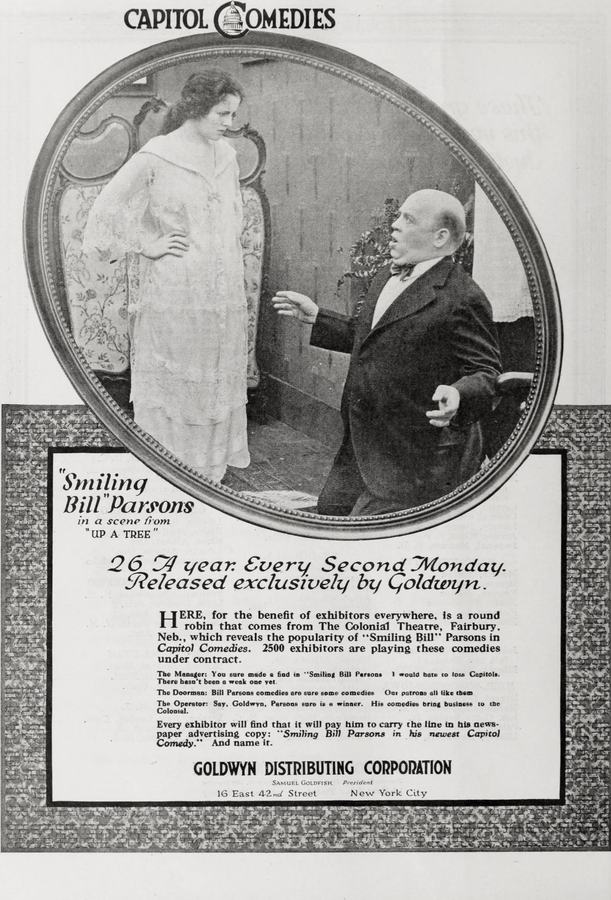
In the sprawling annals of early cinema, where the language of storytelling was still nascent and the spectacle often trumped narrative complexity, certain gems emerge, sparkling with a timeless appeal. Tom Bret's 'Up a Tree,' a delightful offering from an era defined by its pioneering spirit, stands as one such luminous example. Starring the inimitable William Parsons, this film, at first glance, might appear to be a simple comedic romp, a fleeting moment of slapstick designed for ephemeral amusement. Yet, beneath its surface of physical gags and charming mishaps, lies a surprisingly insightful commentary on human perseverance, the often-absurd nature of societal expectations, and the enduring power of a well-executed visual jest. It's a testament to the craft of silent film that a narrative so seemingly straightforward can yield such rich dividends upon closer inspection.
William Parsons, as Mr. Percival Piffle, anchors 'Up a Tree' with a performance that is nothing short of masterful. Parsons, a performer whose nuanced understanding of physical comedy was perhaps unparalleled in his time, imbues Percival with a blend of earnestness and utter incompetence that is instantly endearing. His character is not merely a caricature; he is a man driven by a noble, if ultimately misguided, impulse: to impress his beloved, Miss Penelope Plum, by rescuing her obstinate feline, Whiskers, from a perilous perch. The genius of Parsons' portrayal lies in his ability to convey Percival's escalating frustration and humiliation without uttering a single word. Every flustered glance, every sweat-beaded brow, every exaggerated gesture of exasperation speaks volumes. We witness his initial, almost dapper, attempts at heroism—a confident stride towards the tree, a tentative reach—slowly crumble into a desperate, undignified struggle against gravity, the elements, and his own physical limitations. It's a ballet of escalating misfortune, performed with a grace that belies the character's clumsy predicament. Parsons doesn't just fall; he *collapses* with a theatricality that elicits genuine laughter while simultaneously evoking a pang of sympathy for the poor, beleaguered soul.
The narrative scaffolding provided by writer Tom Bret is surprisingly robust, considering the film's ostensibly simple premise. Bret understands the mechanics of comedic escalation, building layer upon layer of misfortune around Percival. It's not just that Percival gets stuck; it's *how* he gets stuck, and the series of increasingly ill-conceived solutions he devises, each one digging him deeper into his arboreal predicament. The tree itself becomes a character, a silent antagonist that mocks Percival's every effort, its branches a labyrinthine trap. Bret's script, though wordless, is rich in dramatic irony, allowing the audience to anticipate Percival's inevitable missteps while reveling in their unfolding. The introduction of the indifferent cat, Whiskers, adds another layer of comedic brilliance, highlighting the futility of Percival's grand gesture. This isn't just about a man in a tree; it's about a man battling his own ego, the whims of nature, and the unyielding apathy of a creature he's trying to save. The subtle commentary on the performative nature of courtship, where grand gestures often backfire spectacularly, is deftly woven into the fabric of the story, elevating it beyond mere slapstick.
The direction of 'Up a Tree' (unfortunately, the director is not specified, but their vision is palpable) expertly leverages the visual medium of silent film to maximize its comedic impact. The framing of shots, particularly those depicting Percival's precarious ascent and subsequent entanglement, is crucial. Close-ups of his panicked face or the mischievous glint in Whiskers' eye punctuate wider shots of the unfolding chaos, drawing the viewer deeper into the scene. The use of practical effects, while rudimentary by today's standards, is effective in creating a sense of genuine struggle and danger, even within the comedic context. The audience is invited to not just observe Percival's plight, but to feel the tug of the rope, the wobble of the ladder, the precariousness of his perch. The pacing is another unsung hero; the film never rushes the gags, allowing the audience to fully absorb the absurdity of each failed attempt. This deliberate tempo builds anticipation, culminating in moments of uproarious laughter. The visual cues, from the gathering crowd below to Miss Plum's alternating expressions of concern and amusement, paint a vivid picture of a community drawn into the spectacle of one man's escalating misfortune.
'Up a Tree' occupies an interesting niche within the burgeoning landscape of early cinema, particularly when viewed alongside its contemporaries. While it shares the physical comedy DNA of films like The Baseball Revue of 1917, which also relied heavily on visual gags and athletic prowess, 'Up a Tree' offers a more contained, character-driven predicament. Its humor is less about grand spectacles and more about the intimate, often embarrassing, struggle of an individual. One might draw parallels to the early works of figures like Buster Keaton or Charlie Chaplin, though Parsons’ particular brand of bewildered earnestness carves out its own distinct identity. Unlike the more cynical or socially critical undertones found in some later silent films, 'Up a Tree' maintains a lighthearted, almost innocent charm. It lacks the dramatic weight of something like Das Recht aufs Dasein (The Right to Exist), which grappled with profound social issues, or the intense psychological drama of The Whirlpool. Instead, it finds its strength in simplicity and universality. The predicament of being 'up a tree,' literally and metaphorically, is one that resonates across cultures and generations. Even The Impersonation, with its focus on mistaken identity, plays on a different kind of social discomfort, whereas 'Up a Tree' revels in the pure, unadulterated awkwardness of a public failure. The film’s strength lies in its ability to generate genuine humor from a relatable, if exaggerated, human experience, making it a precursor to countless 'fish out of water' narratives that would follow.
Beyond the immediate laughter, 'Up a Tree' subtly explores several themes that remain pertinent. The most obvious is the theme of perseverance, even if Percival's efforts are ultimately futile. His refusal to give up, despite mounting evidence of his own ineptitude, speaks to a fundamental human desire to succeed, particularly when motivated by love or social approval. It’s a comic inversion of the heroic journey, where the hero's struggle is less about slaying dragons and more about battling a recalcitrant feline and an uncooperative tree. The film also touches upon the performative aspects of masculinity and courtship in the early 20th century. Percival's entire endeavor is a performance for Miss Plum and the community, a demonstration of his worthiness. The humor often derives from the stark contrast between his intended image and the reality of his predicament. This societal pressure to maintain a certain facade, even in the face of absurdity, is a timeless comedic wellspring. Unlike the more dramatic moral quandaries presented in films like The Devil's Toy or the stark realities of survival depicted in The Life and Adventures of John Vane, the Australian Bushranger, 'Up a Tree' focuses on the lighter, more farcical side of human endeavor and social interaction. It’s a gentle reminder that sometimes, the greatest challenges come in the most unexpected and undignified forms.
While the director's name may be lost to the mists of time, their hand is evident in the film's effective visual storytelling. The choice of location, a stately oak tree in a residential neighborhood, provides a perfect backdrop for the unfolding comedy. The static camera, typical of the era, is used judiciously, allowing the action to play out fully within the frame. This allows Parsons' physical comedy to take center stage, giving him ample space to contort, struggle, and flail for maximum effect. The editing, though perhaps not as rapid-fire as later comedies, is precise in its cuts, particularly when transitioning between Percival's struggles and the reactions of the onlookers. This interplay between cause and effect, effort and reaction, is fundamental to the film's comedic rhythm. The lighting, likely natural, contributes to the film's authentic, almost documentary-like feel, grounding the absurd premise in a recognizable reality. There's an understated elegance in how the film captures the escalating chaos, never resorting to overly dramatic angles or ostentatious camera movements, allowing the natural humor of the situation and Parsons' performance to shine through. This approach contrasts sharply with the often melodramatic lighting and staging of contemporary dramas like Saffo or Called Back, underscoring the distinct comedic sensibility at play.
'Up a Tree' might not be as widely celebrated as some of the monumental epics or groundbreaking dramas of its time, but its contribution to the evolution of comedic cinema is undeniable. It exemplifies the early silent era's reliance on universal physical humor and relatable human predicaments to connect with audiences. It serves as a valuable historical document, showcasing the talents of William Parsons and Tom Bret, and offering a glimpse into the comedic sensibilities of a bygone era. The film reminds us that laughter, in its purest form, often springs from shared experiences of awkwardness, frustration, and the simple absurdity of life. It predates the more complex character studies seen in films like The Penny Philanthropist, focusing instead on the immediate, visceral reaction to a comical situation. Its influence, though perhaps subtle, can be traced through generations of physical comedians and situational comedies. The notion of a protagonist trapped by their own good intentions, facing an unyielding obstacle, is a trope that 'Up a Tree' executes with an unpretentious charm that still resonates. It’s a small film with a big heart, and its enduring appeal lies in its straightforward yet deeply humorous depiction of a man, a cat, and a very tall tree.
'Up a Tree' is more than just a historical curiosity; it is a vibrant, engaging piece of early cinematic art that continues to entertain and amuse. William Parsons' performance is a masterclass in silent comedy, perfectly complemented by Tom Bret's shrewdly constructed narrative. The film's unassuming premise belies a sophisticated understanding of comedic timing, character development, and visual storytelling. It stands as a charming testament to the ingenuity of early filmmakers who, with limited resources, managed to craft narratives that speak to universal human experiences. For anyone interested in the foundational elements of film comedy, or simply in need of a good laugh, 'Up a Tree' remains a delightful and surprisingly insightful viewing experience. Its simple premise belies a profound understanding of human nature, a quality that elevates it beyond mere slapstick and cements its place as a minor, yet significant, classic of the silent era. It is a film that, much like its protagonist, climbs high and, despite its struggles, leaves an indelible mark.
IMDb 7.2
1923
Community
Log in to comment.