DbcultAccessing Vault...
Cult Review
Senior Film Conservator
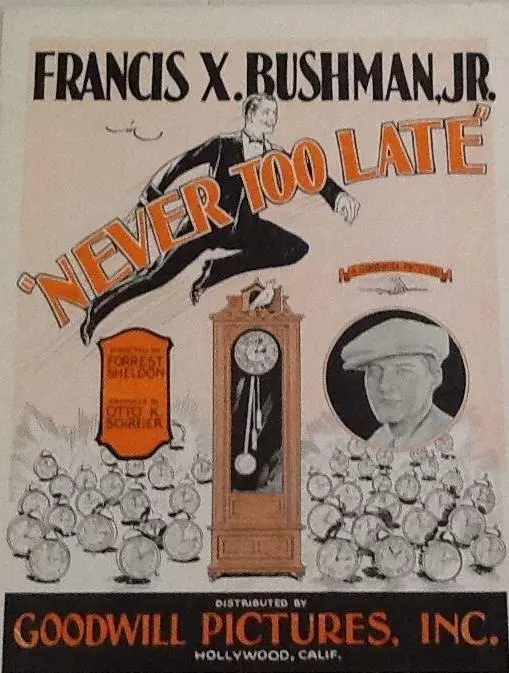
If you crave a brisk, if uneven, slice of pre-Code action cinema, *Never Too Late* delivers. But if you’re looking for nuanced character work or polished dialogue, this film will leave you wanting. Fans of classic Hollywood suspense will find it oddly compelling, while modern audiences may cringe at its dated rhythms.
This film works because it commits fully to its pulpy premise, using tight editing and a few striking visuals to keep the audience engaged. The standout moment—Jim Adams’ rooftop chase against La Rue’s henchmen—showcases a raw, almost proto-surfacing energy that feels ahead of its time. However, it fails because the script relies on clichés (e.g., the “torture den” feels contrived) and undercuts its own tension with awkward exposition. You should watch it if you’re studying early action-thriller conventions or simply enjoy the audacity of a film from the 1930s that dared to mix smuggling and romance without a wink.
Ollie Kirby, as Jim Adams, is the film’s moral center, but his performance occasionally veers into over-the-top heroism. His line delivery, particularly in the final act, feels like it’s tailored for silent films, with exaggerated gestures that clash with the otherwise modern pacing. Gino Corrado, meanwhile, uses the camera’s frame to build tension—note how the narrow shots during the interrogation scenes heighten the claustrophobia. Yet, the direction falters in the second act, where a subplot involving Roy Laidlaw’s henchman feels tacked on and unconvincing.
The film’s visual language is a mixed bag. The opening scene, a long take of a cargo ship at night, is masterful in its simplicity, using fog and low-angle shots to establish mystery. However, the shift to indoor scenes—particularly the torture den—is jarring, with flat lighting and stiff framing that deadens the tension. The contrast between these sequences highlights the film’s lack of cohesion. Even so, the use of color (what little there is) in Helen’s prison cell—a single red curtain—serves as a symbolic anchor for her character’s defiance.
*Never Too Late* thrives in its first 20 minutes, where the kidnapping and subsequent chase establish a sense of urgency. But the middle act drags, with a subplot involving Charles Belcher’s customs agent that feels like filler. The final act, however, surges back into form, particularly during the rooftop confrontation, which is staged with such frenetic energy it almost defies the era’s technical limitations. This seesawing between brilliance and bloat is the film’s most frustrating trait.
This film feels like a precursor to 1930s classics like *The Fate of a Flirt* or *Miss Suwanna of Siam*, but with fewer resources. Where those films leaned into camp or melodrama to mask their flaws, *Never Too Late* tries to be taken seriously, which it almost achieves in moments. Its failure to fully commit to either tone is what ultimately undermines it. For a more polished experience, consider *The Rescue*, which handles similar themes with far more nuance and humor.
Here’s a controversial take: the film’s weakest element—Harriet Loweree’s Helen—is also its most modern. Her quiet defiance and refusal to be a damsel in distress feel ahead of her time, even if the script doesn’t know what to do with her. Another point of contention: the film’s abrupt ending. Rather than resolving the conflict through character growth, it opts for a deus ex machina customs raid that feels like a cop-out. Both elements, though, hint at the kind of risk-taking that made early Hollywood exciting.
The film’s most unexpected strength lies in its use of sound design. For a pre-sound era film, the mix of diegetic noises (door creaks, footsteps) and subtle background music creates a surprisingly immersive atmosphere. This innovation, though limited by the era’s technology, suggests a director (Corrado) experimenting with the medium in ways that would become standard in the 1940s.
*Never Too Late* is a flawed but fascinating artifact of early action-thriller storytelling. It works best as a time capsule—showcasing the ambition and limitations of 1930s cinema. For modern audiences, it’s a mixed bag: thrilling in pockets but uneven in others. If you’re patient enough to overlook its clunky dialogue and inconsistent pacing, you’ll find a film that occasionally transcends its era. If not, there are better options in the same genre that achieve similar thrills with more polish.
IMDb 7
1919
Community
Log in to comment.