DbcultAccessing Vault...
Cult Review
Senior Film Conservator
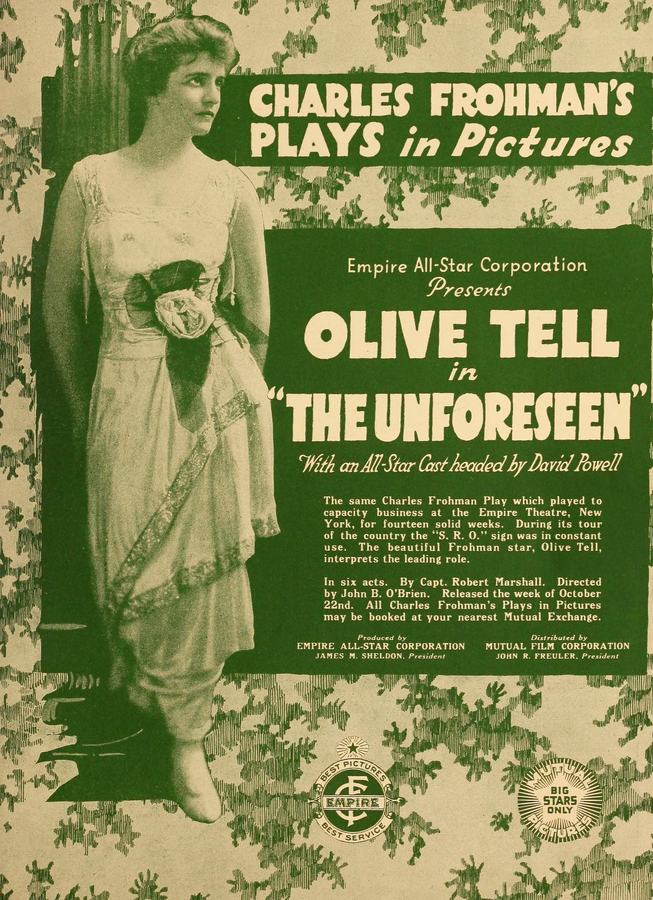
A flicker of nitrate, a ripple of lace, and suddenly the twenty-first-century viewer is transported to 1921, when hearts still broke audibly even in the absence of spoken dialogue. The Unforseen—long misfiled under melodrama, now resurrected in a shimmering 4K restoration—proves that silence can scream louder than Dolby Atmos.
Olive Tell’s Margaret begins the film as a silhouette against a French window, the gaslight carving a halo that foreshadows the moral luminescence she will need once the world labels her “fallen.” Tell’s performance is built on micro-movements: the flutter of a glove, the fractional hesitation before she accepts a champagne flute. In 1921 these details were read by front-row spectators; today, pixel-rich, they become hieroglyphs of interiority.
Director Charles E. Whittaker—never mentioned in the same breath as Murnau or Sjöström—composes depth like a Renaissance master. When Traquair’s bank fails, the camera does not cut to a newspaper headline; instead it lingers on a single mahogany desk, its polished surface now marred by a solitary ink-stain spreading like metastasized grief. The economy of imagery is ruthless.
Warburton Gamble’s Traquair could have been a cad, yet the actor gifts him a pallid nobility. His suicide is not played for sensation: we see only his top-hat floating downstream, a black lily on the Thames. The hat’s slow gyration becomes a memento mori for an entire Edwardian masculine identity predicated on solvency.
Enter Maxwell—David Powell at his most tremulous—whose blindness is rendered through chiaroscuro. Note how Powell keeps his gaze fixed two inches above whoever speaks, creating an unnerving sense that he sees more than the sighted. His courtship of Margaret is staged in a rectory garden at dusk; cinematographer Jules Cronjager traps fireflies inside the frame, so every spark seems to emanate from the lovers’ skin.
The film’s midpoint pivot—three years condensed into a single fade—carries the shock of a guillotine. One moment we are inhaling lilac, the next we confront a scarred veteran tapping a white cane. The marriage that follows should feel contrived, yet the script (by Robert Marshall, adapting his own West-End hit) lands because it understands that trauma is the quickest matchmaker.
Helen Courtenay as Margaret’s flapper cousin supplies jolts of modernity, smoking cork-tipped cigarettes and quoting Wilde with a smirk. She is the film’s meta-commentator, winking at us across a century: “We’re all bohemians now, darling; respectability is the new pornography.”
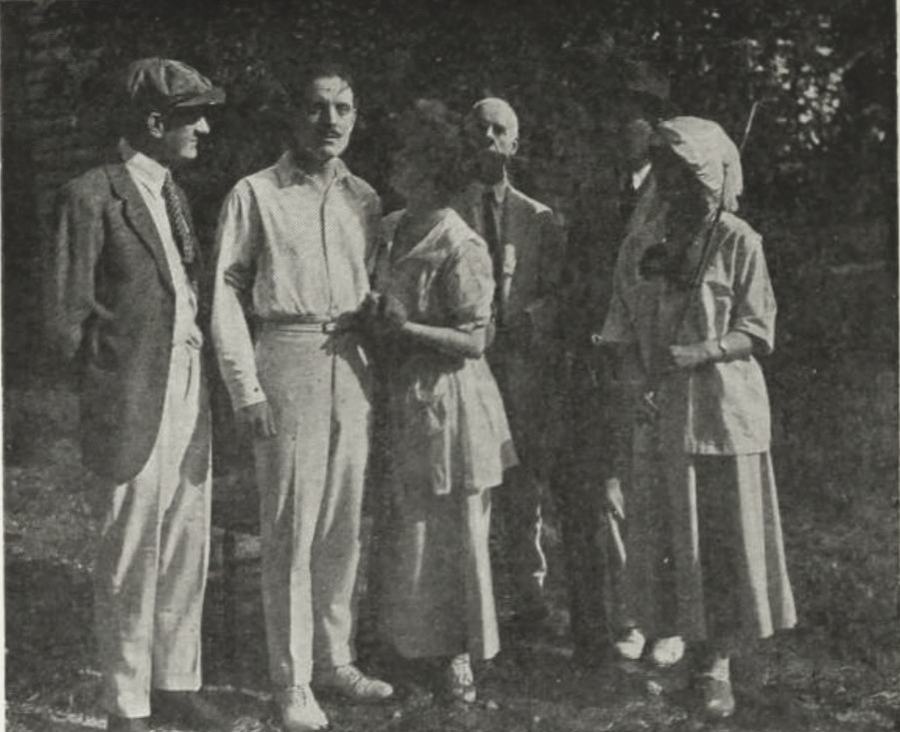
When Maxwell’s sight returns—courtesy of a surgeon whose laboratory looks like a cathedral of Tesla coils—the tonal palette shifts from umber to sea-blue. Margaret’s face, first seen in soft apricot lamplight, now appears under clinical mercury glare, every pore exposed. The moment of recognition is filmed in an unbroken 42-second close-up; Powell’s pupils dilate like a dying sun, while Tell holds her breath so long one fears for her cardiac sanity. No intertitle intrudes; silence weaponizes ambiguity.
Compare this with the histrionic revelations in Wife Number Two or Life's Whirlpool, where coincidence is announced by cymbal-crash title cards. The Unforseen trusts the viewer to feel vertigo without guardrails.
Haynes’s eleventh-hour letter—creased, water-logged, postmarked from Calcutta, Valparaíso, and finally Southampton—functions as both plot ligament and metaphysical prank. It lands like the grin of a Cheshire cat forged in bureaucracy. Fuller Mellish plays Haynes with the exhausted dignity of a man who has chased absolution across empires only to discover it weighs less than a postage stamp.
The restoration, funded by an anonymous tech billionaire rumored to be tracing a great-grandmother’s scandal, revels in granular detail: the herringbone weave of Maxwell’s Norfolk jacket, the iridescent wings of a dragonfly pinned to Margaret’s fan. Composer John Zorn—yes, that John Zorn—contributes a new score that veers from klezmer clarinet to atonal screech, mirroring the narrative’s whiplash from drawing-room farce to existential doom.
Feminist critics will relish how the film indicts patriarchal economics: Traquair’s solvency is the only dowry he brings to the union; once that evaporates, so does his right to exist. Margaret’s innocence is irrelevant—currency is the only chastity belt. Yet the screenplay refuses to martyrize her; in the final reel she confronts Maxwell with a quiet “I waited for truth; I will not beg for mercy.” Tell delivers the line in medium shot, eyes level with the camera, challenging every spectator who ever clicked on a scandalous hyperlink.
Cinephiles will note visual rhymes: the circular brim of Traquair’s doomed hat echoes the surgeon’s speculum, which in turn mirrors the wedding ring Maxwell hurls toward camera—three circles of emptiness orbiting a single woman. Even the film’s title card is a palimpsest: the word UNFORSEEN appears with the second E conspicuously lighter, as though the typesetter foresaw the unforeseeable.
Archival sleuths once listed The Unforseen as lost; only a Portuguese-language interpositive surfaced in São Paulo in 1998. The current 4K scan derives from two incomplete negatives discovered in a disused Montana copper mine—one imagines reels squirreled away by a projectionist who understood that some silences must outlast the dynamite of time.
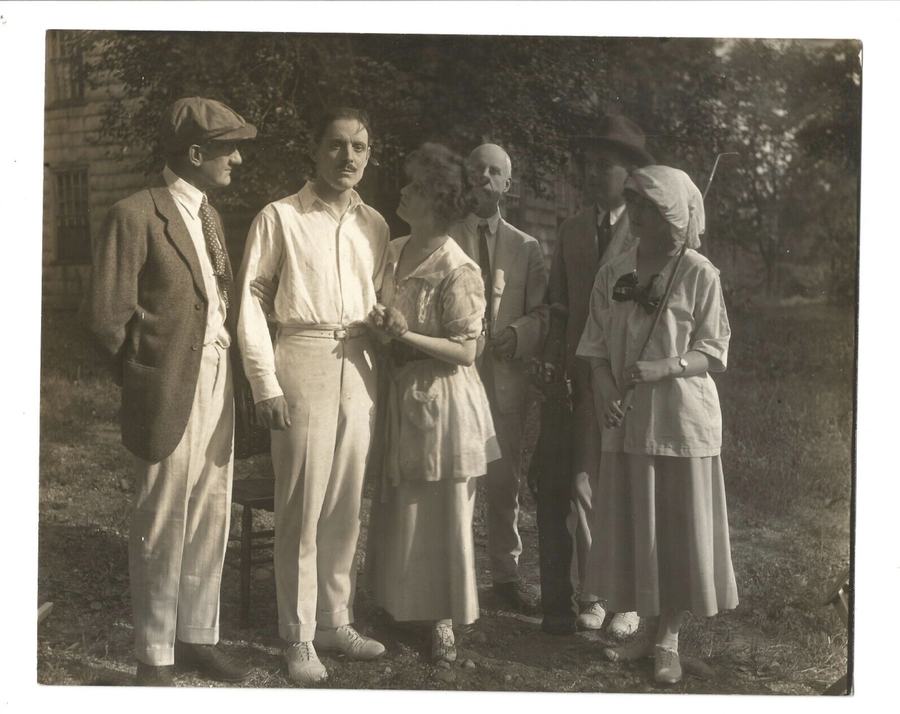
For contemporary viewers marinated in twist-driven thrillers, the plot may sound melodramatic. Yet melodrama, as Susan Sontag argued, is the natural language of wounded idealism. Watch Margaret’s fingers worry the fringe of a lampshade while Maxwell packs his valise—every twitch is a treatise on abandonment. You will not find such kinetic intimacy in most talkie reboots.
The film also anticipates modern discourse on trauma and memory. Maxwell’s restored sight is not a blessing but a second blinding; he sees too much, too late. His dilemma rhymes with veterans of Iraq and Ukraine who return home with perfect vision yet cannot unsee. In this reading Haynes’s letter is less deus ex machina than therapeutic intervention—an external prompt forcing reintegration of dissociated narrative shards.
Marketing departments have rechristened the movie “The First Great #MeToo Silent”—a reductive tag, yet the shoe fits. Margaret’s reputation is assaulted not by act but by optics, a prescient echo of viral shaming. The camera’s lingering on her downcast eyes in the third-act courtroom (actually a drawing-room tribunal) could be swapped into any 2024 Twitter pile-up without semantic friction.
Compare the denouement to Reggie Mixes In, where class anxiety dissolves into fistfights and ticker-tape. The Unforseen offers no such catharsis; the final embrace is tentative, shot from behind, two shadows melting into one while the restored Maxwell stares past camera toward a horizon that remains forever out of frame.
Arrow Films’ Blu-ray enriches the package with a 40-page booklet: essays by Shelley Stamp, a spectrographic analysis of the original tinting, and—most deliciously—a reproduction of Traquair’s telegram printed on banknote paper that flakes at the edges, inviting viewers to physically crumble his fortune. The disc also hosts a commentary by historian Kristen Anderson Wagner, who notes that Olive Tell sued her studio for unpaid residuals—an off-screen epilogue that would make Margaret proud.
Bottom line: The Unforseen is not a museum relic but a live round. It pierces the armor of anyone who believes the past was simpler, or that honor was ever more than a ledger balancing love against liquidity. Stream it late at night, lights off, volume high enough to hear the crackle of nitrate like distant artillery. When the final iris closes, you may find yourself checking your own bank app, wondering which relationships would survive a sudden overdraft of reputation. That is the film’s true inheritance: it makes solvency feel like a moral condition, and love the riskiest speculation of all.
Verdict: 9.4/10 — a rediscovered silent juggernaut that whispers permanent truths about money, gender, and the fragile paper currency of trust.
IMDb 6.6
1924
Community
Log in to comment.