DbcultAccessing Vault...
6.8/10
Senior Film Conservator
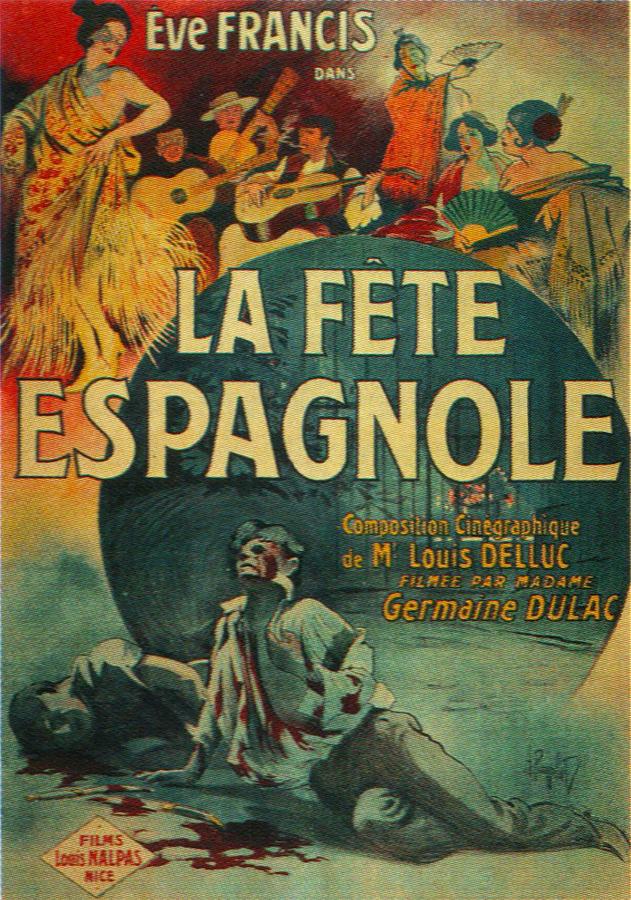
A definitive 6.8/10 rating for a film that redefined the boundaries of cult cinema. La fête espagnole remains a cornerstone of transgressive art.
Stepping back into the nascent years of French cinema, one encounters a fascinating, often overlooked gem: Louis Delluc's 1919 masterpiece, La fête espagnole. This isn't merely a silent film; it's a vibrant, pulsating exploration of human desire, an intricate ballet of glances and unspoken longings, set against a backdrop that evokes the fiery passion of its titular Spanish celebration. Delluc, a towering figure in early film theory and a pioneer of what would become French Impressionist cinema, didn't just tell stories; he crafted cinematic poems, delving into the psychological depths of his characters with an astonishing modernity that still resonates today. To watch La fête espagnole is to witness a director at the peak of his nascent powers, experimenting with the very fabric of visual storytelling to convey emotions that defy simple articulation.
At its core, La fête espagnole presents what might, on the surface, appear to be a straightforward romantic entanglement. We are introduced to a woman, brought to life with an almost hypnotic allure by the incomparable Ève Francis, Delluc’s muse and a performer whose expressive face could convey entire novels without a single intertitle. She is, to put it mildly, an object of intense fascination. Two men, each distinct in their appeal and intensity, vie for her affection. There's the brooding, perhaps more traditional, ardor of one, possibly embodied by Gabriel Gabrio's formidable screen presence, and the more refined, perhaps calculating, charm of another, potentially portrayed by Jean Toulout. Their rivalry forms the initial tension, a silent, simmering contest for her attention, her heart, her very being. The narrative sets up this classic dynamic, leading the audience to expect a resolution within this binary choice. Will she choose the passionate one or the intellectual one? The strong one or the sensitive one? The film lulls you into this expectation, only to brilliantly subvert it.
What unfolds next is where Delluc truly distinguishes his work. Rather than succumbing to the predictable pull of either suitor, Ève Francis's character, with a compelling blend of independence and enigmatic caprice, turns her gaze, and ultimately her affections, towards a third man. This isn't merely a plot twist; it’s a profound commentary on the irrationality and unpredictability of human desire. It challenges the notion that love is a logical outcome of being pursued or that it can be earned through persistent devotion. The 'third man' — perhaps a fleeting presence, an unexpected glance, a connection born of pure, unadulterated magnetism, potentially brought to life by the understated performances of Robert Delsol or Gaston Modot — represents the heart's untamed wilderness. This narrative choice elevates La fête espagnole from a mere romantic drama to a psychological study, making it remarkably modern in its exploration of agency and the elusive nature of attraction. It posits that true desire often lies outside the confines of expectation, a concept that even today feels daring and fresh.
Louis Delluc's directorial hand in La fête espagnole is unmistakable, a testament to his belief in cinema as an art form capable of expressing the most nuanced human emotions. He wasn't just directing actors; he was orchestrating an experience. His use of light and shadow, often stark and expressionistic, doesn't merely illuminate scenes; it sculpts moods, revealing the inner turmoil and hidden passions of his characters. The camera becomes an extension of the characters' gazes, lingering on a significant gesture, a flickering expression, a moment of profound silence that speaks volumes more than any dialogue ever could. This is the essence of French Impressionist cinema: an emphasis on subjective experience, on capturing the fleeting impressions of life and emotion rather than simply recounting events.
The film’s visual poetry is particularly striking. Delluc employs a fluid, almost dreamlike editing style, utilizing dissolves, superimpositions, and rapid cuts to convey the rush of emotion, the passage of time, or the subjective state of his characters. This wasn't merely technical wizardry; it was a deliberate artistic choice designed to draw the audience deeper into the psychological landscape of the story. The 'Spanish fête' itself, while perhaps not depicted with exhaustive ethnographic detail, serves as a potent metaphor for unrestrained passion and vibrant life, a backdrop against which the intensely personal drama unfolds. The atmosphere is palpable, charged with a sense of impending fate and simmering desire, a testament to Delluc’s masterful control over cinematic mood.
It’s impossible to discuss La fête espagnole without dedicating significant attention to Ève Francis. As Delluc’s wife and artistic collaborator, she was uniquely positioned to embody his vision. Her performance here is nothing short of mesmerizing. In an era where silent film acting could sometimes veer into melodrama, Francis brings a remarkable subtlety and depth to her character. Her eyes, her posture, the slight tilt of her head – every movement is imbued with meaning. She doesn't just react; she emanates a complex inner world. She is not merely an object of desire but a subject with her own desires, her own unpredictable will. This portrayal is crucial to the film’s central conceit: the woman’s choice is not a passive acceptance but an active, almost rebellious, assertion of her own autonomy in matters of the heart. Her performance is a masterclass in conveying psychological nuance without spoken words, making her character one of the most compelling female figures of early cinema.
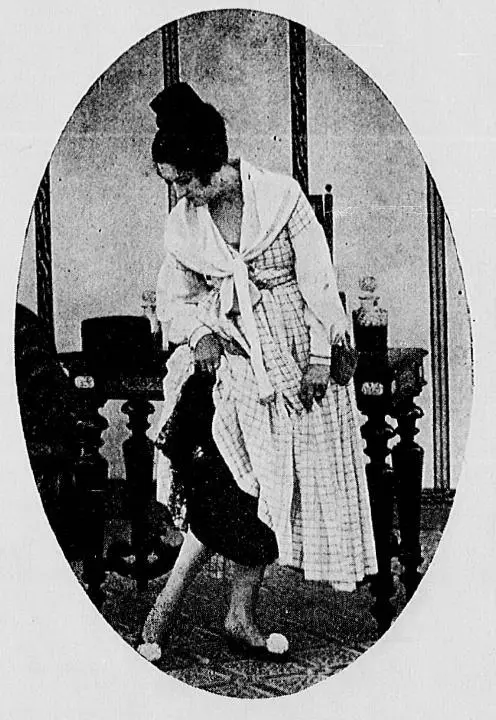
While Francis undeniably anchors the film, the supporting cast provides the essential counterpoints to her enigmatic allure. Gabriel Gabrio, with his rugged intensity, and Jean Toulout, likely embodying a more refined presence, create a tangible sense of rivalry, each man representing a different facet of conventional male desire. Their performances, though perhaps less overtly nuanced than Francis’s, are vital in establishing the emotional stakes. Anna Gay, Robert Delsol, and Gaston Modot, though their specific roles might be secondary, contribute to the tapestry of the film’s world, adding layers of reality and reaction that frame the central drama. Delluc understood that even in a story focused on a singular, captivating figure, the surrounding human landscape is crucial for grounding the narrative and amplifying its emotional impact. Their collective efforts ensure that the world of La fête espagnole feels lived-in, its passions authentic.
La fête espagnole stands as a pivotal work in the history of French cinema, a clear precursor to the more widely recognized French Impressionist movement that would flourish in the 1920s. Delluc’s innovative techniques and his profound interest in the inner lives of his characters laid much of the groundwork for directors like Abel Gance and Jean Epstein. He championed cinema as a unique art form, distinct from theater, capable of expressing abstract ideas and subjective realities through purely visual means. This film is a shining example of that philosophy in action.
The thematic resonance of La fête espagnole also invites comparison with other works exploring intense, often destructive, passion. One cannot help but draw parallels to the enduring mythos of Carmen, particularly in its depiction of a woman whose irresistible allure and independent spirit drive men to distraction, often with tragic consequences. While Delluc’s film is perhaps more subtle in its dramatic climax, the underlying current of potent, untamable desire is strikingly similar. Both narratives grapple with the societal implications of a woman who refuses to be confined by conventional expectations of love and loyalty. Furthermore, the film's exploration of an exotic, passionate setting as a backdrop for intense emotional drama might evoke memories of films like The Call of the Blood, where foreign lands often catalyze profound internal transformations or unleash primal urges.
And then there's the specific narrative twist: the woman turning to a 'third man.' This trope, while perhaps not entirely unique, is handled with such psychological weight here that it anticipates later explorations of romantic complexity. It’s a theme that finds echoes, albeit in different contexts, in films like The Other Man, where the unexpected deviation from a binary choice fundamentally alters the emotional landscape for all involved. Delluc’s genius lies in presenting this not as a mere plot device, but as an organic, almost inevitable, outcome of his protagonist's enigmatic nature.
As a critic, I find La fête espagnole endlessly fascinating because it challenges us to look beyond the surface of a love story. It asks us to consider the deeper currents of human motivation, the unspoken desires, and the sheer unpredictability of emotional connection. Delluc, the critic turned filmmaker, understood the power of cinema to reveal these truths. He didn't shy away from ambiguity; in fact, he embraced it, allowing the audience to project their own understanding onto the characters' silent struggles. The film is a masterclass in suggestion, in letting the audience fill in the emotional blanks, making for a deeply personal and engaging viewing experience.
The film’s historical significance cannot be overstated. It arrived at a moment when cinema was still finding its voice, when the very language of the moving image was being invented. Delluc, along with a handful of other visionaries, was actively contributing to this invention. La fête espagnole is not just a film; it's a document of artistic evolution, a testament to the boundless potential of a medium still in its infancy. Its influence, though perhaps not as overtly celebrated as some of its contemporaries, rippled through French cinema, inspiring a generation of filmmakers to explore the psychological dimensions of storytelling.
To revisit La fête espagnole today is to be reminded of the timeless power of silent cinema. It proves that narratives don't require spoken dialogue to convey profound emotional truths. With Ève Francis at its heart, Delluc’s keen directorial eye, and a narrative that dares to defy convention, the film remains a potent and relevant work. It’s a celebration not just of Spanish festivity, but of the unpredictable, often bewildering, fiesta of the human heart. For anyone with an interest in the origins of cinematic art, in the psychology of desire, or simply in a beautifully crafted story, La fête espagnole is an essential viewing experience. It's a film that lingers, its silent passions echoing long after the final frame.
IMDb 6.5
1931
Community
Log in to comment.