DbcultAccessing Vault...
6.5/10
Senior Film Conservator
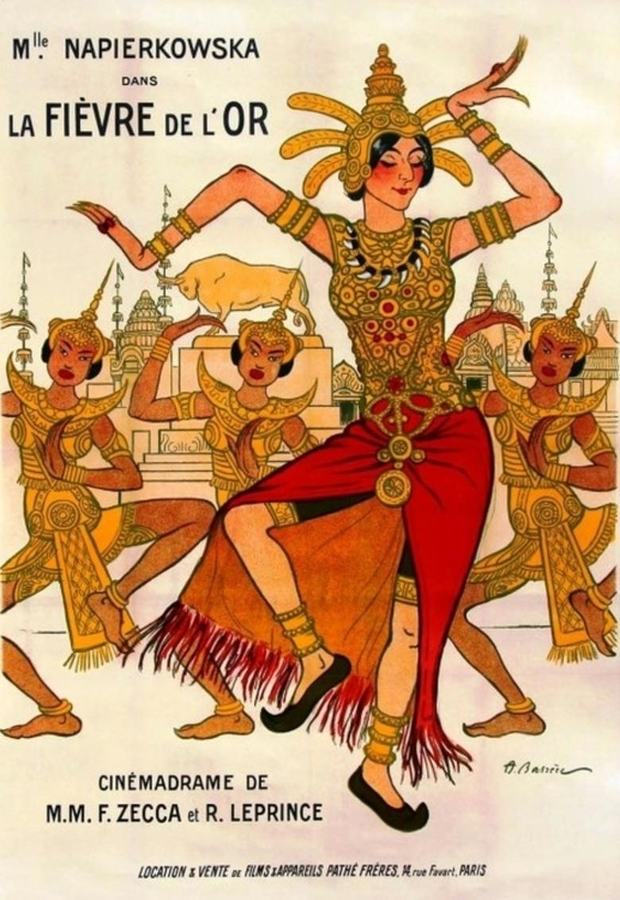
A definitive 6.5/10 rating for a film that redefined the boundaries of cult cinema. La fièvre de l'or remains a cornerstone of transgressive art.
There are films that merely tell a story, and then there are those that dissect the human condition with an unflinching gaze, peeling back layers of societal veneer to expose the raw, throbbing pulse of desperation. 'La fièvre de l'or', or 'The Gold Fever', is unequivocally the latter. It is a silent film that speaks volumes, a stark, psychological drama that, despite its vintage, resonates with an unsettling contemporary relevance. The narrative thrust is simple, yet profoundly disturbing: a man, Maxime, cornered by debt, finds himself on a precipice, staring into an abyss of moral compromise from which few return unscathed. His journey is not one of a grand adventure or a sweeping romance, but a harrowing, internal odyssey into the dark heart of human ambition and the devastating consequences of unchecked financial pressure.
The film introduces us to Maxime not as a villain, but as a man under siege. The denial of financial aid serves as the catalyst, a bureaucratic cold shoulder that pushes him from a state of mere anxiety into a realm of existential dread. This isn't just about losing comfort; it's about losing dignity, losing hope, and ultimately, losing oneself. The initial plotting to kill his father-in-law for his debts is a moment of chilling clarity, a testament to the extreme measures a cornered individual might contemplate. It's a primal scream against the unfairness of a world where one's worth is so often equated with one's wealth. Claude Garry, in the role of Maxime, conveys this internal torment with a remarkable subtlety that belies the theatricality often associated with silent cinema. His expressions, his body language, articulate a soul in freefall, a man teetering on the brink of an irreversible decision. The silent medium, in this instance, amplifies the psychological weight, forcing the audience to project their own understanding onto Maxime's unspoken anguish.
One cannot help but draw parallels to other tales of societal oppression and the resulting moral quandaries. Consider the plight of Jean Valjean in Les Misérables, driven to theft by hunger, or the desperate struggles of characters in Oliver Twist who are born into a system designed to crush them. While Maxime's proposed solution is far more heinous, the root cause – a system that offers no safety net, no avenue for redemption – feels remarkably similar. 'La fièvre de l'or' strips away any romantic notions of poverty, presenting it as a corrosive force that eats away at the soul, leaving behind a husk capable of unimaginable acts.
The initial murderous contemplation, though perhaps not executed, marks an irrevocable shift within Maxime. It’s a Rubicon crossed in the mind, a moral barrier shattered. When the path of direct violence proves unfeasible or too daunting, he doesn't retreat; he merely re-strategizes. The transition from contemplating murder to actively scamming the vulnerable is not a step towards lesser evil, but a deeper plunge into a mire of calculated cruelty. This is where 'La fièvre de l'or' truly distinguishes itself. It portrays the insidious nature of desperation, how it can transform a man from a victim of circumstance into a perpetrator of exploitation. The film doesn't offer easy answers or convenient villains; instead, it presents a chillingly plausible trajectory of moral decay. Maxime's victims are not the powerful, but those least equipped to defend themselves, a choice that underscores his utter depravity and the completeness of his transformation.
Stacia Napierkowska and Louis Ravet, though their roles are not detailed in the plot, undoubtedly contribute to the tapestry of this grim world, likely representing either the victims of Maxime's schemes or the societal elements that either enable or condemn him. The power of silent film acting, often underestimated, lies in its ability to communicate complex emotions and motivations through gesture, expression, and the subtle interplay between characters. One can imagine the nuanced performances required to convey both the cunning of the scammer and the fragility of the scammed.
Even without dialogue, the film's narrative is propelled by a potent visual language. The direction, likely by a visionary of the era, would have utilized stark contrasts, close-ups to emphasize Maxime's tortured expressions, and perhaps deep focus shots to convey the isolating nature of his predicament. The pacing, crucial in silent cinema, would have fluctuated between moments of agonizing deliberation and swift, decisive action, mirroring Maxime's internal chaos. The use of intertitles, far from being mere exposition, would have served as internal monologues, revealing the twisted logic and rationalizations of a man losing his moral footing. This is where the artistry of silent film truly shines – in its capacity to evoke profound psychological states through purely visual means. The title itself, 'The Gold Fever', is a brilliant metaphor, suggesting not just the pursuit of wealth, but a disease, a consuming illness that distorts perception and corrupts the soul.
Comparing this to other early cinematic works, one might consider the raw emotional power seen in films like Life and Passion of Christ or From the Manger to the Cross, which, while vastly different in subject matter, relied on powerful visual storytelling to convey profound human drama and spiritual journeys. While 'La fièvre de l'or' deals with a very earthly, very human failing, its intensity of portrayal places it in a similar league of early cinematic achievement, demonstrating how early filmmakers grappled with complex themes long before the advent of synchronized sound.
Maxime's trajectory is a cautionary tale, a stark reminder of how the relentless pursuit of financial security, when unmoored from ethical considerations, can lead to monstrous outcomes. The film doesn't glamorize his actions; it exposes them for what they are: desperate, cowardly, and ultimately self-destructive. The choice to target the vulnerable is particularly poignant, highlighting a societal sickness where the strong prey on the weak, often under the guise of legitimate business or desperate necessity. This exploitation isn't a sudden burst of rage but a calculated, methodical process, arguably more chilling than a spontaneous act of violence. It speaks to a deeper malaise, a systemic failure that allows such predation to flourish.
One could argue that the film touches upon themes echoed in later works that explore the underbelly of society. While not directly comparable in plot, the moral quandaries and desperate measures taken by individuals in narratives like The Mystery of the Rocks of Kador, if it explores dark human motivations, or even the struggles against authority in The Story of the Kelly Gang, where protagonists are pushed to extremes by their circumstances, share a thematic resonance. The 'fever' aspect suggests an irrational, consuming force, much like a disease, that grips Maxime and compels him down a path of no return.
What makes 'La fièvre de l'or' endure, beyond its historical significance as an early film, is its timeless examination of human frailty and the corrupting influence of money. It forces the audience to confront uncomfortable truths about the pressures exerted by economic systems and the choices individuals make when faced with insurmountable odds. Is Maxime a product of his environment, or a man who simply chose the darkest path? The film, in its silent eloquence, leaves this question hanging, inviting introspection rather than dictating judgment. It's a powerful indictment of a society that allows its members to fall so far, with so little recourse, that they are driven to such depraved acts.
The film’s stark portrayal of desperation could be seen as a precursor to the grim realism found in later cinematic movements. It avoids sentimentality, presenting a raw, unvarnished view of human nature under duress. This unflinching honesty is what elevates it beyond a mere melodramatic tale. It’s a study in moral erosion, a psychological portrait painted with broad, bold strokes that nonetheless capture intricate nuances of despair and cunning. The absence of spoken dialogue enhances this effect, allowing the viewer to fill in the emotional gaps, making the experience intensely personal and profoundly unsettling. The film doesn't preach; it observes, and in its observation, it implicates us all in the societal conditions that can forge such a character.
In an era dominated by spectacle and emerging narrative forms, 'La fièvre de l'or' carved out its own niche by daring to explore the darker corners of the human psyche. It is a testament to the power of early cinema to tackle complex, uncomfortable themes with artistic integrity. The film doesn't offer a redemptive arc for Maxime; his journey is one of continuous descent, a cautionary beacon against the seductive yet destructive allure of easy money. It reminds us that the pursuit of wealth, when it becomes an obsession, can transform individuals into monsters, preying on the very fabric of trust and community.
The film's impact lies not just in its plot, but in its ability to provoke thought about systemic issues. What societal structures were in place that denied Maxime aid? What support systems were lacking? These are questions that remain relevant today, making 'La fièvre de l'or' more than just a historical artifact; it's a timeless commentary on poverty, greed, and the human spirit's capacity for both resilience and depravity. It challenges us to look beyond the surface, to understand the forces that drive individuals to desperate acts, and perhaps, to reflect on our own complicity in systems that perpetuate such cycles of despair. This is not a film to be enjoyed lightly, but one to be grappled with, its silent screams echoing long after the final frame.
The visceral portrayal of Maxime's transformation, from a man burdened by debt to a calculated schemer, offers a chilling insight into the human capacity for self-preservation at any cost. This relentless drive, stripped of all ethical considerations, defines the 'gold fever' that consumes him. It’s a powerful exploration of how societal pressures can warp an individual’s moral compass, leading them down a path from which there is no return. The film serves as a potent reminder that the most dangerous fevers are not always physical, but those that corrupt the soul, leaving a trail of destruction in their wake. The silent era, often seen as quaint, here delivers a punch to the gut with its raw emotional intensity and profound thematic depth. It is a masterclass in visual storytelling, proving that dialogue is not always necessary to convey the most harrowing aspects of the human experience.
The performances, particularly that of Claude Garry, must have been truly captivating, relying solely on physical expression and the nuanced portrayal of internal states. In an age before sophisticated special effects, the power lay entirely in the actor's ability to embody the character's torment and cunning. This elevates 'La fièvre de l'or' beyond a simple melodrama, positioning it as an early psychological thriller, an exploration of mental and moral collapse. It stands as a profound testament to the early pioneers of cinema who dared to tackle such dark subject matter, laying the groundwork for future generations of filmmakers to explore the complexities of human nature.
Ultimately, 'La fièvre de l'or' is a profound and unsettling experience. It doesn't offer comfort or easy resolution, but rather a mirror reflecting the darker corners of human ambition and the devastating impact of financial despair. It's a film that demands to be seen, studied, and discussed, not just for its historical value, but for its timeless message about the perils of unchecked greed and the fragility of morality in the face of overwhelming pressure. Its silent frames resonate with a powerful, enduring truth.
IMDb 5.3
1929
Community
Log in to comment.