DbcultAccessing Vault...
6.2/10
Senior Film Conservator
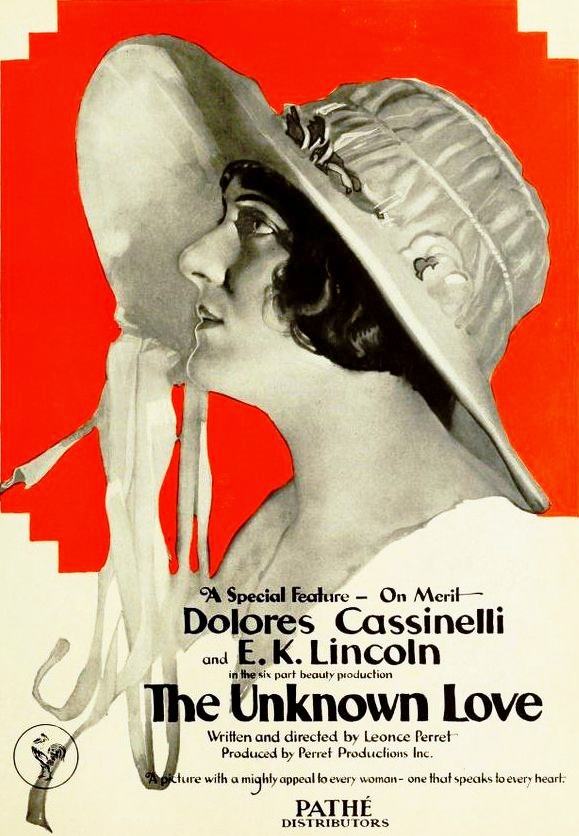
A definitive 6.2/10 rating for a film that redefined the boundaries of cult cinema. Unknown Love remains a cornerstone of transgressive art.
In the annals of cinematic history, few narratives manage to distill the profound complexities of human connection amidst the chaos of war with the delicate artistry witnessed in Léonce Perret’s Unknown Love. This isn't merely a tale of wartime romance; it's a profound meditation on perception, identity, and the very essence of affection, daring to challenge the superficiality of appearances long before such themes became commonplace. As an ardent admirer of early cinema's audacious storytelling, I found myself utterly captivated by the intricate dance of devotion and deception at its core.
The film opens with a scene of almost bucolic domesticity, a stark contrast to the distant horrors of the Great War. Doris Parker (Dolores Cassinelli), the vivacious daughter of a retired sea captain, hosts a gathering of friends. Their shared ritual? The eager anticipation of letters from their "adopted" soldiers fighting in France. This communal act of support, a balm for the collective anxieties of a nation at war, sets a poignant stage. It's a testament to the ingenuity of civilian morale-boosting efforts, echoing similar sentiments perhaps seen in films like The Heart of Lady Alaine, which similarly explores the emotional landscapes of wartime.
Amidst this convivial atmosphere, a suggestion emerges that will irrevocably alter Doris's trajectory: write to Harry Townsend (Robert Elliott), a soldier reportedly devoid of family or friends, a man utterly alone save for his comrades-in-arms. This seemingly innocuous act of kindness, born of pure altruism, ignites a chain of events far more intricate than anyone could foresee. Doris, with a heart brimming with empathy, pens a note. Harry's response, however, introduces the first tremor of deception. Lacking a photograph of himself, he sends one of a friend. This seemingly minor substitution, a practical expediency in a time of limited resources, becomes the fulcrum upon which the entire narrative pivots.
What follows is a masterful exploration of the power of the written word. Through a steady stream of letters, an intimate connection blossoms between Doris and the man whose words she reads, a connection untethered to the visual representation she holds. This isn't a superficial infatuation; it's a profound, intellectual, and emotional attachment forged in the crucible of shared thoughts, anxieties, and hopes. The letters become a conduit for souls, bypassing the often misleading filter of physical appearance. Doris finds herself deeply in love with the essence of Harry, the man revealed in his prose, rather than the face in the photograph. This burgeoning love is so potent, so undeniable, that she resolutely denies the earnest and ardent entreaties of Captain Jack Tims (Bradley Barker), a man of undeniable charm and direct presence, whose affections are tangible and immediate. The contrast between the known, present suitor and the unknown, distant correspondent forms a central dramatic tension, reminiscent of complex romantic entanglements in films like Syndig Kærlighed, where the heart's true desires often defy conventional logic.
The brilliance here lies in Perret’s ability to render this intangible bond palpable to the audience. We witness Doris's joy upon receiving each letter, her quiet contemplation of Harry's words, and her unwavering conviction in the face of Tims's advances. Dolores Cassinelli delivers a nuanced performance, conveying the depth of Doris's internal world with subtle gestures and expressions, a hallmark of powerful silent film acting. Her portrayal transcends mere melodrama, grounding Doris's choices in a relatable emotional truth.
The narrative takes a dramatic turn when news arrives that Harry has been gravely wounded and is believed to be on the brink of death. His farewell note, imbued with a raw vulnerability and profound affection, acts as a catalyst, igniting in Doris an unshakeable resolve to reach him. This desperate yearning, this primal need to be with the man she loves in his final moments, drives her to extraordinary lengths. She appeals to Captain Tims, whose unrequited love for Doris is both a burden and a powerful motivator. Despite naval regulations and the immense personal risk, Tims agrees to take her aboard his transport ship.
The ensuing sea voyage is fraught with tension, a palpable sense of impending doom hanging heavy in the air. Perret masterfully builds suspense, transforming the seemingly safe passage into a perilous journey mirroring the emotional landscape of war itself. The inevitable submarine attack is a stark, brutal reminder of the conflict's omnipresent danger. In a moment of tragic heroism, Captain Tims perishes, his life claimed by the merciless sea, his body given a somber burial at sea. This poignant sacrifice, born of his love for Doris, adds another layer of emotional complexity to the narrative, highlighting the collateral damage of war and the selflessness it often inspires. It’s a moment that resonates with the stark realities depicted in other wartime dramas, where personal sacrifice often intertwines with broader conflicts.
Upon finally reaching Harry, Doris finds him swathed in bandages, his face obscured, his identity a mystery even to himself. This visual obfuscation extends the initial deception, ironically allowing Doris to connect with him purely as the man of her letters. She nurses him back to health with unwavering devotion, her actions driven by the deep, internal bond they had forged. It is only after his recovery, when the bandages are removed, that the startling truth is revealed: the man before her is not the soldier in the photograph she had cherished. The visual deception is finally unmasked.
This pivotal moment, handled with remarkable grace by Perret and Cassinelli, is the film's emotional crescendo. Instead of disillusionment or betrayal, Doris experiences a profound epiphany. She realizes, with absolute clarity, that her love for Harry was never predicated on the face in the picture, but on the profound connection forged through his words, his spirit, his very essence conveyed across continents. The photograph was merely a placeholder, a proxy for a deeper, more authentic reality. This realization elevates Unknown Love from a simple romance to a philosophical inquiry into the nature of love itself. It asks: what truly constitutes connection? Is it the visual, the tangible, or the intangible resonance of souls?
Léonce Perret's directorial hand is evident throughout, guiding the narrative with a delicate touch that belies the dramatic weight of the story. His ability to convey complex emotional states in a silent medium, relying on nuanced performances and visual storytelling, is truly commendable. The pacing is deliberate, allowing the audience to fully immerse themselves in Doris's emotional journey. The use of close-ups, particularly on letters and faces, emphasizes the internal struggles and revelations. Perret, a pioneer in early French cinema, demonstrates a sophisticated understanding of cinematic language, crafting a narrative that feels both intimate and epic. His work here could be compared to the psychological depth found in some of his contemporaries' works, even if not directly in plot, such as the exploration of moral dilemmas in Teufelchen, or the intricate character studies within La cattiva stella.
The visual composition, though perhaps constrained by the technology of its time, is nonetheless effective. The contrast between the warmth of Doris's home and the stark reality of the battlefield (implied or shown briefly) underscores the vast chasm between the civilian and military experiences. The sequence of the submarine attack, while perhaps not reaching the spectacle of later blockbusters like Napoleon, is nonetheless tense and impactful, conveying the sudden brutality of naval warfare.
The cast, though part of an ensemble, truly shines in their respective roles. Dolores Cassinelli's Doris is the emotional anchor of the film. Her expressive eyes and subtle physicality communicate a rich inner life, allowing the audience to empathize deeply with her evolving affections. She embodies the delicate balance of vulnerability and strength, making Doris a truly compelling heroine. Robert Elliott, as Harry Townsend, manages to convey a quiet dignity and depth even through the initial deception. His performance after the revelation is particularly poignant, showing a man grappling with the consequences of his initial act while realizing the profound love he has inadvertently inspired.
Bradley Barker, as Captain Jack Tims, delivers a memorable portrayal of the honorable, yet ultimately unrequited, suitor. His sacrifice is not merely a plot device; it's a testament to his character's integrity and his profound, selfless love for Doris. E.K. Lincoln and Warren Cook round out the supporting cast, providing solid performances that anchor the domestic scenes and lend credibility to the wartime context. Each actor, through the conventions of silent film, manages to imbue their characters with distinct personalities and motivations, contributing significantly to the film's emotional resonance.
At its heart, Unknown Love is a powerful exploration of identity. It interrogates the very notion of who we are and how we are perceived. Is identity tied to our physical form, or to the intangible aspects of our character, our thoughts, our spirit? Harry's initial deception, born of necessity, forces this question into sharp relief. Doris's journey is one of self-discovery, realizing that her heart had intuitively recognized the true Harry, irrespective of the borrowed face. This theme resonates with contemporary discussions about online identities and the curated personas we present to the world, making the film remarkably prescient. It's a testament to the timeless nature of such human dilemmas.
The film also deftly handles the theme of deception. While Harry's act is born of circumstance rather than malice, it carries significant weight. Yet, the narrative doesn't condemn him; instead, it uses the deception as a vehicle for a deeper truth. It challenges the audience to look beyond the surface, echoing the sentiment that true connection transcends superficialities, a theme delicately handled in films like At First Sight, which often plays with initial impressions versus deeper realities.
Ultimately, the film champions authentic connection. The love that blossoms between Doris and Harry is genuine because it is built on the foundation of shared thoughts and emotions, not on a physical ideal. The letters, humble as they are, become sacred artifacts, repositories of true feeling. The armistice, which brings peace to the world, also brings a resolution to their personal drama, culminating in a marriage that symbolizes not just the end of conflict, but the triumph of a love that saw beyond the veil of illusion. This triumphant conclusion reinforces the film's message that true love, once found, can overcome any obstacle, even the most profound deception.
Despite its age, Unknown Love remains a compelling watch, offering insights into both the historical context of WWI and the timeless intricacies of the human heart. It stands as a testament to Léonce Perret's skill as a storyteller and the powerful emotional resonance that silent cinema could achieve. For cinephiles and casual viewers alike, it provides a unique window into a bygone era of filmmaking, where visual artistry and expressive acting carried the full weight of the narrative. Its themes of love, loss, identity, and the surprising ways in which human beings connect across vast distances continue to resonate, making it a valuable piece of cinematic heritage.
In an age increasingly dominated by superficial digital interactions, the film serves as a poignant reminder of the enduring power of written communication and the profound connections that can be forged through shared vulnerability and authentic expression. It encourages us to look beyond the immediate, the visible, and to seek out the deeper truths that lie beneath the surface. Unknown Love is more than just a historical artifact; it's a timeless narrative that continues to speak volumes about the nature of love in its purest, most unexpected forms. Its contemplative depth and emotional honesty solidify its place as a significant work, perhaps even more so when viewed through the lens of modern relationships, where the line between reality and representation is increasingly blurred. This film, in its quiet brilliance, reminds us to seek the heart of the matter, to truly know the person behind the persona, a message that remains as vital today as it was a century ago.
IMDb —
1926
Community
Log in to comment.