DbcultAccessing Vault...
5.7/10
Senior Film Conservator
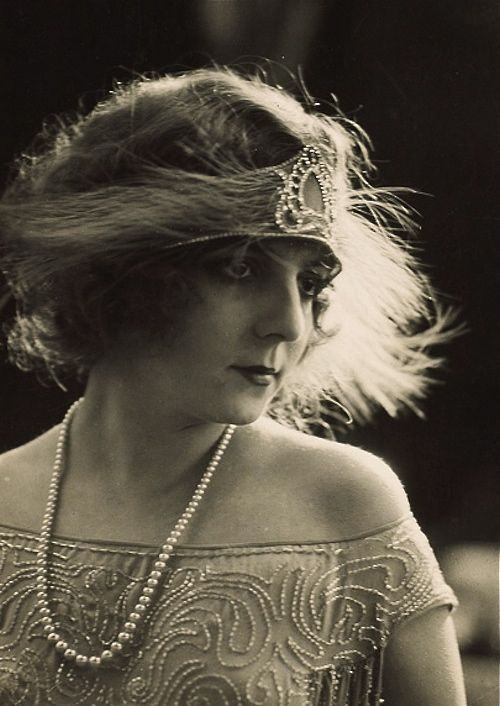
A definitive 5.7/10 rating for a film that redefined the boundaries of cult cinema. La garçonne remains a cornerstone of transgressive art.
To understand the cultural earthquake triggered by La Garçonne (1923), one must first visualize the suffocating corset of 1920s French morality. This isn't just a film; it’s a cinematic manifesto that arrived with the force of a hand grenade tossed into a high-society ballroom. Based on the incendiary novel by Victor Margueritte—who also had a heavy hand in this production—the film serves as a visceral document of a society in the throes of a nervous breakdown, caught between the Victorian ghosts of the past and the jazz-fueled nihilism of the future.
The film opens with a visual language that feels almost deceptively traditional. We see Monique, played with a haunting, evolving intensity by France Dhélia, trapped in the amber of her family’s expectations. Unlike the more whimsical approach to youthful folly seen in A Csitri, the stakes here are immediately presented as existential. Monique is a commodity, her virginity and reputation the currency with which her family negotiates their social standing. When she discovers her fiancé's betrayal, it isn't just a heartbreak; it is the realization that she has been sold a fraudulent bill of goods.
The cinematography during these early scenes captures the claustrophobia of the bourgeois interior. The shadows are long, and the furniture seems to loom over Monique like silent judges. It’s a far cry from the adventurous spirit found in The Adventure Shop; here, the only adventure allowed is the one that leads to the altar. When Monique finally snaps, the film undergoes a stylistic transformation that mirrors her internal revolution.
There is a specific, electrifying moment when Monique cuts her hair. In 1923, this wasn't just a style choice—it was a declaration of war. By adopting the 'garçonne' look, Monique is stripping herself of the traditional markers of feminine vulnerability. She becomes an androgynous specter haunting the boulevards of Paris. The film handles this transition with a sophisticated lack of judgment that must have been profoundly shocking to contemporary audiences. While a film like La forza della coscienza might have obsessed over the moral weight of such a choice, La Garçonne treats it as a necessary survival mechanism.
Monique’s descent—or ascent, depending on your perspective—into the demi-monde is captured with a gritty, almost documentary-like eye. We see the jazz clubs, the opium dens, and the intellectual salons where the old rules simply don't apply. The film’s pacing shifts from the slow, turgid rhythms of the family home to a frenetic, syncopated energy. It’s a rhythmic shift that reminds one of the chaotic energy in Fight in a Thieves' Kitchen, though elevated to a much higher level of social critique.
The supporting cast provides a fascinating cross-section of the era’s anxieties. Victor Margueritte’s presence as a writer ensures that the film retains the biting social commentary of the source material. The performances are notably restrained for the era, eschewing the wild gesticulations often found in silent melodramas. Instead, there is a focus on the eyes—the hollowed-out gaze of those who have seen too much. This psychological depth is a stark contrast to the more straightforward characterizations in The Sea Master.
The film doesn't shy away from the darker aspects of liberation. Monique’s journey is fraught with peril, but unlike the characters in The Trap (1922), she is not a victim of a singular villain but of a systemic rot. The men she encounters—played with varying degrees of menace and charm by the likes of Gaston Jacquet and Jean Toulout—are often just as lost as she is, clinging to the wreckage of a dying world.
Visually, La Garçonne is a triumph of silent era lighting. The use of shadow to delineate the 'safe' world of the bourgeoisie from the 'dangerous' world of the liberated woman is masterfully executed. There are sequences in the Parisian night that feel almost expressionistic, pre-dating some of the more famous experiments in German cinema. The way the camera lingers on Monique’s face as she experiences her first real taste of freedom is haunting. It’s a level of intimacy that you rarely find in the action-oriented plots of Dead Men Tell No Tales.
The film also utilizes costume as a primary narrative device. Monique’s transition from lace and frills to sharp tailoring and silk robes tells the story of her liberation more effectively than any title card ever could. It’s a visual shorthand for the death of the 'ingenue' and the birth of the 'individual.' This focus on the superficial to reveal the profound is a hallmark of great silent cinema, and it’s used here to devastating effect.
When we look at other films of the period, the radical nature of La Garçonne becomes even more apparent. While Romance and Arabella treats the search for love as a lighthearted pursuit, Monique’s search is a matter of life and death. She is not looking for a partner; she is looking for herself. The film avoids the easy sentimentality of The Whistle or the moralizing lectures of Tragedija nase dece. Instead, it presents Monique’s choices with a cold, almost surgical precision.
Even compared to the mystery and intrigue of The Man with the Twisted Lip, the true 'mystery' in La Garçonne is the internal landscape of the modern woman. What happens when a woman realizes that the entire structure of her life is a lie? The film doesn't offer easy answers, and that is its greatest strength. It is a work of profound ambiguity, reflecting a world where the old certainties have been vaporized on the battlefields of the Great War.
It is impossible to discuss this film without mentioning the scandal. Victor Margueritte was stripped of his Legion of Honor because of the novel's perceived obscenity, and the film faced significant censorship hurdles. This controversy, however, only fueled its impact. The film became a touchstone for a generation of women who saw themselves reflected in Monique’s defiance. It’s a far cry from the light entertainment of So Long Letty or the patriotic fluff of The Dollar-a-Year Man.
The film’s exploration of female autonomy, drug use, and sexual fluidity was decades ahead of its time. It doesn't just depict a rebellion; it enacts one. Every frame is a rejection of the status quo. The relationships depicted—often transient, sometimes transactional, but always honest—challenge the very notion of 'friends and enemies' as explored in Friends and Enemies. In Monique’s world, everyone is an ally until the moment they attempt to control her.
Watching La Garçonne (1923) today is a haunting experience. It serves as a reminder that the struggles for self-definition and bodily autonomy are not new. Monique Lerbier is a timeless protagonist, a woman who refuses to be a secondary character in her own life. The film’s refusal to provide a neatly packaged, moralistic ending is a testament to its artistic integrity. It doesn't end with a wedding or a funeral; it ends with a woman simply... existing, on her own terms.
While some of the subplots may feel slightly dated, the core of the film—the burning desire for freedom—remains as potent as ever. It lacks the simplistic binary of 'good vs evil' found in Wolves of the Range, replacing it with a complex, shades-of-grey reality that feels startlingly modern. La Garçonne is not just a relic of the silent era; it is a vibrant, breathing piece of cinema that continues to challenge, provoke, and inspire. It is a masterclass in visual storytelling and a vital chapter in the history of feminist art.
In an age of pre-packaged rebellion and performative 'edginess,' La Garçonne stands as a reminder of what real transgression looks like. It is a film that risked everything to tell a truth that society wasn't ready to hear. For any serious student of cinema, it is essential viewing.
IMDb 6.8
1937
Community
Log in to comment.