DbcultAccessing Vault...
Cult Review
Senior Film Conservator
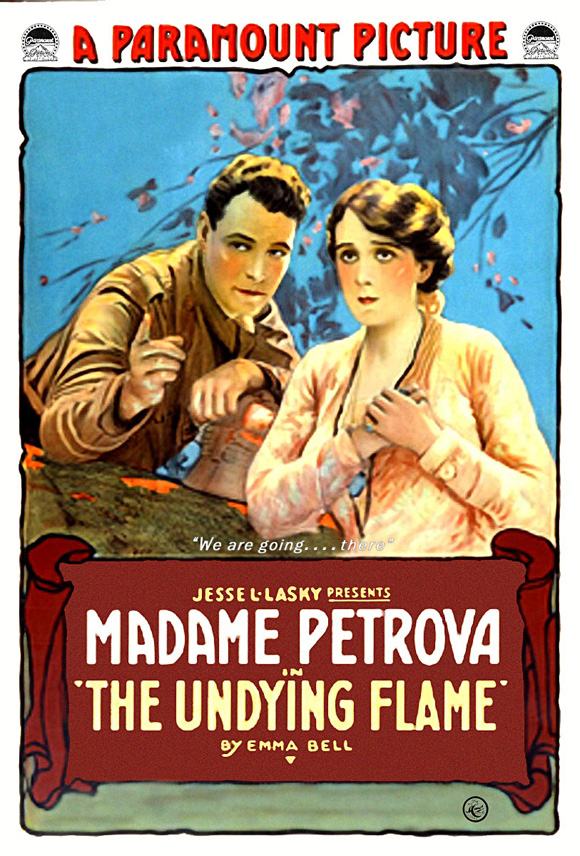
In the vast tapestry of early cinema, few narratives dared to stretch across the chasm of centuries with such audacious romanticism as "The Undying Flame". This 1917 silent epic, penned by the imaginative duo of Charles E. Whittaker and Emma Bell Clifton, isn't merely a film; it's a grand declaration on the persistence of love, a testament to souls bound by an unseen, unbreakable thread that transcends even the finality of death. It asks us to consider, with a potent blend of melodrama and mystical conviction, whether true affection can truly be extinguished, or if it merely awaits its moment to rekindle in another time, another place.
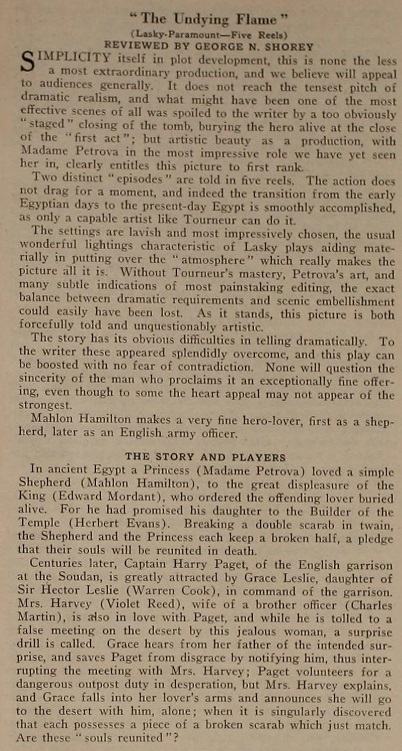
The film's opening gambit plunges us into the sun-baked, sand-swept grandeur of ancient Egypt, a setting that, even in the nascent days of cinema, held an irresistible allure for audiences. Here, amidst the towering monuments and the rigid hierarchies of pharaonic rule, a forbidden romance blossoms. A humble shepherd, his heart unburdened by societal rank, captures the affection of a princess, a transgression of monumental proportions in a kingdom where royal bloodlines dictated destiny. The king, a figure of absolute authority, is naturally incensed. His daughter has been promised, not to a mere pastoralist, but to the esteemed builder of the magnificent temple, a union designed to solidify power and prestige. This initial conflict sets the stage for the film's central conceit: the struggle between individual desire and the crushing weight of duty and societal expectation. The king’s decree is swift and merciless: the offending lover is to be buried alive, a chillingly brutal punishment that underscores the severity of their illicit bond. Yet, even in the face of such grim finality, the lovers perform a poignant ritual. They cleave a double scarab, a potent symbol of rebirth and protection in ancient Egyptian mythology, each retaining a broken half. This act is more than a sentimental gesture; it is a solemn oath, a fervent prayer whispered into the winds of fate, that their souls, though forcibly separated in this life, would inevitably find each other again in the great beyond. This initial act of defiance and a pledge of eternal return immediately elevates the narrative beyond a simple tragic romance, imbuing it with a mystical quality that reverberates throughout the entire picture. The weight of this ancient promise becomes the gravitational pull of the entire story, an invisible force guiding the narrative's subsequent developments.
Centuries unfurl, and the narrative abruptly shifts, transporting us from the mystical past to the colonial present—specifically, to the British garrison stationed in the Sudan. This juxtaposition of ancient mysticism with the stark realities of imperial expansion is a fascinating choice, highlighting the timeless nature of human emotion against ever-shifting historical backdrops. Here, we meet Captain Harry Paget, portrayed with a compelling blend of dashing heroism and subtle vulnerability by Charles Martin. Paget, an officer of the English garrison, finds his disciplined military existence disrupted by the enchanting presence of Grace Leslie, the vivacious daughter of Sir Hector Leslie, the garrison's formidable commander. Their connection is immediate and palpable, a magnetic pull that feels less like new love and more like a recognition of something deeply familiar. But true love, as the film suggests, rarely runs smooth, especially when entangled with the complexities of military life and societal expectations.
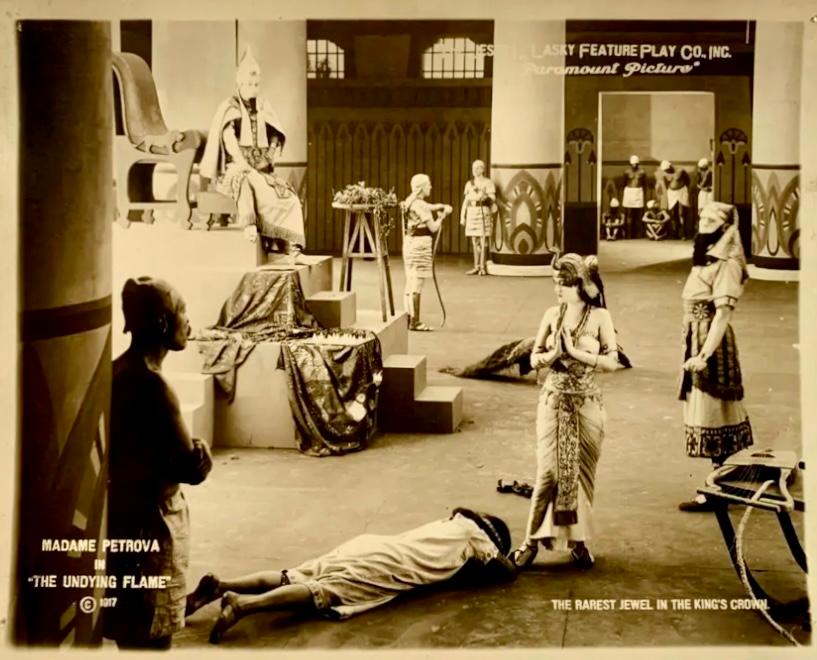
Enter Mrs. Harvey, a character expertly brought to life by Olga Petrova, whose portrayal oscillates between seductive manipulation and desperate vulnerability. Mrs. Harvey, the wife of another officer, harbors a consuming, unrequited passion for Captain Paget. Her jealousy, a corrosive force, drives her to desperate measures. She orchestrates a clandestine meeting in the desert, a romantic ruse designed to lure Paget away from his duties. This illicit rendezvous, however, comes at a critical juncture: Paget is scheduled for a surprise drill, a moment of military scrutiny that he, unknowingly, is set to miss. The tension here is exquisitely crafted, playing on the audience's knowledge of the impending disaster.
Grace, with her intuitive understanding of military protocol and perhaps an unconscious premonition, learns of the surprise drill. Driven by concern for Paget’s reputation, she rushes to inform him, inadvertently stumbling upon the very meeting Mrs. Harvey had so cunningly arranged. The sight of Paget with another woman, even under such ambiguous circumstances, is a devastating blow to Grace, and her presence shatters the illicit tryst. The immediate consequence of Paget's absence from the drill is profound disgrace. In the rigid world of military honor, such a dereliction of duty is unforgivable. Faced with the stark reality of his compromised standing, Paget, a man of integrity despite his momentary lapse in judgment, volunteers for a dangerous posting at a remote desert outpost. This act of self-sacrifice, while born of shame, also speaks to a deeper sense of duty and a desire for redemption.
The emotional core of the film truly ignites in the aftermath of these events. Grace, reeling from the perceived betrayal, eventually confronts Mrs. Harvey. It is here that the truth, like a desert mirage finally dissipating, is revealed. Mrs. Harvey, perhaps moved by guilt or the futility of her machinations, confesses her deception, elucidating the true nature of the "meeting" and Paget's innocence regarding any intentional slight to Grace. This confession is a pivotal moment, not just for the plot, but for the emotional arc of the characters. It allows Grace to shed her doubt and embrace the depth of her feelings for Paget.
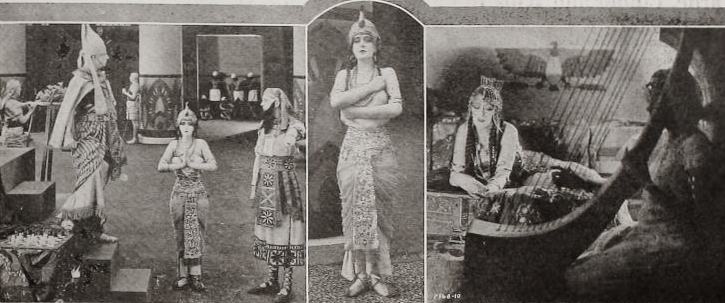
In a moment charged with destiny, Grace rushes to Paget, throwing herself into his arms and declaring her unwavering resolve to accompany him to the desolate outpost. It is amidst this passionate reunion, this profound affirmation of their bond, that the film delivers its most compelling revelation: each possesses a fragment of the ancient, broken scarab. This discovery isn't merely a plot twist; it is the cosmic confirmation of their eternal connection, the tangible proof that their souls, separated by millennia, have indeed found each other again. The scarab, a silent witness to their ancient vow, now serves as a beacon of their reincarnated love, tying the two disparate timelines into a single, cohesive narrative of enduring passion. The emotional weight of this moment is considerable, designed to evoke a powerful sense of fate and destiny in the audience. It elevates their love story from a mere colonial romance to a transcendent epic, suggesting that some bonds are simply too strong for time or death to sever.
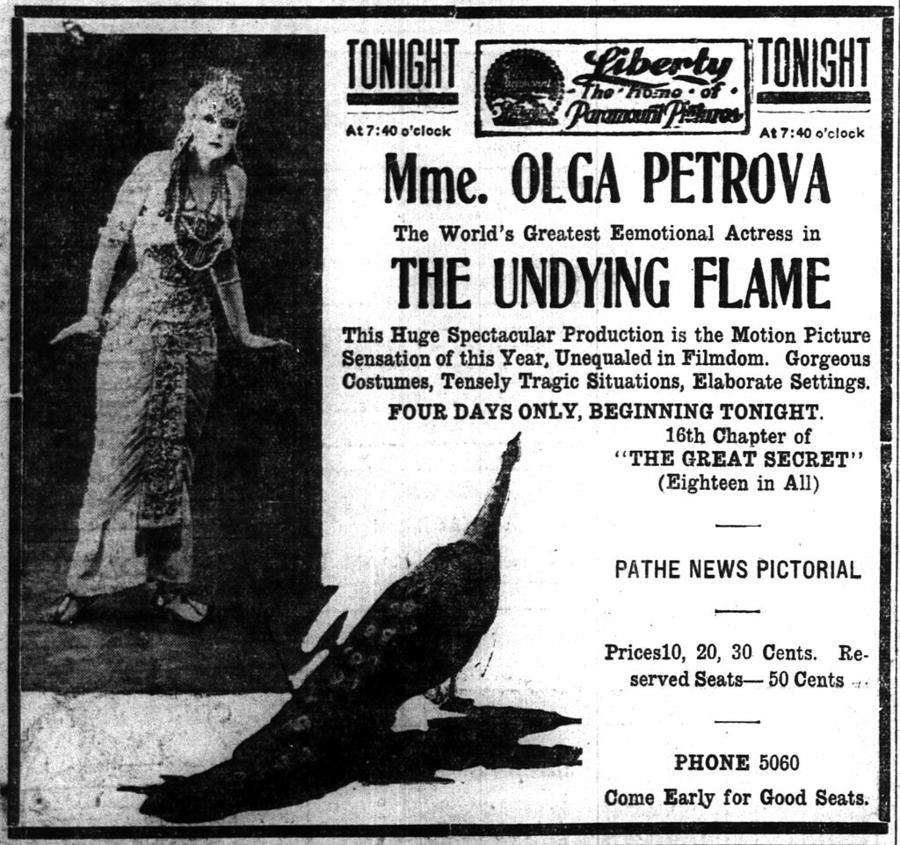
"The Undying Flame" is a fascinating artifact of its time, showcasing the storytelling prowess of early cinema. The performances, particularly by Olga Petrova as Mrs. Harvey and Charles Martin as Captain Paget, are exemplary for the silent era. Petrova, a celebrated stage actress and "vamp" figure of her time, brings a nuanced complexity to Mrs. Harvey, making her more than a simple antagonist. Her jealousy is palpable, her desperation almost sympathetic, allowing the audience to understand the motivations behind her destructive actions. Martin, on the other hand, embodies the stoic heroism expected of a leading man, yet manages to convey a quiet dignity in his disgrace and a profound tenderness in his affection for Grace. The supporting cast, including Warren Cook, Herbert Evans, Edwin Mordant, Mahlon Hamilton, and Violet Reed, contribute to the film's immersive atmosphere, grounding the more fantastical elements of reincarnation in believable human drama.
The direction, while adhering to the conventions of silent film—often reliant on exaggerated gestures and intertitles to convey emotion and dialogue—manages to craft a compelling visual narrative. The contrast between the opulent, mystical ancient Egyptian scenes and the stark, sun-drenched landscapes of the Sudan is striking. Cinematography of the era, though limited by technology, often excelled in capturing dramatic vistas, and "The Undying Flame" is no exception. The desert, in particular, becomes a character unto itself, a vast, indifferent backdrop against which human dramas of love and betrayal play out, echoing the timelessness of the central theme.
At its core, "The Undying Flame" is a profound exploration of destiny and the unyielding power of love. The concept of reincarnation, while not unique to cinema, is handled with a sincerity that elevates the melodrama. It suggests that some connections are predestined, woven into the very fabric of existence, defying the arbitrary divisions of time and space. This theme resonates deeply, tapping into universal human longings for a love that lasts beyond a single lifetime.
The film also skillfully navigates the tension between personal desire and societal obligation. In ancient Egypt, the princess and shepherd defy royal decree; in the Sudan, Paget grapples with military honor and the expectations of his rank. Both narratives showcase individuals struggling against formidable external pressures for the sake of love. This duality provides a rich thematic canvas, highlighting the enduring human conflict between the heart's dictates and the world's demands. The film implicitly critiques the rigidity of class structures and military hierarchies, suggesting that true nobility lies not in birthright or rank, but in the purity of one's affections and the courage to follow one's heart.
Comparatively, while it shares thematic echoes with other films of its period exploring grand romantic gestures, "The Undying Flame" distinguishes itself with its explicit embrace of reincarnation. Other films might hint at fate, but here it is the very engine of the plot. One might look at something like The Betrothed (1913) for a sense of fated love, but rarely with the explicit, mystical framework that defines this picture. The film's ambitious scope, spanning millennia, sets it apart from more grounded dramas like The College Orphan or even action-oriented tales such as The Battle of Shiloh, which, while offering their own compelling narratives, do not aim for the same transcendental reach.
As a product of 1917, "The Undying Flame" offers invaluable insight into the burgeoning art of cinematic storytelling. The writers, Charles E. Whittaker and Emma Bell Clifton, demonstrate a keen understanding of how to build suspense, develop character arcs (even within the constraints of silent film acting), and deliver a satisfying emotional payoff. Their collaboration resulted in a narrative that, despite its fantastical premise, feels emotionally grounded. The film's structure, moving between two distinct historical periods, was a bold choice for its time, requiring careful pacing and clear visual cues to prevent audience confusion. This technique, while commonplace today, was still being refined in the early 20th century.
The portrayal of colonial Sudan, while undoubtedly reflecting the prevalent attitudes of the era, serves primarily as a backdrop for the romantic drama rather than a deep exploration of geopolitical themes. This focus on the personal over the political is characteristic of many melodramas of the period, where grand emotions often took precedence over nuanced historical commentary. However, the setting does add a layer of exoticism and adventure that would have appealed greatly to audiences of the time, much like films such as Captain of the Gray Horse Troop might have offered glimpses into other adventurous locales, though with different thematic concerns. The narrative successfully uses the setting to intensify the stakes for Paget, making his disgrace and subsequent volunteering for a remote outpost feel genuinely perilous.
The film also touches upon themes of deception and revelation. Mrs. Harvey's machinations, while villainous, are eventually exposed, leading to a cathartic moment of truth for Grace. This narrative device, common in many dramas, is effectively employed here to propel the plot forward and resolve the central misunderstanding that threatens the lovers' happiness. The eventual unraveling of Mrs. Harvey's plot is crucial, allowing the audience to fully embrace the destined nature of Grace and Paget's love without lingering doubts about their initial separation. It’s a classic trope, perhaps seen in mysteries like The Blue Envelope Mystery, but here it serves a romantic rather than a crime-solving purpose.
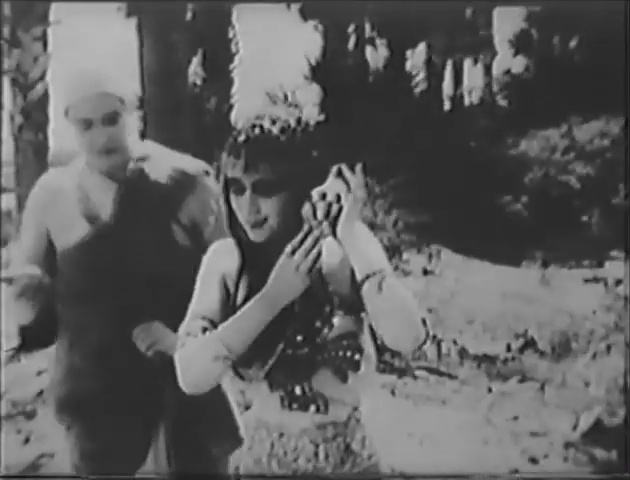
Despite its age and the inherent limitations of silent film, "The Undying Flame" remains a compelling watch for enthusiasts of early cinema and those fascinated by the evolution of romantic storytelling. It is a powerful reminder that the fundamental human desires for love, connection, and destiny have always been at the heart of our narratives. The film’s ability to bridge two distinct historical periods with a single, overriding theme of reincarnated love is a testament to its ambitious vision and the skill of its creators. It doesn't shy away from grand, sweeping emotions, embracing the melodrama inherent in its premise with open arms.
The final reveal of the scarab fragments is a moment of pure cinematic magic, a visual metaphor for the completion of a cycle, the fulfillment of an ancient promise. It leaves the audience with a sense of wonder and the comforting notion that true love truly is eternal, capable of overcoming any obstacle, even death itself. In an era where films were still finding their voice, "The Undying Flame" spoke volumes about the enduring power of the human heart. It offers a unique blend of historical drama, mystical romance, and a compelling love triangle, proving that some stories, much like the flame itself, are truly undying. For those interested in the broader scope of silent film, understanding how these early narratives tackled complex themes like fate and love across time is crucial. It stands as a vibrant example of how early filmmakers experimented with structure and symbolism to craft engaging and emotionally resonant tales, perhaps more overtly mystical than the domestic dramas like Gloriana, yet equally concerned with the human condition. The explicit use of the scarab as a tangible link between lives offers a bold, almost fantastical element that grounds the film's romantic aspirations in a mythical framework, distinguishing it from many contemporaries.
In conclusion, "The Undying Flame" is more than just a historical curiosity; it is a captivating journey through time, a testament to the enduring human spirit and the belief that some loves are simply meant to be. It’s a film that asks us to suspend disbelief and embrace the fantastical, rewarding us with a tale of love so profound it defies the very boundaries of existence. Its creative ambition and emotional depth secure its place as a noteworthy entry in the annals of early cinema, a flickering but powerful beacon of romantic idealism.

IMDb —
1922
Community
Log in to comment.