DbcultAccessing Vault...
Cult Review
Senior Film Conservator
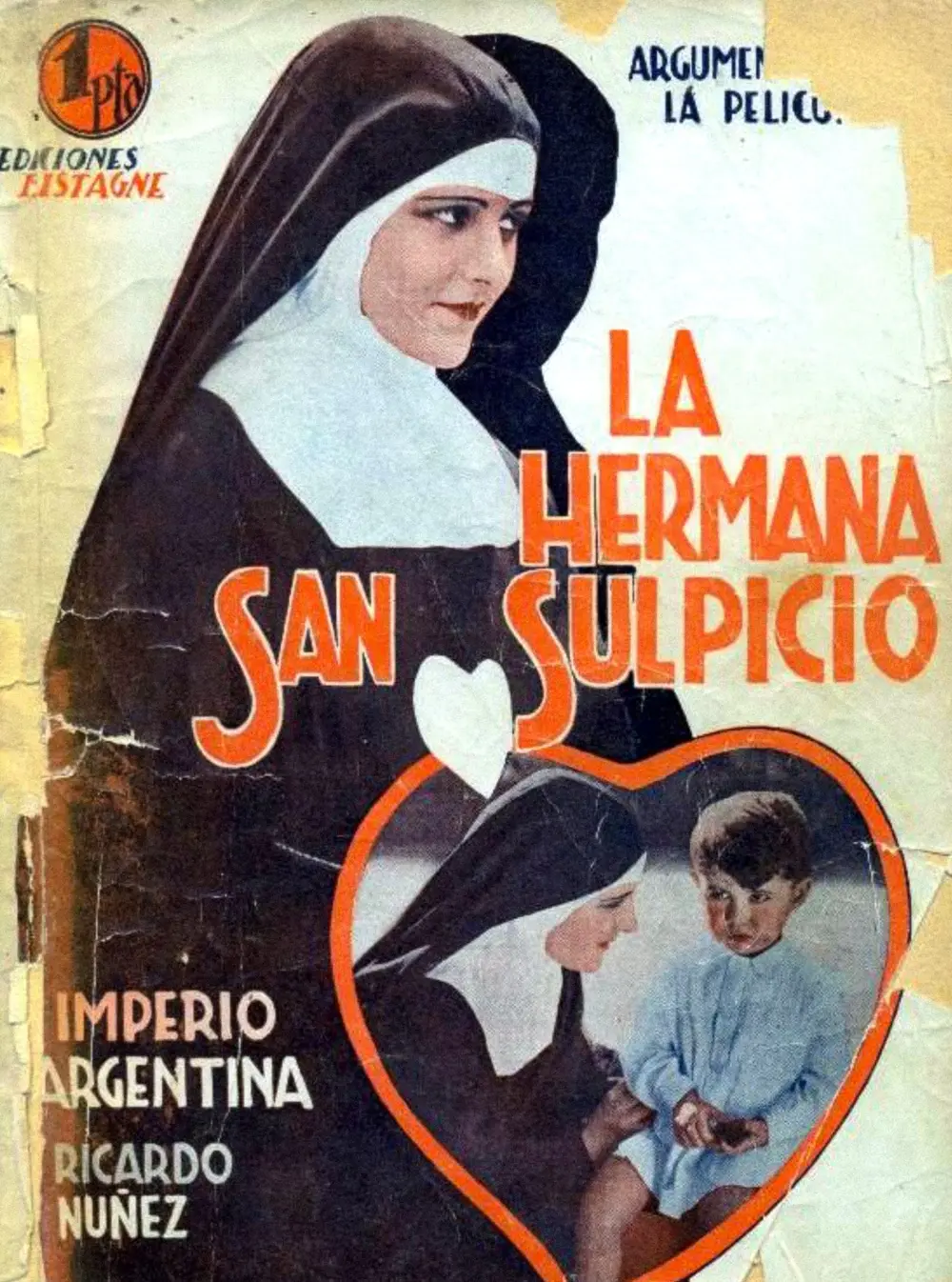
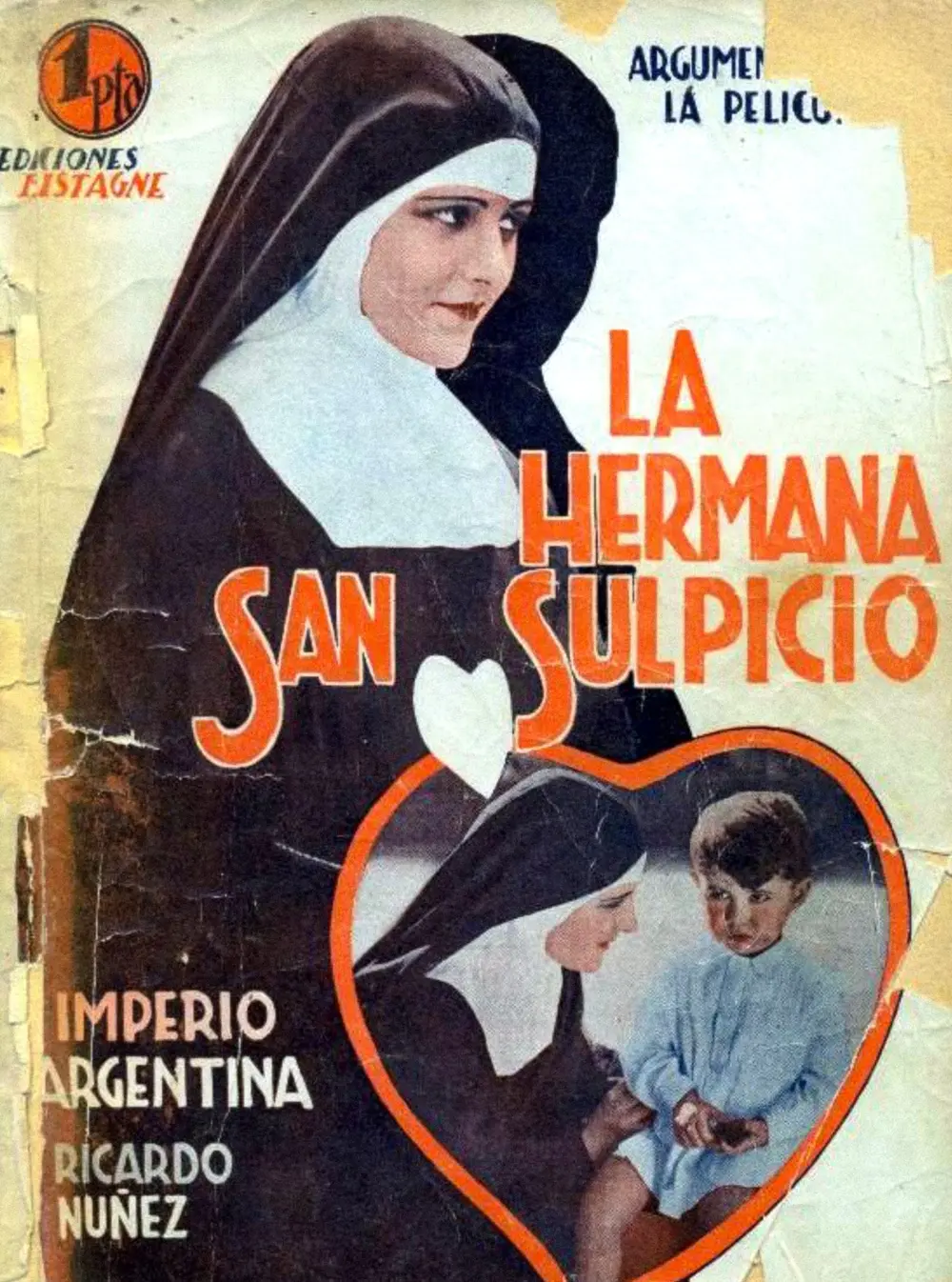
Is La hermana San Sulpicio worth watching today? Short answer: Yes, but only if you view it as a cultural artifact rather than a modern comedy. This is a film for those who appreciate the foundational stones of European cinema and the birth of the 'star system' in Spain. It is decidedly not for viewers who require lightning-fast editing or the sophisticated irony of contemporary rom-coms.
Before we dive into the dusty archives of Seville, let's be clear about what this film offers. It is a time capsule of a Spain that was beginning to define its cinematic identity through the lens of regional archetypes.
At its core, La hermana San Sulpicio is an exploration of the 'Two Spains.' We have Ceferino, played with a delightful stiffness by Evaristo Vedia. He represents the North—serious, clinical, and perhaps a bit dull. Then we have Gloria, the 'Sister San Sulpicio,' who represents the South—passionate, musical, and inherently free. The film uses the convent not as a place of spiritual crisis, but as a comedic obstacle. It’s a bold choice for 1927 Spain.
Consider the scene where Ceferino first encounters Gloria in the sanatorium. The camera lingers on his bewildered expression, a man of science confronted by a woman of pure, unadulterated spirit. It’s a moment that mirrors the technical transitions of the era. While films like Lord Saviles brott were experimenting with darker, more psychological themes, Rey was perfecting the art of the lighthearted cultural clash.
It is impossible to discuss this film without focusing on Imperio Argentina. This was her breakout role, and you can see why. She doesn't just act; she glows. In an era where many silent stars relied on wild gesticulation—a style seen in more melodramatic works like The Scarlet Oath—Argentina brings a naturalism that was decades ahead of its time. Her eyes do more work in a three-second close-up than the entire supporting cast does in an hour.
There is a specific sequence where she is dancing, ostensibly for the other nuns, but really for the camera. It’s a moment of pure cinematic joy. She breaks the fourth wall with her energy. You aren't just watching a character; you are watching a star being born. It works. But it’s flawed. The surrounding film sometimes struggles to keep up with her pace, resulting in moments where the narrative drags while we wait for her to return to the screen.
Florián Rey was a master of using the Spanish landscape as a character. In La hermana San Sulpicio, Seville isn't just a setting; it’s a living, breathing force. The way he uses natural light to wash over the white-walled patios of the convent creates a sense of heat and lethargy that you can almost feel. He contrasts this with the more structured, shadowed interiors of the doctor’s world.
His pacing is deliberate. Some might call it slow. I call it atmospheric. He allows the viewer to soak in the environment. This is a far cry from the gritty realism or the high-adventure stakes of a film like Sahara. Rey is interested in the small moments—the adjustment of a habit, the shared look between lovers, the way a fan snaps shut. These are the details that build the world.
Yes, it is worth watching for anyone interested in the evolution of romantic comedy and the history of Spanish cinema. While the humor is dated, the central chemistry between the leads remains surprisingly fresh. It provides a unique window into how 1920s audiences viewed the tension between tradition and modernity.
“A fascinating glimpse into the soul of 1920s Spain, even if the jokes have lost some of their luster.”
Pros:
- Stunning location photography that captures the essence of Seville.
- A rare look at a 'nun' character who is allowed to be funny and desirable.
- Exceptional restoration quality in modern prints allows the cinematography to shine.
Cons:
- Some of the 'Northern vs. Southern' humor feels repetitive.
- The film relies heavily on title cards to explain internal monologues that could have been shown visually.
- The climax is somewhat predictable, even for its time.
One cannot understate the importance of this film in the context of Spanish identity. In 1927, Spain was a country divided by deep regional loyalties. Rey used this film to bridge those gaps through laughter. By making the 'rigid' Northern doctor fall for the 'wild' Southern nun, he was making a statement about national unity. It’s a subtle political undercurrent that adds weight to what would otherwise be a simple fluff piece.
When you compare this to other films of the era, such as the social dramas or the early thrillers, La hermana San Sulpicio stands out for its sheer optimism. It refuses to be a tragedy. It insists on a happy ending, even when the social structures of the time would have made such a union difficult. This optimism was exactly what Spanish audiences craved in the late 1920s.
La hermana San Sulpicio is a charming, if slightly overlong, relic of a bygone era. It is held together by the sheer force of will of Imperio Argentina. Without her, the film would likely be forgotten, a mere footnote in the career of Florián Rey. With her, it becomes a vibrant, essential piece of cinema history. It isn't a masterpiece in the technical sense—the editing is often clunky and the script relies on too many coincidences—but it has heart. And in the world of silent film, heart often matters more than technical perfection. Go into it with an open mind, a bit of patience, and a love for the history of the silver screen, and you will find much to admire. It’s a beautiful, sun-soaked journey that reminds us that some things—like the thrill of a forbidden romance—never go out of style.
IMDb —
1927
Community
Log in to comment.