DbcultAccessing Vault...
6/10
Senior Film Conservator
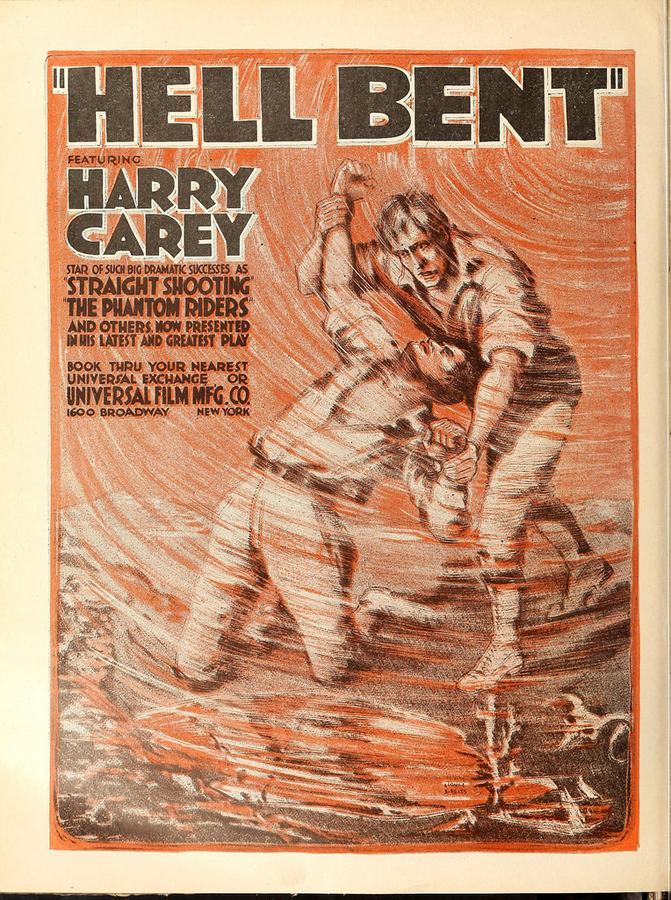
A definitive 6/10 rating for a film that redefined the boundaries of cult cinema. Hell Bent remains a cornerstone of transgressive art.
Stepping back into the nascent years of cinematic storytelling, one encounters a fascinating artifact of American film history: 'Hell Bent' (1918). This silent Western, helmed by the legendary John Ford in his formative directorial period, is far more than a mere relic; it’s a vibrant, pulsing testament to the enduring power of elemental narratives and the captivating charisma of its star, Harry Carey. It stands as a pivotal piece in understanding the evolution of the Western genre and the foundational artistry of one of Hollywood's most revered auteurs. In an era when cinema was still finding its voice, Ford, alongside his frequent collaborator Carey, crafted a tale that, despite its age, resonates with a raw, visceral energy that many modern blockbusters struggle to achieve.
John Ford's early directorial vision, even in these silent endeavors, was unmistakably distinct. He possessed an innate understanding of space, particularly the vast, mythic landscapes that would become synonymous with his work. In 'Hell Bent', the desert is not merely a backdrop; it is a character, a formidable antagonist, and a crucible that tests the very essence of human endurance. Ford's camera, even without the luxury of sound, speaks volumes, capturing sweeping vistas that dwarf human figures, emphasizing their struggle against an indifferent, monumental nature. His ability to frame action sequences with clarity and dynamism, a skill honed through countless early shorts, is on full display here, making the chases and confrontations remarkably engaging despite the inherent limitations of the medium. This early mastery of visual storytelling laid the groundwork for the epic canvases he would later paint with sound and color, yet the foundations of his genius are strikingly evident in this monochromatic world.
At the heart of 'Hell Bent' lies Harry Carey's indelible portrayal of Cheyenne Harry, a character he would embody in numerous films for Ford. Carey's Harry is not the clean-cut, morally unambiguous hero often found in popular fiction; he is a rugged individualist, a drifter with a past shrouded in ambiguity, yet possessed of an undeniable moral compass that steers him towards justice. His performance is a masterclass in silent acting, conveying a complex emotional landscape through nuanced facial expressions, body language, and a captivating screen presence that transcends the absence of dialogue. Harry Carey cultivated a persona that was rough-hewn and authentic, embodying the spirit of the frontier without resorting to caricature. His interactions, particularly with Neva Gerber's Bess Thurston, are imbued with a quiet intensity, hinting at a deep affection that drives his subsequent heroic actions. Carey was more than an actor; he was an icon of the silent Western, and 'Hell Bent' showcases precisely why his legend endures.
The narrative core of 'Hell Bent' is deceptively simple yet profoundly effective. Cheyenne Harry, seeking a fresh start, finds himself drawn to the spirited Bess Thurston. Their burgeoning connection is brutally severed when Bess is abducted by the nefarious Beau Ross (played with menacing conviction by Millard K. Wilson) and his ruthless gang, including Steve Clemente's menacing figure. This inciting incident catapults Harry from a contemplative wanderer into a man of decisive action. The film then transforms into a relentless pursuit, a high-stakes game of cat and mouse across the unforgiving terrain. The immediacy of the threat, the sheer audacity of the abduction, and Harry's unwavering determination to rescue Bess create a compelling emotional anchor that grips the viewer from the outset. It’s a classic Western trope—the damsel in distress, the lone hero—but rendered with a raw intensity that feels anything but cliché.
Perhaps the most compelling character in 'Hell Bent', beyond its human protagonists, is the desert itself. Ford utilizes the vast, arid expanse not merely as a setting but as a living, breathing entity that dictates the terms of survival. The relentless sun, the endless dunes, and the scarcity of resources become formidable adversaries. The plot hinges on the existence of a single, vital waterhole—a beacon of hope and a magnet for both the heroes and their pursuers. This geographical detail elevates the stakes, transforming a simple rescue mission into a desperate struggle against dehydration and exhaustion. The journey on foot across this desolate landscape with Bess, after her rescue, is a testament to human resilience and Harry’s unwavering resolve. It’s a stark reminder that in the Old West, nature was often the most formidable foe, demanding respect and punishing weakness with brutal efficiency. The visual poetry of these sequences, even in black and white, evokes the profound sense of isolation and the sheer scale of the challenge.
Thematic depth abounds in 'Hell Bent'. Beyond the thrilling action, the film delves into themes of redemption, the search for a new beginning, and the inherent goodness that can emerge under duress. Harry, a man who explicitly states he's leaving his past behind, finds his true character forged in the fires of adversity. His heroism isn't born of a desire for glory, but from a profound sense of duty and affection. The film also subtly explores the idea of civilization versus the wilderness, and how the harsh realities of the frontier can strip away pretenses, revealing the true nature of individuals. The struggle for survival, both physical and moral, is a constant undercurrent, making the film's triumphs feel genuinely earned and its perils deeply felt. It's a foundational narrative that would echo through countless Westerns, establishing a template for the archetypal hero who finds his purpose in protecting the vulnerable.
The supporting cast, while perhaps less celebrated than Carey, plays crucial roles in anchoring the narrative. Neva Gerber's portrayal of Bess Thurston is more than just a passive victim; she embodies a resilience that makes her a worthy object of Harry's heroic efforts. Her fear is palpable, but so is her underlying strength, which shines through her ordeal. The villains, particularly Millard K. Wilson as Beau Ross and Steve Clemente, are suitably menacing, providing a tangible threat that elevates the stakes. Their ruthlessness is conveyed through stark, unadorned performances, making their malevolence clear without the need for extensive exposition. Even Vester Pegg, Duke R. Lee, Joe Harris, and Molly Malone contribute effectively to the ensemble, creating a believable world populated by distinct characters, each playing their part in the unfolding drama.
The collaborative spirit behind the screenplay is also noteworthy, with John Ford himself credited alongside Eugene B. Lewis and Harry Carey. This triumvirate brought a unique blend of directorial vision, narrative craftsmanship, and intimate understanding of the Western persona to the script. Carey's involvement in shaping his own character undoubtedly contributed to the authenticity and depth of Cheyenne Harry, allowing the actor to imbue the role with personal nuance. This synergy between director, writer, and star was a hallmark of Ford's early career and arguably one of the keys to the enduring appeal and coherence of his silent Westerns. Their collective understanding of the genre's conventions, coupled with a willingness to push its emotional boundaries, resulted in a story that feels both familiar and refreshingly robust.
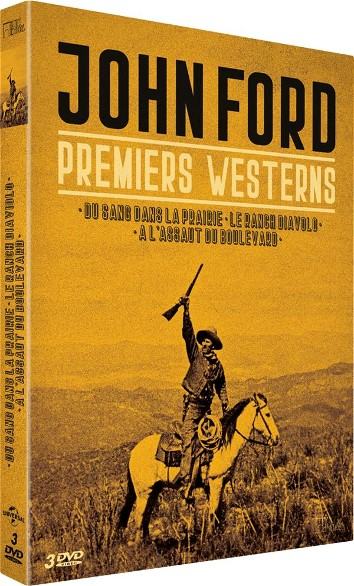
Silent film storytelling, a challenging art form, truly shines in 'Hell Bent'. The absence of spoken dialogue necessitated a heightened reliance on visual cues, expressive acting, and well-crafted intertitles to convey plot and emotion. Ford, even at this early stage, displayed a remarkable aptitude for this. The pacing is expertly managed, transitioning smoothly between moments of quiet contemplation and explosive action. The use of close-ups on Carey's face, for instance, allows the audience to connect deeply with his internal struggle and determination. The physical comedy, often a staple of silent cinema, is woven in judiciously, providing moments of levity without detracting from the overarching suspense. It is a testament to the skill of the filmmakers that such a compelling and emotionally resonant story could be told with such clarity and impact, relying solely on the power of images and music.
The visual language and cinematography of 'Hell Bent' are surprisingly sophisticated for its time. Ford's careful composition of shots, particularly those involving the vast desert, creates a sense of grandeur and isolation. The interplay of light and shadow, essential in black and white cinema, is used effectively to heighten drama and define mood. Whether it's the stark silhouette of a rider against a blazing horizon or the intimate intensity of a close-up, the film's visual grammar is articulate and purposeful. The camera work often mirrors the emotional journey of the characters, sweeping across landscapes during moments of pursuit and tightening in on faces during moments of intense emotion. This thoughtful approach to cinematography elevates the film beyond mere pulp adventure, imbuing it with an artistic sensibility that foreshadows Ford's later, more celebrated works.
When comparing 'Hell Bent' to its contemporaries, its unique blend of rugged individualism and environmental struggle becomes strikingly clear. The raw human struggle for survival and heroism here stands in stark contrast to the often more refined, domestic dramas like The Little Girl Next Door, where conflict arises from social intricacies rather than life-or-death desert treks. The moral clarity, even amidst violence, also differs from the more ambiguous or intricate plots found in contemporary mysteries such as The Crimson Stain Mystery, which rely on cerebral puzzles rather than visceral action. Furthermore, the film's focus on the rugged individualist echoes, in a sense, the aspirations often depicted in films like The American Beauty, though the 'beauty' here is the stark, untamed landscape and the inherent goodness of a man tested by fire, rather than societal grace and material success. This emphasizes 'Hell Bent''s commitment to a more primal, fundamental form of storytelling.
The film's portrayal of its heroine, Bess, while fitting for its era, also invites comparison. While films like A Woman's Way might explore the internal struggles and societal constraints faced by female characters, 'Hell Bent' positions its heroine as a catalyst for heroic action, a prize to be won back, but also a figure of quiet resilience who endures immense hardship. The intense loyalty and sense of duty present in 'Hell Bent' could be seen as a parallel to the themes of commitment and connection explored in films like Called Back, albeit with vastly different stakes and settings, moving from domestic drama to epic adventure. Moreover, the film's exploration of fate and human agency against overwhelming odds finds a distant echo in the more philosophical inquiries of Who Knows?, though 'Hell Bent' grounds its questions in physical endurance and immediate peril rather than abstract contemplation.
The grand, almost epic scope of Harry's journey, though intimate in its focus on personal survival, can be loosely compared to the adventurous spirit found in films like A Prince of India or Der Sultan von Johore, both of which deal with exotic locales and high-stakes narratives, albeit from different cultural perspectives and often with more elaborate historical backdrops. The clear delineation of good versus evil, while characteristic of many early Westerns, stands apart from the more morally complex narratives sometimes hinted at in films such as Double Crossed, where loyalties and betrayals form the core of the drama. Furthermore, the brutal honesty of the landscape and the struggle for survival also offers a stark contrast to the more romanticized or melancholic portrayals of nature seen in films like Impressioni del Reno, which focus on aesthetic appreciation and mood rather than raw, existential threat and the fight for life.
The theme of captivity and rescue, central to 'Hell Bent', resonates with similar narrative devices in other adventure-driven stories, though perhaps less directly with the social commentary inherent in films like Sold for Marriage, which critiques societal norms rather than celebrating individual heroism against external forces. The pursuit of justice, often outside the bounds of conventional law, positions Harry as a prototype for countless Western heroes, a figure whose actions might be seen as a counterpoint to the more formal legal processes implied in films like The Mystic Hour, which often deals with investigations or revelations within a structured framework. Moreover, the raw, untamed spirit of the wilderness and the men who inhabit it in 'Hell Bent' finds a kindred, albeit geographically distinct, spirit in tales of remote life such as A Tale of the Australian Bush, both films showcasing human resilience against formidable natural backdrops and the challenges of isolated existence. The grit and determination exhibited by Harry also echo the struggle against overwhelming odds found in stories like Les chacals, though the specific cultural and environmental contexts differ dramatically, highlighting the universal appeal of such narratives.
The enduring legacy of 'Hell Bent' lies not just in its historical significance as an early Ford/Carey collaboration, but in its timeless storytelling. It's a film that, despite its silent nature and nearly a century of distance, still manages to captivate and thrill. It offers a window into the nascent art of filmmaking, showcasing how compelling narratives could be crafted with limited technology but boundless creativity. For film scholars, it provides invaluable insight into Ford's evolving directorial style and Carey's development as a screen persona. For enthusiasts of the Western genre, it's a foundational text, illustrating the core tenets that would define countless films to come. Its exploration of human courage, the unforgiving beauty of the American West, and the eternal struggle between good and evil ensures its continued relevance.
In conclusion, 'Hell Bent' is far more than a dusty old movie; it is a vibrant, compelling piece of cinematic heritage. It is a testament to the power of visual storytelling, the magnetic pull of a truly iconic screen hero, and the foundational genius of a director who would go on to define American cinema. It reminds us that the essence of great filmmaking lies not in technological bells and whistles, but in the crafting of resonant characters, engaging plots, and a profound understanding of the human condition. Seek it out, and you’ll discover a classic that remains, even today, as potent and exhilarating as the desert wind itself.
IMDb —
1928
Community
Log in to comment.